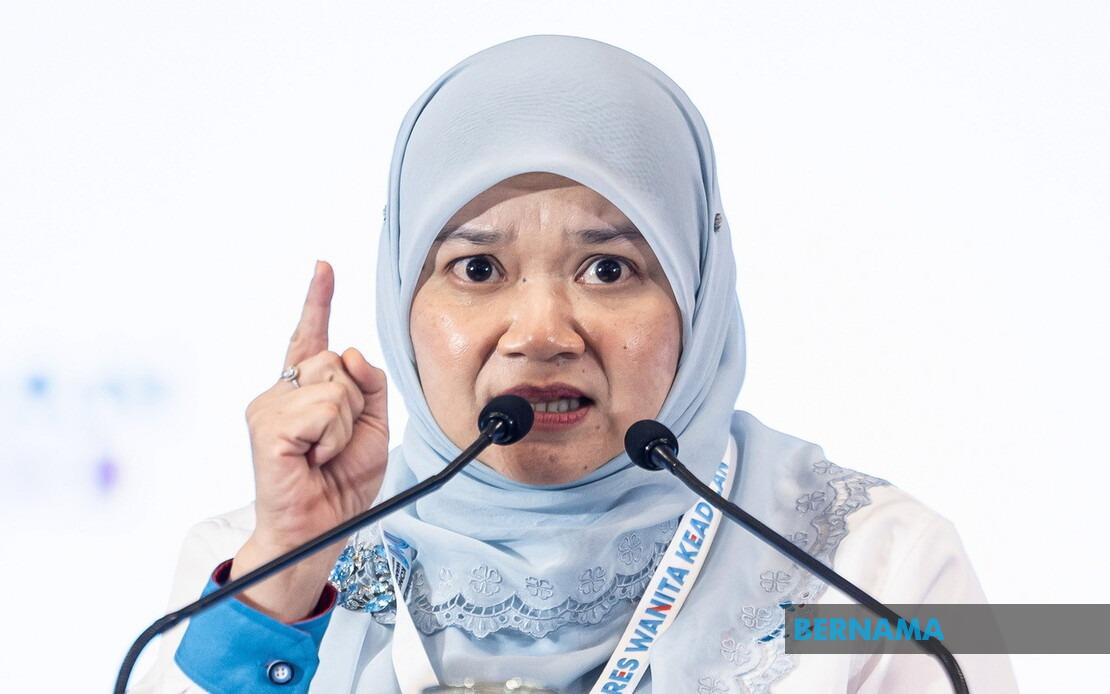
Wanita PKR chief Fadhlina Sidek has delivered a pointed message about the direction Malaysian politics should take, calling for a shift away from using religion as a tool for political mobilisation toward genuine competition based on substantive ideas and practical governance solutions. Speaking at the 2026 Wanita PKR National Congress held at the Melaka International Trade Centre in Ayer Keroh, Fadhlina articulated a vision for political discourse that prioritises evidence-based policymaking and community welfare over divisive appeals to faith-based identity.
The remarks carry particular weight given the Malaysian political landscape's recurring pattern of religious rhetoric being weaponised during campaign seasons. Fadhlina's intervention suggests growing concern within PKR about the broader trajectory of electoral politics in the country, where religious sensitivities have increasingly become contested terrain rather than shared foundational values. Her explicit warning against inciting people over matters of faith represents an attempt to establish clearer ethical boundaries for political competition at a time when such boundaries have become increasingly blurred across the political spectrum.
Central to Fadhlina's argument is the distinction between respecting religious conviction—which she emphasises should remain inviolable—and instrumentalising religion for partisan advantage. This distinction, while seemingly straightforward, reflects a deeper challenge in Malaysian politics: how parties can acknowledge the legitimate role of faith in citizens' lives while simultaneously resisting the temptation to manipulate religious identity for electoral gain. The timing of her statement, delivered during a party congress focused on strengthening women's participation in PKR, also underscores how questions of political integrity and ethical competition intersect with broader internal party strengthening efforts.
Fadhlina's call for competition based on demonstrable policy alternatives and governance capacity represents a shift in emphasis within PKR's public messaging. Rather than engaging opponents on their preferred terrain—where appeals to religious authenticity and communal protection dominate—she articulates a strategy centred on competitive advantage through superior ideas and implementation capacity. This approach acknowledges that Malaysian voters remain fundamentally concerned with bread-and-butter issues: economic security, access to quality healthcare and education, and responsive local governance. By reorienting political competition toward these domains, parties can potentially elevate the quality of public debate while addressing citizens' actual priorities.
The practical implications of this vision extend beyond rhetorical positioning. If political parties genuinely shifted toward ideas-based competition, electoral campaigns would necessarily become more substantive, requiring candidates to articulate detailed policy positions and demonstrate understanding of local economic and social conditions. This would present challenges for parties that have relied heavily on mobilising voters through identity-based appeals, but it could also create opportunities for newer or smaller parties to establish competitive footholds through innovative policy proposals and direct engagement with community needs.
Fadhlina simultaneously urged PKR's leadership and membership to strengthen grassroots connections through more intensive community engagement. Her emphasis on leaders visiting neighbours' homes and directly assessing local needs reflects recognition that political legitimacy ultimately derives from demonstrable responsiveness to constituents' circumstances. This ground-level reconnection strategy complements her broader call for ideas-based competition; parties cannot realistically present themselves as solution-oriented if they remain disconnected from communities' actual challenges and aspirations. The integration of these two themes—ethical political competition and genuine community rootedness—suggests a coherent governance philosophy centred on earned legitimacy and sustained accountability.
The emphasis on party loyalty and steadfastness, which concluded Fadhlina's address, acknowledges internal challenges PKR has faced. Political movements that attempt to differentiate themselves through ethical positioning face particular pressure to maintain internal cohesion, as defections or internal scandals undermine their moral claims. By appealing to members' commitment to the party's broader struggle, Fadhlina reinforced that ideas-based competition and community-responsive governance require sustained collective effort and institutional discipline. This represents a sophisticated understanding that political principles cannot be separated from organisational capability and member commitment.
For Malaysian voters and regional observers, Fadhlina's intervention offers a window into PKR's strategic thinking as the country approaches electoral cycles. The party appears to be positioning itself as offering a qualitatively different model of political engagement—one less dependent on identity mobilisation and more focused on demonstrable governance competence and community responsiveness. Whether this positioning gains traction depends substantially on whether PKR members themselves genuinely embrace this philosophy in their own political conduct and whether the broader Malaysian electorate responds to candidates who prioritise policy substance over identity-based appeals.
The regional dimension of this debate also merits attention. Across Southeast Asia, political competition has increasingly turned on questions of religious identity and communal affiliation, reflecting both demographic change and strategic choices by political entrepreneurs. Malaysia's particular history—as a constitutionally Muslim-majority nation with significant non-Muslim populations and strong Islamic institutions—creates specific pressures around religious rhetoric in politics. Fadhlina's call for depoliticising religion, while not unprecedented within Malaysian discourse, gains significance from her position within a major coalition party and the directness of her framing.
Looking forward, the success of ideas-based political competition depends on multiple actors. The media must provide platforms for substantive policy discussion rather than amplifying identity-based soundbites. Civil society organisations can facilitate forums where candidates engage in detailed policy exposition. Most importantly, voters themselves must signal through their choices that policy substance and demonstrated problem-solving capacity matter more than appeals to religious identity or communal belonging. Fadhlina's remarks suggest PKR believes such a realignment is possible and desirable, positioning the party to benefit if Malaysian politics genuinely shifts in this direction.

