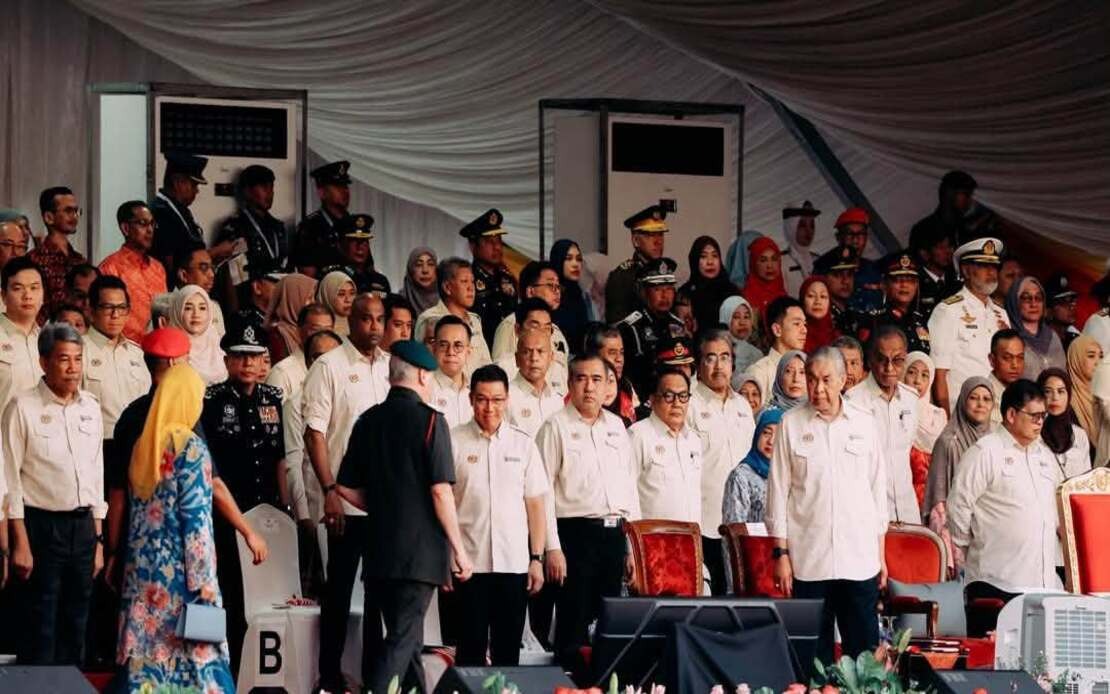
Datuk Armizan Mohd Ali, Malaysia's Domestic Trade and Cost of Living Minister, has underscored the critical importance of political maturity in preserving the stability of the Unity Government, particularly as the nation navigates its transformed political landscape following the 15th General Election. Speaking on National Day, Armizan stressed that the country's citizens and political leadership must consciously embrace the new governmental structure while recognising that institutional stability directly underpins Malaysia's capacity to advance national development and enhance public welfare. His remarks reflect growing recognition within government circles that the coalition arrangement requires deliberate cultivation of cooperative relationships among constituent parties to function effectively.
The minister's perspective highlights a fundamental tension within Malaysia's current political architecture. Unlike the decades of single-party dominance that characterised previous decades, the post-GE15 environment demands active management of diverse political interests within a consolidated government framework. Armizan observed that despite visible tensions between party activists at the grassroots level, senior Cabinet members have consistently demonstrated professional and constructive engagement during formal government proceedings. This disconnect between party-level rhetoric and ministerial-level collaboration suggests that political leaders have internalised the consequences of institutional instability and chosen pragmatism over partisan point-scoring.
Armizan specifically referenced the tumultuous 2018-2022 period as a cautionary example of political dysfunction. During those four years, Malaysia experienced three changes of prime minister alongside corresponding upheavals in Cabinet composition, a situation he characterised as fundamentally incompatible with building lasting prosperity and coherent policy implementation. That era witnessed not only governance disruptions but also investor uncertainty and public confidence erosion as competing political blocs struggled for supremacy. The contrast between that instability and the relative cohesion evident in today's Cabinet meetings underscores both the stakes involved and the deliberate choices that leadership has made to prioritise institutional continuity over factional advantage.
The concept of political maturity that Armizan advocates extends beyond mere civility or procedural compliance. Rather, it represents a deliberate alignment of partisan interests with broader national objectives. Political maturity, in this formulation, requires party leaders and activists to recognise that their individual or organisational political rights—including freedom to organise, contest, and articulate positions—must be consciously balanced against their shared responsibility as components of a governing coalition. This equilibrium remains delicate and requires constant reinforcement through both principled leadership and institutional mechanisms that incentivise cooperation while allowing legitimate expression of differences.
For Malaysia specifically, achieving this balance holds particular significance given the country's diverse ethnic, religious, and regional composition. The Unity Government's coalition structure reflects, in microcosm, the pluralistic negotiation required to govern such a heterogeneous nation. When senior political figures like Armizan publicly reinforce the importance of mature governance, they signal to both party activists and ordinary citizens that institutional stability serves collective interests that transcend party affiliation. This messaging becomes especially valuable during periods when short-term electoral considerations or ideological disputes might otherwise tempt political actors toward destabilising manoeuvres.
Armizan's emphasis on translating political maturity into concrete governance outcomes reflects an understanding that abstract institutional commitment must produce tangible benefits. The minister pointed to the role of National Day celebrations as opportunities for citizens across the political spectrum to reaffirm their shared commitment to national development and territorial stewardship. By framing this celebration as a platform for expressing unity while acknowledging inevitable differences, Armizan articulated a vision of governance that accommodates pluralism without requiring artificial consensus on all matters. Citizens and leaders alike, he suggested, can simultaneously maintain their distinct identities and allegiances while functioning as stewards of collective national interests.
The distribution of governance responsibility across society, as Armizan outlined, encompasses civil servants, business communities, civil society organisations, and ordinary citizens, each operating within systems that require their contribution and restraint. This broader civic understanding complements the political maturity that Armizan advocated for among party leadership. When governance stability is widely understood as a prerequisite for societal functionality, the incentive structures shift toward supporting rather than undermining institutional arrangements, even when particular parties find themselves in opposition roles or compromised policy positions within coalition settings.
Malaysia's regional context further amplifies the importance of the stability that Armizan championed. Southeast Asia has witnessed multiple instances of coalition governments fragmenting under pressure, creating governance vacuums or precipitating constitutional crises. Countries like Thailand and Myanmar have experienced severe disruptions stemming from political instability and weak institutional commitments to democratic governance. Malaysia's capacity to maintain a functioning multi-party coalition government, particularly one that accommodates ideological diversity and ethnic representation, establishes a counterexample that could influence regional political trajectories. International observers monitoring democratic resilience in Southeast Asia will scrutinise whether Malaysia's current governmental arrangement can prove durable.
The challenge ahead for Armizan's vision involves sustaining the professional Cabinet-level harmony he observed through multiple electoral cycles and policy challenges. As the Unity Government confronts issues that pit constituent parties' interests directly against one another—whether concerning resource distribution, regulatory frameworks, or electoral prospects—maintaining the political maturity that currently characterises leadership interaction will become increasingly difficult. The framework that Armizan articulated provides useful guidance, yet true tests of that framework's resilience will emerge when political calculations tempt leaders toward behaviour that serves partisan advantage at the expense of collective stability.
Ultimately, Armizan's message crystallises an argument that increasingly resonates among governance specialists: sustainable political systems depend not merely on institutional design or constitutional provisions, but fundamentally on the choices that leaders make regarding how to exercise power. The political maturity he advocates—balancing legitimate partisan interests with institutional stewardship responsibilities—represents neither naïve idealism nor cynical resignation, but rather a recognition that Malaysia's development trajectory depends on whether its political elite can consistently prioritise collective stability over faction-based advantage. The coming years will reveal whether that commitment proves sufficiently durable to weather the inevitable strains that coalition governance generates.

