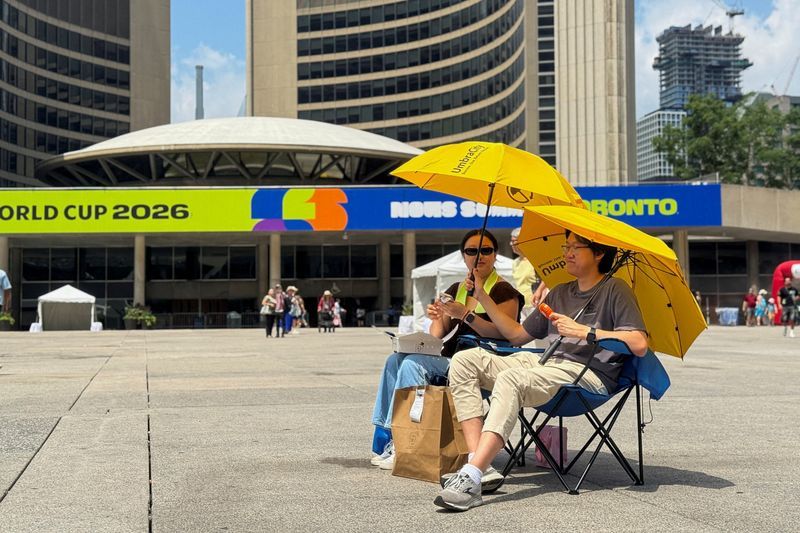
Thousands of soccer enthusiasts converging on Toronto for the World Cup round of 32 encounter between Portugal and Croatia face potentially dangerous weather conditions, prompting Canadian health officials to issue stern guidance on managing heat exposure during the Thursday fixture. Environment Canada has declared a heat warning for the region, with actual temperatures exceeding 35 degrees Celsius expected, but the combination of heat and moisture in the atmosphere could make conditions feel substantially worse to those gathering in outdoor viewing areas throughout the city.
Michelle Murti, the City of Toronto's medical officer of health, stressed the importance of proactive hydration strategies when speaking to media on Tuesday. Rather than relying on thirst as an indicator, Murti advised spectators to consume water continuously throughout the day leading up to kickoff. The guidance specifically cautioned against excessive alcohol consumption, emphasising that alcoholic beverages accelerate dehydration and compound the physiological stress imposed by extreme heat exposure. For crowds anticipated at public fan zones scattered across Toronto, this represents critical public health messaging aimed at preventing heat-related medical emergencies.
The perceived temperature in Toronto on Thursday could reach approximately 40 degrees Celsius according to Murti's assessment, driven primarily by elevated humidity levels that prevent the body's natural cooling mechanisms from functioning efficiently. This apparent temperature—significantly higher than the actual ambient reading—poses genuine health risks, particularly for vulnerable populations including the elderly, young children, and individuals with pre-existing medical conditions. Outdoor fan zones and viewing parties organised by the City of Toronto would expose attendees to extended periods in these hazardous conditions without the protective shelter of an indoor venue.
Beyond the heat threat, meteorological forecasters have identified the possibility of thunderstorms disrupting Thursday's proceedings. The convergence of extreme heat and atmospheric instability creates conditions conducive to severe weather development, potentially leading to cancellations or suspensions of public viewing events. Toronto Stadium, serving as the tournament's smallest venue, is scheduled to host its final World Cup match on this occasion, underscoring the significance of the event for local fans despite the meteorological obstacles.
Weather extremes have plagued Canada from coast to coast in recent weeks, with communities across the nation experiencing either severe flooding or oppressive heat waves. This pattern of volatile weather comes immediately before Canada Day on Wednesday, a national holiday when Canadians typically congregate outdoors for celebrations. The confluence of holiday festivities and hazardous weather conditions has amplified concerns among public health and safety officials managing crowd management and emergency medical preparedness.
The City of Toronto has taken preventative measures to mitigate heat-related health incidents, installing misting stations in high-traffic gathering areas including the iconic Nathan Phillips Square, a traditional focal point for public celebrations and fan assemblies. These cooling installations provide temporary relief for pedestrians traversing downtown Toronto, though they represent only a partial solution to the broader challenge of managing large outdoor crowds in dangerous heat.
Observations from attendees at Nathan Phillips Square on Tuesday illustrated the practical impacts of extreme heat on visitor behaviour and comfort levels. Megan Rennie, a Toronto resident, expressed concern about both her own wellbeing and the physical demands facing the athletes competing under identical conditions. Her comment about potentially departing early reflects a broader calculation many spectators must undertake when balancing enthusiasm for major sporting events against genuine health risks posed by environmental conditions.
Visitors from outside Canada similarly expressed difficulty adapting to the temperature extremes. Laura Albarez, travelling from Colombia where heat is commonplace, nonetheless found Toronto's conditions taxing, particularly when compounded by humidity levels unfamiliar to South American climates. Her preference for retreating to air-conditioned hotel accommodation rather than remaining in outdoor viewing spaces underscores how extensively these weather conditions impact tourism and public participation in major events.
The Portugal-Croatia fixture carries additional significance as Toronto Stadium's concluding World Cup match, making the occasion noteworthy for local supporters and international football enthusiasts. The combination of competitive intensity, large anticipated crowds, and dangerous environmental conditions creates a complex scenario for municipal authorities responsible for public safety, medical response capabilities, and event management. Health officials must balance facilitating community engagement with major international sporting events against their primary responsibility to protect public health.
For Malaysian observers and Southeast Asian readers familiar with tropical climates, Toronto's current weather situation may appear superficially comparable to conditions routinely experienced in the region. However, the distinction lies in population acclimatisation and infrastructure adaptation. While Malaysian residents have evolved physiological and behavioural responses to sustained heat and humidity, Canadian populations in Ontario possess neither evolutionary adaptation nor established cultural practices for managing such conditions, rendering them more vulnerable to heat-related illness despite comparable ambient temperatures. This disparity underscores how climate context shapes health vulnerabilities across different populations.
The broader implications extend beyond Thursday's sporting event, signalling how climate variability increasingly disrupts major public gatherings and mass events in traditionally temperate regions. As weather patterns become more volatile globally, cities worldwide must develop enhanced capacity to manage crowds during meteorological extremes, a challenge particularly acute for outdoor sporting events and public celebrations. Toronto's experience during this World Cup match offers instructive lessons about integrating health preparedness, infrastructure adaptation, and public communication when environmental conditions threaten large assemblies.

