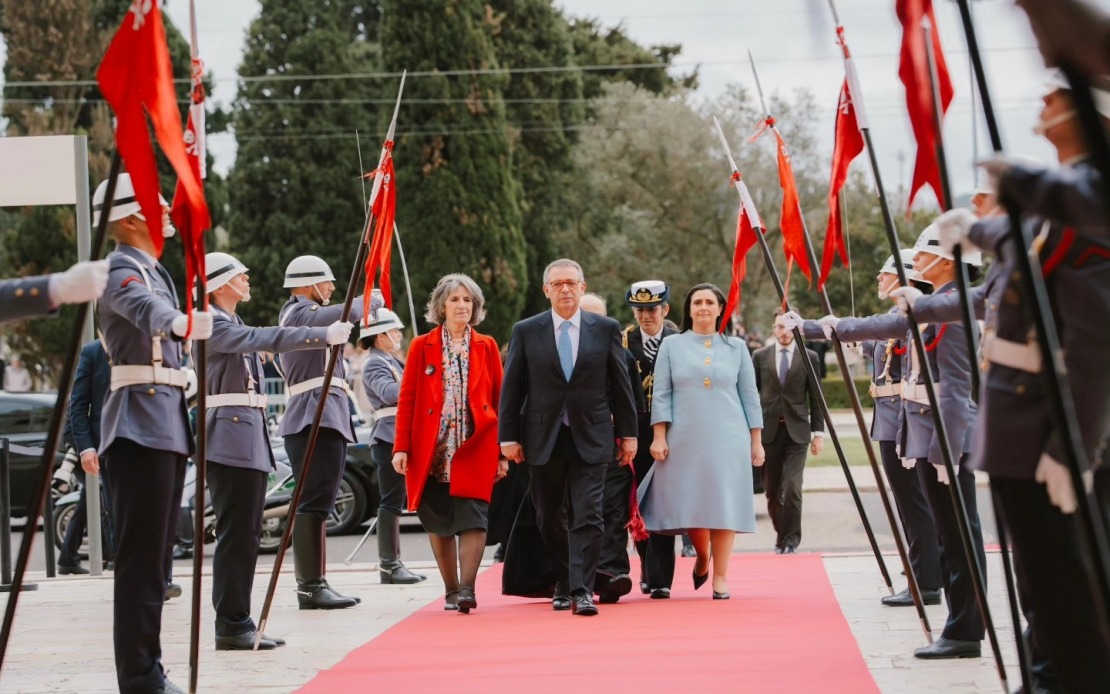
Portugal has joined a growing number of European democracies in restricting face coverings in public areas, after President Antonio Jose Seguro formally approved the controversial measure on Tuesday. The legislation, initially advanced by the right-wing Chega party, now prohibits individuals from concealing their faces in public spaces, establishing Portugal as the latest European nation to adopt such restrictions alongside France, Belgium, Austria, Denmark and the Netherlands.
The Portuguese presidency issued a statement from Belem Palace, the official residence in Lisbon, outlining the rationale for the presidential signature. Seguro indicated that amendments incorporated during parliamentary deliberations had addressed his earlier concerns, ultimately persuading him to endorse the final version. The President framed his decision through multiple lenses: social cohesion, public safety protocols, and alignment with European legal precedents, particularly rulings from the European Court of Human Rights that have examined face-covering regulations.
At the heart of the government's position lies a philosophical argument about community trust and interpersonal recognition. According to the presidential statement, an uncovered face represents a fundamental pillar of social confidence characteristic of Portuguese society. The administration contends that daily interaction between citizens depends upon the ability to identify one another directly and establish authentic human connection, suggesting that obscured faces undermine these foundational social dynamics that bind modern democracies together.
A gender equality dimension features prominently in Lisbon's reasoning. Officials emphasised that restricting facial coverings predominantly affects women, particularly those from Muslim communities who wear traditional religious dress such as the niqab or burqa. The government characterised such asymmetric impact as fundamentally incompatible with European democratic values centred on parity and equal human dignity. This framing positions the ban as a progressive measure protecting women's interests rather than a discriminatory policy, though this interpretation remains hotly contested.
The administration further argued that in a genuinely free society, individuals should exercise their identity and convictions within an agreed framework of common standards that enable shared community experience. Officials pointed to European Court of Human Rights jurisprudence in support, suggesting international judicial bodies have validated such regulatory approaches as consistent with fundamental freedoms and democratic governance.
However, this narrative confronts significant criticism from human rights organisations operating across Europe. Amnesty International's Portuguese branch has condemned the legislation as fundamentally discriminatory, arguing it disproportionately harms Muslim women who voluntarily choose to cover their faces for religious or personal reasons. The organisation contends the ban violates the rights of religious minorities and women's autonomy to determine their own appearance and religious observance, even while ostensibly protecting women's equality.
For Malaysian readers, the Portuguese development carries particular relevance given Malaysia's large Muslim population and ongoing domestic debates about religious expression and public order. While Malaysia permits Islamic religious dress including the hijab and niqab, the Portuguese approach illustrates how secular European democracies increasingly view facial coverings through security and social integration frameworks rather than religious accommodation lenses. The contrast highlights fundamentally different constitutional philosophies regarding the relationship between religious freedom, state regulation, and public space management.
The European regulatory trend appears to reflect post-2015 security anxieties and integration challenges facing many Western nations. Face-covering bans have typically been justified on grounds ranging from counter-terrorism measures to requirements that public servants maintain visible identity verification. Yet critics argue these ostensibly neutral security rationales disproportionately burden religious minorities, particularly Muslim communities, creating a discriminatory impact beneath officially secular justifications.
Portugal's decision also reflects broader rightward political shifts across Europe, where nationalist and populist movements have elevated immigration and cultural integration concerns. The Chega party's successful promotion of this legislation demonstrates how culturally conservative political actors leverage security and social cohesion arguments to advance policies critics view as targeting immigrant and minority communities. The Portuguese parliament's willingness to advance the Chega proposal, subsequently approved by the centrist presidency, suggests mainstream political parties increasingly validate previously marginal positions on cultural identity issues.
The implementation challenges facing Portuguese authorities remain unclear. Questions persist regarding enforcement mechanisms, penalties for violations, religious or medical exemptions, and practical application across diverse public settings from transportation to retail. European experience suggests such bans often generate litigation in domestic and international courts, with judges reconsidering their compatibility with constitutional protections for religious freedom and human dignity rights.
Southeast Asian governments monitoring this European development may observe how democratic societies navigate tensions between security governance, cultural integration policy, and minority rights protections. Malaysia's multifaith constitutional framework and Islamic-majority democracy present different governance contexts, yet the broader challenge of reconciling public order with religious expression transcends geography. Portugal's approach will likely become a reference point in international debates about whether secular democracies can legitimately restrict religious dress practices, particularly as similar proposals periodically resurface in various European and Western nations.
The Portuguese case ultimately illustrates how contemporary European governance increasingly interprets visible religious expression as a public policy matter rather than purely private religious conscience. Whether this regulatory approach effectively enhances social cohesion or instead alienates religious minorities while creating counterproductive backlash remains an open empirical question European societies will grapple with for years ahead.

