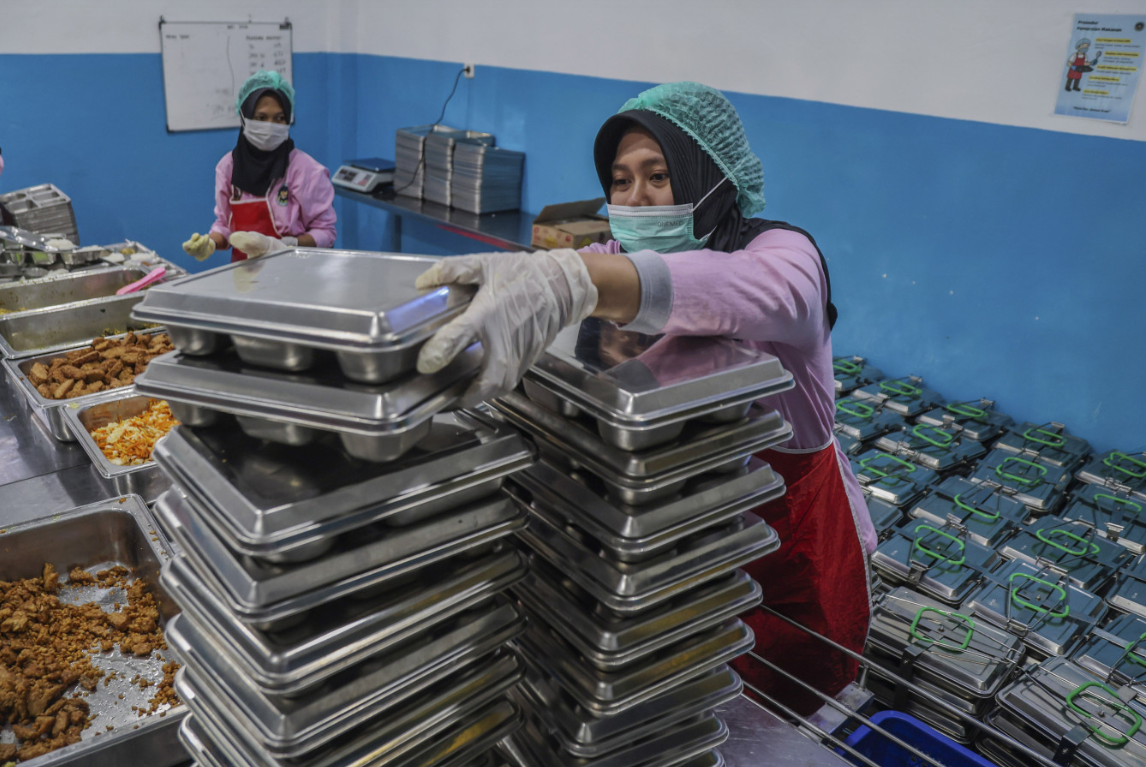
President Prabowo Subianto is directing a comprehensive overhaul of two centrepiece programmes that have become lightning rods for public criticism and political controversy. The move to reassess the free nutritious meal initiative and the Red and White cooperative scheme reflects mounting pressure on the Indonesian leader to address implementation challenges, escalating costs, and safety concerns that have sparked street protests and formal investigations. The policy direction emerged from a four-hour closed-door session at the Palace on Wednesday involving several cabinet members overseeing these initiatives, signalling that the administration recognises the need for substantial course corrections rather than minor adjustments.
The free meals programme, allocated at least Rp 268 trillion (US$19.5 billion) for 2026 alone, represents one of Prabowo's signature policy commitments, aimed at providing nutritious food to approximately 83 million beneficiaries spanning schoolchildren, pregnant women, and vulnerable populations. The scheme is designed to address persistent challenges of malnutrition and childhood stunting, persistent health concerns that drain Indonesia's human capital and productivity potential. However, the programme has become a credibility flashpoint for the new administration, transforming what should have been a straightforward social welfare initiative into a test of governmental competence and fiscal responsibility.
Deputy chief of the National Nutrition Agency Agustina Arumsari outlined the President's directive to conduct an exhaustive examination of how meals are currently distributed in schools, with completion required within one month. The instruction emphasises careful deliberation rather than hasty implementation, reflecting perhaps a recognition that the initial rollout proceeded without adequate groundwork. The review will specifically examine beneficiary eligibility criteria, with government officials considering whether higher-income families should be excluded from the programme, a move that would fundamentally reshape its universal character and potentially reduce expenditure significantly.
A central concern animating the reassessment involves the practical and psychological dimensions of mixed-income classroom settings. School environments where some students receive government-provided meals while classmates do not present an uncomfortable social dynamic that officials now acknowledge warrants serious consideration. This represents a maturation in thinking about social programmes, moving beyond simple cost-benefit analysis to encompass the dignity and social cohesion implications of targeted assistance within shared spaces. The government is exploring whether alternative delivery mechanisms, such as utilising existing school canteen infrastructure rather than establishing separate meal kitchens, might address these concerns while reducing administrative complexity.
The decision to review reflects intensifying public backlash that materialised in street demonstrations last month demanding programme suspension. Beyond protest politics, the initiative has faced scrutiny regarding documented cases of food poisoning affecting beneficiaries, raising serious questions about food safety standards and quality control mechanisms. More damaging to government credibility, a corruption investigation has implicated senior officials from both the National Police and the Indonesian Military, agencies whose involvement was presumably intended to ensure programme integrity and efficient implementation.
These revelations have exposed weaknesses in oversight structures and raised uncomfortable questions about whether the massive budget allocation is being deployed effectively or diverted through corrupt channels. For Malaysian observers monitoring regional governance, the Indonesian experience illustrates the substantial risks of launching programmes at such enormous scale without adequate testing and transparent monitoring frameworks. The corruption dimension particularly resonates given ongoing regional concerns about institutional integrity and the political costs of allowing high-profile initiatives to become vehicles for illicit enrichment.
Simultaneously, the government is recalibrating its approach to the Red and White cooperative scheme, which was conceived as a mechanism for revitalising rural economies and connecting agricultural producers directly with government distribution networks. Coordinating Food Minister Zulhas Hasan announced that cooperatives will expand their role to serve as official channels for delivering various assistance programmes and subsidised goods, while also purchasing agricultural commodities such as rice and corn when market prices dip below government-established support levels. This repositioning aims to create a market stabilisation mechanism protecting farming communities from price volatility while creating steady demand for their output.
However, the cooperative initiative has attracted its own criticism, particularly surrounding mandatory military-style training programmes for cooperative managers that resulted in at least four deaths. These fatalities transformed what should have been routine administrative training into a scandal reflecting poorly on programme design and implementation oversight. The deaths raise troubling questions about the necessity and appropriateness of militarised training protocols for civilian cooperative workers, suggesting inadequate consideration of participant welfare and potential dangers inherent in the training methodology.
For Southeast Asian policymakers observing these developments, the Indonesian situation illuminates persistent implementation challenges facing large-scale social programmes in developing democracies. Both initiatives reflect genuine policy ambitions aimed at addressing real social challenges—malnutrition, agricultural sustainability, rural economic development—yet both have stumbled in execution. The reviews now underway represent an acknowledgment that aspirational goals require meticulous implementation planning, transparent oversight mechanisms, and willingness to adjust course when evidence reveals problems.
The political implications of these reviews extend beyond administrative fine-tuning. Prabowo's decision to order comprehensive reassessments suggests responsiveness to public concern and legislative pressure, potentially preserving programme credibility if revisions demonstrably address identified problems. Conversely, if reviews result merely in cosmetic changes while fundamental issues persist, public confidence will erode further and opposition will intensify. The one-month timeline for completing the meals programme review indicates the administration recognises urgency in restoring confidence in what should function as a cornerstone social initiative.
These developments also carry implications for Indonesia's broader institutional evolution and democratic functioning. Street protests successfully prompted government action, suggesting that organised public pressure remains a meaningful mechanism for influencing policy direction in Southeast Asia's largest democracy. Simultaneously, corruption investigations involving military and police officials indicate that institutional accountability mechanisms, while imperfect, retain capacity to expose malfeasance even within traditionally opaque security establishments.
For Malaysian stakeholders, these events offer valuable lessons regarding programme design and implementation rigour. Both initiatives attempted to address legitimate social needs through substantial resource commitments, yet encountered problems that more methodical planning might have anticipated. As Malaysia contemplates its own policy innovations and social spending priorities, the Indonesian experience underscores the critical importance of pilot-testing approaches before national rollout, establishing transparent monitoring frameworks before problems escalate, and maintaining flexibility to adjust course when evidence reveals implementation challenges.
The outcome of these reviews will significantly influence perceptions of Prabowo's administration's capacity to deliver on its social commitments. If the reassessments result in more efficient, better-targeted, and corruption-resistant programmes, the government can claim having learned from initial setbacks and strengthened governance. Conversely, if reviews prove superficial or if the fundamental problems persist despite announced corrections, the administration faces continued credibility challenges and intensified political opposition.

