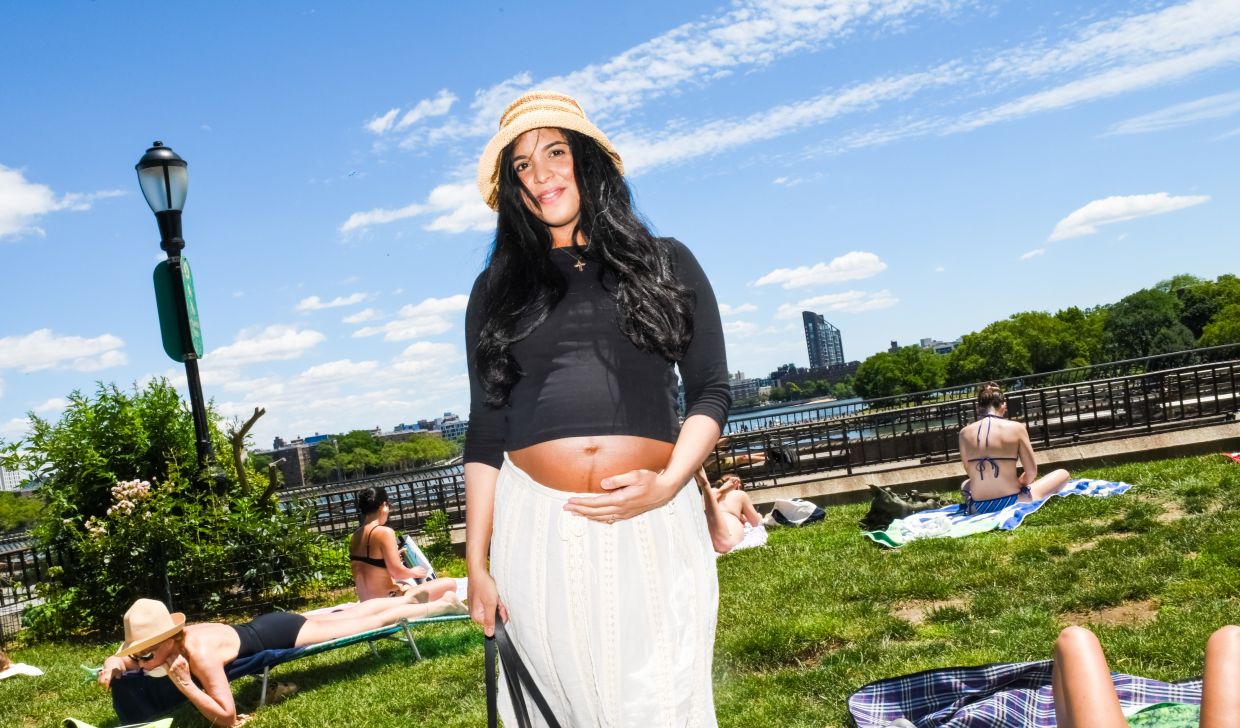
The sight of a pregnant woman deliberately exposing her midriff would have raised eyebrows just decades ago, yet today it has become a statement of body positivity and sartorial confidence. When Sarah Brown, a 36-year-old handbag designer and stylist, posted photographs showing her bare belly beneath carefully curated outfits at 22 weeks pregnant, she encountered a gentle but revealing suggestion from her mother to purchase maternity jumpsuits. Brown's response reflected an entirely different philosophy from previous generations: she was not accidentally revealing her changing body through poor fitting clothes, but rather deliberately styling her pregnancy as a fashion statement worthy of celebration.
What Brown experienced represents a broader generational shift in how expectant mothers approach maternity style. Over recent years, pregnant women have increasingly opted to showcase their bumps through strategic wardrobe choices, whether beneath cropped tops, through artfully positioned cutouts, or via minimal bikinis at the beach. This celebration of the pregnant silhouette has become impossible to ignore across social media platforms, concert stages, and city streets, signifying a departure from the era of shapeless, concealing maternity wear that dominated previous decades.
The transformation reflects deeper changes in societal attitudes toward pregnancy itself. Laura McAndrews, an associate professor studying fashion at Kent State University, attributes much of this shift to generational messaging around body positivity. Members of Generation Z and younger millennials have been exposed to messaging emphasizing acceptance of all body types and life stages, creating a markedly different mindset from the 1990s and earlier when pregnant women typically obscured their expanding silhouettes beneath oversized garments designed primarily to hide rather than flatter.
Celebrity culture has served as a powerful catalyst for normalizing visible pregnancy. The watershed moment came in 2017 when Beyoncé shared photographs of her bare belly at her baby shower during her second pregnancy, introducing millions of followers to a new visual language around expectancy. The trend intensified dramatically in 2022 when Rihanna announced her first pregnancy wearing a half-buttoned bright pink Chanel puffer jacket, her exposed bump becoming an instant fashion moment replicated across countless pregnancy announcement posts. Anne Hathaway continued the trajectory in June, announcing her own pregnancy in a white crop top and skirt combination that celebrated rather than concealed her changing form.
Musician and author Michelle Zauner exemplifies how these celebrity moments translate into real-world fashion choices. Zauner performed at the Governors Ball music festival in New York while visibly pregnant, wearing an unbuttoned cardigan that revealed a lacy black bra and her bare belly—a look she credits directly to Rihanna's influence. Her choice was not merely aspirational mimicry but reflected a genuine aversion to traditional maternity clothing, which she describes dismissively as oversized garments lacking aesthetic appeal or personal style expression.
The historical context explains why this shift feels so dramatic. For centuries, pregnancy was viewed as deeply private or even scandalous, considered "evidence of having had sex" as fashion historian Isabel Davis notes, making concealment not merely a fashion preference but a social requirement. Women went to extraordinary lengths to hide pregnancies, sometimes until the final months, with the prospect of visible pregnancy potentially triggering workplace discrimination or social stigmatization.
This historical burden shaped the maternity fashion industry itself. Ariane Goldman, founder of the maternity clothing company Hatch established in 2011, began her business during an era when discussing pregnancy openly remained taboo and many women actively hid their condition from employers for fear of termination. The intervening decade has witnessed what Goldman describes as "an incredible shift to the celebration and the power of carrying a child and owning it," fundamentally changing how expectant mothers approach their wardrobes and public presence.
Yet the rise of visible pregnancy styling raises intriguing questions about the future viability of the maternity fashion industry itself. If increasing numbers of women opt to wear partners' clothing, oversized regular-fit pieces, and strategically borrowed garments rather than purchasing dedicated maternity lines, what becomes of companies built specifically around pregnancy wear? Goldman acknowledges this challenge within her industry, though she remains committed to what she identifies as the core function of maternity clothing: enabling women to wear pieces that actually accommodate their changing bodies and facilitate necessary functionality during this temporary physical transformation.
Practical realities ensure that even the most fashion-forward pregnant women eventually require purpose-designed pieces. Brown, who styled much of her pregnancy using her husband's APC jeans, ultimately relied on elastic-waist Los Angeles Apparel trousers and side-unbuttoning Paloma Wool tops to complete her maternity wardrobe. These functional pieces served purposes that regular clothing simply could not accommodate, suggesting that the maternity market's future may involve evolution rather than obsolescence—companies adapting to serve mothers who demand both functionality and fashionable visibility.
The transformation in maternity fashion ultimately reflects broader cultural progress regarding women's bodies and autonomy. Rather than accepting society's expectation to disappear into oversized garments, contemporary expectant mothers are reclaiming pregnancy as a legitimate subject for style experimentation and celebration. This shift grants women agency over their own bodies during a period of dramatic physical change, rejecting the shame-based frameworks that historically governed pregnancy representation. The visible, fashionable pregnant belly has become not merely acceptable but aspirational—a symbol of confidence, body positivity, and refusal to diminish oneself during one of life's most transformative experiences.

