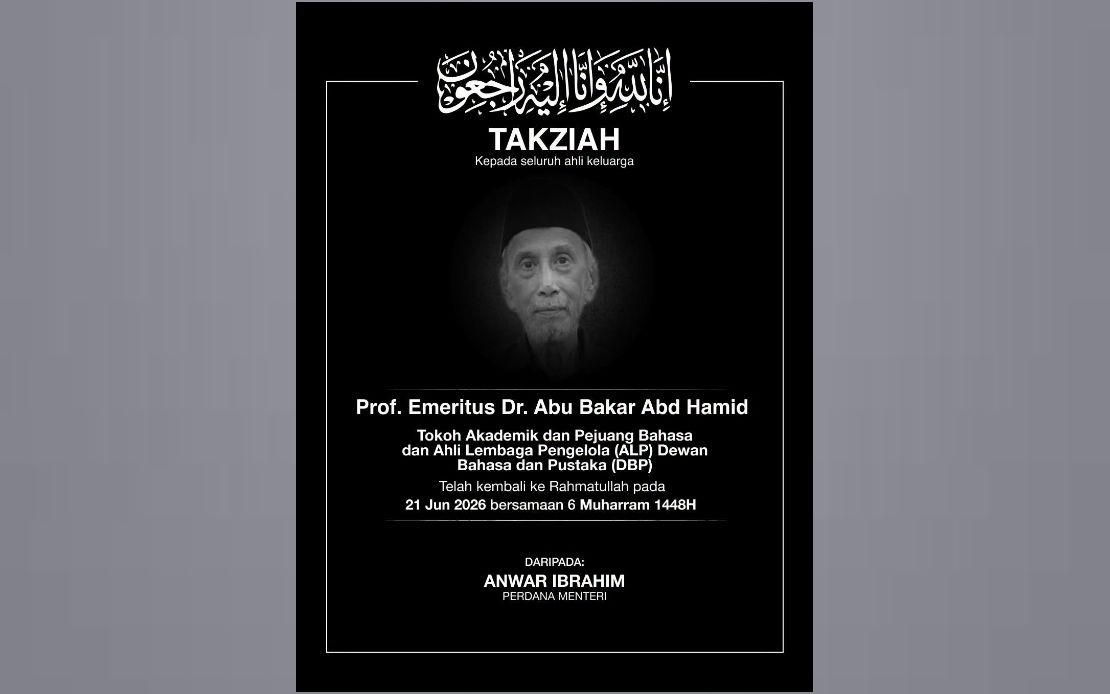
Prime Minister Datuk Seri Anwar Ibrahim has mourned the loss of Professor Emeritus Datuk Abu Bakar Abd Hamid, a towering figure in Malaysian literature and higher education, who passed away last Sunday at his home in Petaling Jaya. The Prime Minister, who was among Abu Bakar's many students over the decades, shared his condolences through a Facebook post, reflecting on the profound impact the late academic had on generations of Malaysians through his unwavering commitment to scholarship and cultural preservation.
Abu Bakar Abd Hamid, a native of Johor, collapsed suddenly at approximately 10.30pm on June 21 after experiencing acute respiratory distress at his residence. His death marks the end of an extraordinary intellectual career spanning several decades, during which he became synonymous with the advancement of Malay literary studies in Malaysia's universities. The scholar was subsequently laid to rest at Bukit Kiara Muslim Cemetery on Monday, drawing tributes from across the academic and cultural establishment.
In his tribute, Prime Minister Anwar described the late professor as far more than an academic authority—he characterised him as an inspirational mentor whose genuine passion for knowledge transcended the classroom. The Prime Minister emphasised that Abu Bakar's influence extended beyond his formal teaching responsibilities, as he consistently motivated those around him to pursue intellectual excellence and engage meaningfully with Malaysia's rich literary heritage. Such personal testimonies underscore the deep personal relationships Abu Bakar cultivated with his students, many of whom went on to occupy significant positions in Malaysian society.
Among Abu Bakar's most significant institutional contributions was his pivotal role in establishing Universiti Kebangsaan Malaysia during its formative period. Serving as joint secretary of the committee tasked with creating the university in 1968, Abu Bakar helped shape the foundational vision and academic direction of what would become one of Southeast Asia's leading institutions. His involvement in UKM's establishment reflected his broader commitment to expanding access to higher education and creating spaces where Malaysian intellectual traditions could flourish.
His credentials at Universiti Malaya further demonstrated his stature within Malaysian academia. Appointed as deputy vice-chancellor in 1987, Abu Bakar held a position of considerable influence during a critical period in the university's development. His leadership at Malaysia's oldest university reinforced the importance of maintaining rigorous academic standards while simultaneously ensuring that Malaysian cultural and literary studies received appropriate prominence within the curriculum.
Beyond his university roles, Abu Bakar's influence extended into the media landscape through his chairmanship of the Board of Governors of the Malaysian National News Agency, Bernama, a position he held from 1996 to 2000. This appointment reflected recognition of his credibility and vision for how Malaysia's official news agency could serve the nation's information needs during a period of significant political and social change.
Throughout his lifetime, Abu Bakar accumulated numerous prestigious awards and accolades recognising his outstanding contributions to Malaysian literature and cultural studies. These honours, bestowed by both domestic and international institutions, validated his status as a scholar of regional significance whose work advanced understanding of Malay language, literature, and intellectual traditions. His recognition extended beyond academic circles, resonating with cultural organisations and government bodies invested in preserving and promoting Malaysia's literary heritage.
The passing of Professor Emeritus Abu Bakar Abd Hamid represents a significant loss for Malaysia's intellectual community at a time when questions about cultural preservation and educational excellence remain paramount. His work helped establish institutional frameworks through which generations of Malaysian scholars could access rigorous training in literary studies while maintaining connection to indigenous cultural traditions. For younger academics and students, his legacy provides a template for balancing scholarly rigour with meaningful engagement in nation-building.
Prime Minister Anwar's public mourning reflects the broad respect Abu Bakar commanded across Malaysia's political, academic, and cultural spheres. The decision to share personal reflections on his former mentor suggests recognition that Abu Bakar's influence extended into the highest levels of government, shaping the intellectual formation of leaders responsible for national policy. Such intergenerational connections underscore the enduring importance of exceptional educators in Malaysian society.
As Malaysia continues navigating questions about its cultural identity and educational priorities, Abu Bakar's scholarly contributions remain relevant resources for contemporary debates. His emphasis on rigorous engagement with Malay literature and his institutional efforts to elevate literary studies within university systems offer valuable precedents as policymakers consider how best to support humanities education. His passing invites reflection on how Malaysian institutions can cultivate the next generation of scholars equally committed to advancing knowledge while serving their nation's cultural and intellectual needs.