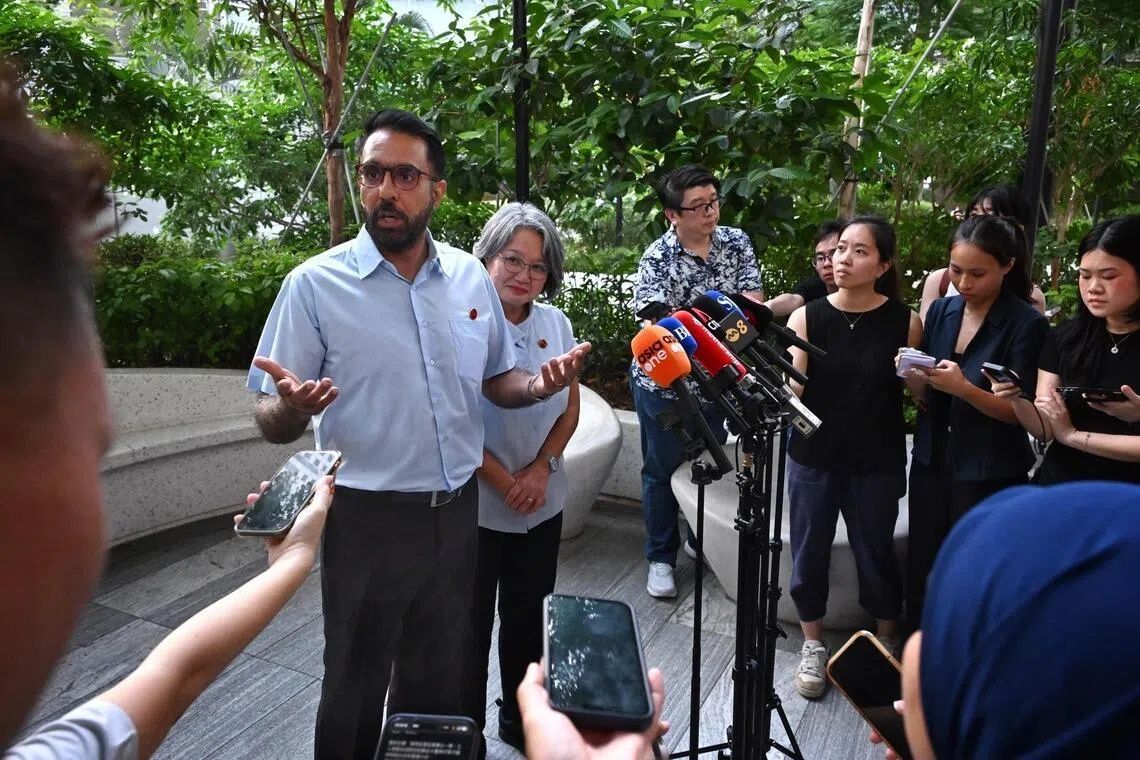
Pritam Singh has consolidated his grip on Singapore's largest opposition party after sailing through a critical internal ballot on June 28, fending off an attempt by a faction of unhappy cadres to force his departure. The Workers' Party leader faced the dual test of a special accountability conference followed by the party's regular biennial elections, emerging victorious from both contests and ending speculation about his future stewardship that had swirled for months.
The decisive outcome marks a turning point for the opposition leader, whose authority had been undermined by the fallout from former Sengkang GRC MP Raeesah Khan's 2021 parliamentary falsehoods and the legal consequences that followed. Political observers argue that Singh's survival and comfortable margin of support signals a stabilisation of the Workers' Party after years of institutional turbulence that had threatened to erode the opposition's parliamentary credibility and public standing.
According to party sources, Singh commanded approximately 80 per cent backing from the party's inner circle of slightly more than 100 cadres when ballots were cast in secret. The vote was sufficiently dominant to qualify as what Aljunied GRC MP Gerald Giam, who chaired the accountability conference, characterised as "well in excess of a supermajority." This level of backing provides Singh with a substantial mandate, though it also reveals that a meaningful minority—roughly one-fifth of the party's core membership—either voted against him or abstained, suggesting lingering reservations about his continued leadership.
The dispute had been triggered by a December 2025 petition signed by 25 dissident cadres, raising questions about Singh's legal troubles and seeking either his explanation, resignation, or removal through a ballot. The internal gathering allowed cadres to articulate grievances and permitted Singh to mount a defence of his record. Giam noted that proceedings unfolded with civility and proceeded through a single round of voting, establishing what he termed "proper accountability" within the party's democratic structures. The orderly nature of the proceedings contrasted with potential scenarios of acrimony or schism.
Singh's response to his critics demonstrated both humility and reassurance. He acknowledged that the petition reflected the party's commitment to open debate, emphasising that dissenting voices must be heard and respected. He insisted that matters raised by the unhappy faction had been adequately addressed and that he expected those cadres to accept the democratic verdict. His framing pivoted the discussion away from personal vindication toward institutional resilience, suggesting that the party's commitment to rational discourse and responsible governance ultimately justified his continued stewardship.
Uncertainty over former Workers' Party chief Low Thia Khiang's position had added intrigue to the proceedings. Dissident cadres had reportedly sought a challenger candidate and looked for signals about whether Low, Singh's predecessor and a towering figure in the party's modern history, might withdraw backing. Low's early intervention on June 28, publicly reaffirming his support for Singh en route to the meetings, effectively foreclosed any prospect of a generational power struggle and undercut efforts to recruit an alternative leader. This endorsement from the party's recent past was strategically vital in foreclosing debate about succession.
Following the accountability conference, the party proceeded to its routine internal elections at 3pm, where party chair Sylvia Lim, who has occupied that position since 2003, was returned unopposed. The elections also determined membership of the 12-seat central executive committee, the party's top decision-making authority. Most members were re-elected from the previous iteration, maintaining continuity in party stewardship at a time when institutional stability was valued.
The composition of the renewed executive committee reflected the party's balance between parliamentary incumbents and institutional figures. Four of the 12 members are not sitting Members of Parliament—a cohort that includes Low, former Aljunied GRC MP Faisal Manap, long-serving central executive committee member Tan Kong Soon, and senior counsel Harpreet Singh, who contested as part of the Workers' Party's Punggol GRC slate during the May 2025 general election. Singh's inclusion as a new executive addition indicated the party's effort to broaden its leadership base beyond legislators.
Harpreet Singh's post-election commentary provided insight into the Workers' Party's philosophical approach to the leadership contest. In a LinkedIn post, he characterised the cadres' decision as reflecting deliberate assessment rather than "blind loyalty," claiming they had weighed Singh's track record including his resilience under sustained political pressure and measured stewardship that had produced parliamentary gains. Singh acknowledged that the High Court's December 2025 decision upholding his conviction for lying to a parliamentary committee formed the explicit context for the vote, yet he argued that a person's complete history rather than a single legal outcome should determine suitability for leadership.
The background to Singh's legal troubles stems from his role in the Raeesah Khan matter. Parliamentary investigation and judicial proceedings established that Singh had guided Khan in maintaining her false statements to the Committee of Privileges for several months before the truth emerged. Although Singh appealed his conviction, the High Court upheld the verdict in December 2025. Parliament subsequently deemed him unsuitable for the role of Leader of the Opposition in January 2026, and Prime Minister Lawrence Wong removed him from that specific position shortly after. The Workers' Party declined Wong's invitation to nominate a replacement, instead insisting that the position properly belonged to the leader of the largest opposition party.
Prior to the June 28 internal elections, the Workers' Party's central executive committee had issued Singh a formal letter of reprimand in April 2026, responding to findings from a disciplinary panel comprising Sengkang GRC MPs Jamus Lim and He Ting Ru alongside former Hougang MP Png Eng Huat. The panel determined that Singh had breached two articles of the party's constitution through his actions relating to Khan's parliamentary dishonesty. This formal sanction acknowledged institutional wrongdoing while stopping short of recommending removal.
The outcome of June 28 resolves, for now, the question of Singh's tenure as the Workers' Party chief. His substantial electoral victory provides him with democratic legitimacy among the party faithful and suggests that cadres, having weighed the legal findings and institutional failings, judged him capable of redemption and continued service. Yet the persistence of significant internal opposition—roughly one-fifth of core party membership—indicates that Singh's leadership, while secure, operates against a backdrop of unhealed institutional wounds. The Workers' Party enters the next phase of its development with a reaffirmed leader but also with demonstrable fissures that could resurface if party fortunes deteriorate or if fresh controversies emerge.

