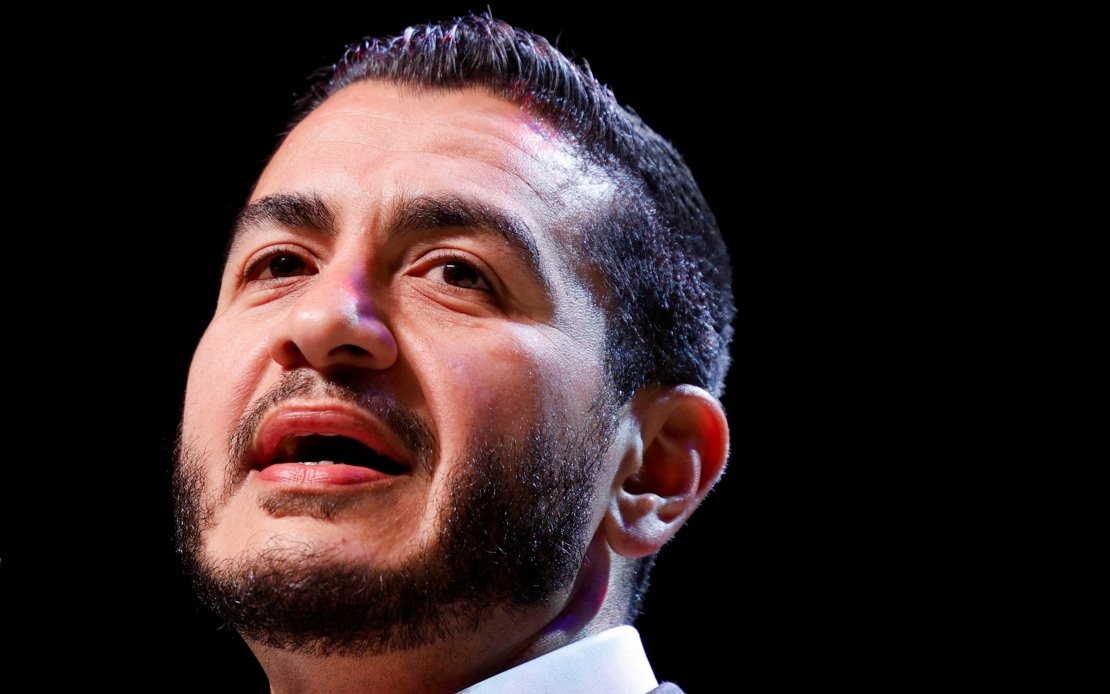
Abdul El-Sayed has established a marginal lead in Michigan's Democratic primary for the United States Senate seat, according to early tallies released on Wednesday as voters across Kansas, Michigan, Missouri, Virginia and Washington selected their preferred candidates for pivotal races ahead of November's nationwide midterm elections. With more than nine in ten ballots counted, El-Sayed held a commanding position over his principal rival, US Representative Haley Stevens, though the Associated Press had refrained from officially declaring the race concluded at the time of reporting.
The Michigan Senate Democratic primary has emerged as a striking showcase of the ideological fractures within the party's electoral coalition. El-Sayed, who champions progressive causes, secured backing from some of the party's most prominent left-leaning figures, including Vermont Senator Bernie Sanders and House Representatives Alexandria Ocasio-Cortez and Rashida Tlaib. Stevens, by contrast, received the endorsement of the Democratic establishment, including the incumbent Senator Gary Peters, whose retirement created the vacancy these candidates are seeking to fill. This division reflects deeper tensions within the Democratic Party regarding its direction and priorities heading into an election year that could reshape Congress.
The contest has crystallised around US foreign policy toward the Middle East, particularly America's support for Israel's military operations in Gaza. This issue proved particularly potent among Michigan's substantial Arab American voter population and progressive activists, providing a natural advantage to El-Sayed, whose messaging resonated with constituencies concerned about civilian casualties and humanitarian consequences. The winner of the Democratic primary will ultimately face Republican Mike Rogers in the general election, as Rogers advanced unopposed through his party's nominating process, securing the Republican nomination without competitive challenge.
Michigan's congressional races produced mixed results across the state's districts. In the 1st Congressional District, Republican Jack Bergman secured his party's nomination with three-quarters of the vote, demonstrating strong support among primary voters against two competing candidates. Similarly, Republican Bill Huizenga won renomination in the 4th District with overwhelming support, capturing 85 per cent of ballots in a contest against Philip Tanis. Huizenga's general election opponent emerged from the Democratic side, where state Senator Sean McCann defeated Diop Harris II by a comfortable margin of roughly two to one.
Kansas Republicans delivered a decisive endorsement to incumbent Senator Roger Marshall, who defeated challenger Pond Naramore with nearly 80 per cent of votes across nearly all precincts. Marshall will confront Adam Hamilton, who navigated a crowded Democratic field to secure his party's nomination. The Kansas gubernatorial race presents a fascinating matchup between Democrat Cindy Holscher, who prevailed in her party's primary against two rivals, and Republican Ty Masterson, who won a competitive Republican primary with explicit endorsement from President Donald Trump. This contest will determine the successor to Democratic Governor Laura Kelly, whose tenure ends due to constitutional term limits.
Missouri's primary elections unfolded against the backdrop of aggressive Republican redistricting. State lawmakers, aligned with Trump's political interests, adopted a congressional map explicitly designed to strengthen Republican prospects of maintaining House control in the coming election cycle. Within Missouri's 1st Congressional District, Democratic Representative Wesley Bell successfully defended his seat by defeating four challengers in the primary, notably including former Representative Cori Bush, whose progressive credentials and national prominence might have suggested vulnerability but failed to translate into electoral success. Bell now advances to face Republican Paul Berry III, who defeated Andrew Jones in the Republican primary contest.
Virginia's primary contests produced several notable outcomes across the state's competitive districts. In the Senate race, Republican Bert Mizusawa secured his party's nomination unopposed and will challenge incumbent Democratic Senator Mark Warner, who ran without opposition in his own primary, reflecting Democratic confidence in his reelection prospects. Shannon Taylor emerged victorious in the 1st Congressional District Democratic primary with just over half the votes cast, positioning herself to challenge Republican Representative Rob Wittman, who advanced without primary competition and pursues an unprecedented tenth full term in the House. Former Democratic Representative Elaine Luria decisively won the 2nd District Democratic nomination with more than four in five votes, setting up a rematch against Republican Representative Jen Kiggans.
In Virginia's 7th Congressional District, Republican Doug Ollivant secured his party's nomination with approximately 56 per cent of the primary vote, qualifying to face first-term Democratic Representative Eugene Vindman, who had no primary challenger. The competitive nature of these Virginia contests underscores the state's importance as a closely contested political battleground where control of congressional representation remains genuinely uncertain heading into the general election campaign.
Washington's primary system, which permits candidates from all parties to compete simultaneously on a single ballot, produced several advancing candidates. In the 1st Congressional District, Democratic Representative Suzan DelBene and Republican Mary Silva both secured sufficient support to advance directly to November's general election contest. Democratic Representative Marie Gluesenkamp Perez qualified for the general election and will face Republican John Braun, who received explicit campaign support from President Trump. Emily Randall, representing the state's 6th District, advanced as the Democratic candidate and will encounter Republican Teresa Fox in the November matchup.
These contests across five states collectively signal ongoing Democratic vulnerability in numerous districts and the persistence of internal party divisions regarding foreign policy, economic priorities and the party's ideological orientation. The strength of progressive candidates like El-Sayed in Michigan, alongside the resilience of establishment-backed nominees elsewhere, suggests the Democratic Party remains internally contested heading into the midterm elections. Meanwhile, Republican support for Trump-endorsed candidates and strategic redistricting demonstrate the opposition party's organisational cohesion and determination to maximise electoral advantages through legal but controversial maps and candidate selection processes.

