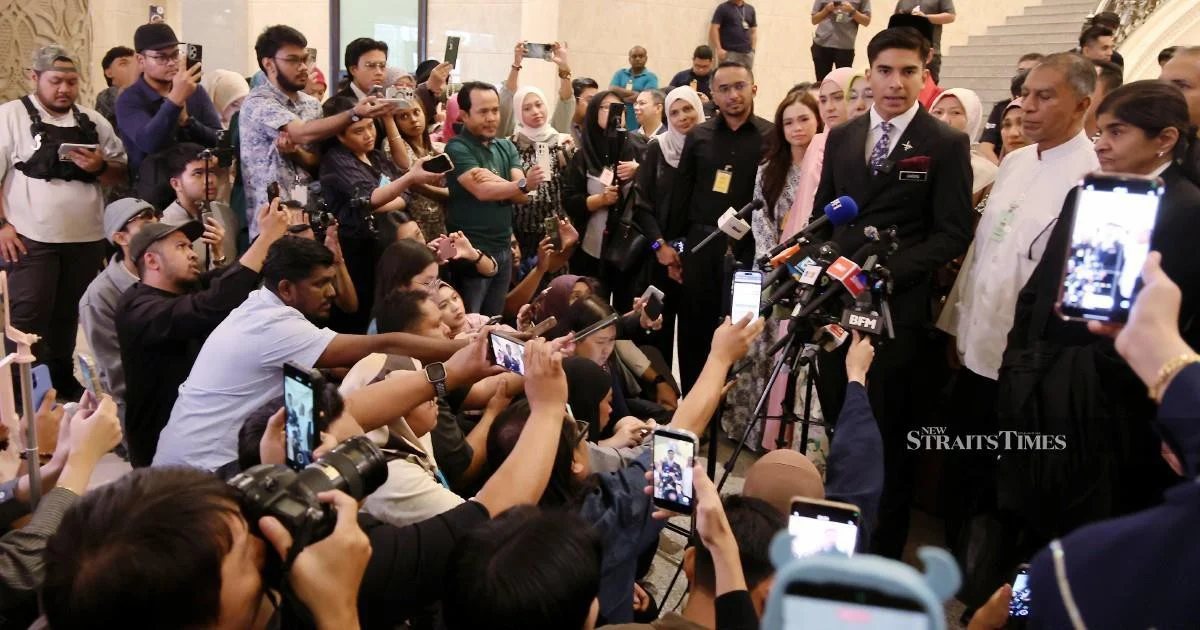
The prosecution has formally acknowledged the Federal Court's decision to uphold the acquittal and discharge of Muar member of parliament Syed Saddiq Syed Abdul Rahman in his corruption case, marking the conclusion of a legal battle that has shadowed the politician's career since 2021. The statement reflects the prosecution's acceptance of the country's apex court's judgment, bringing closure to a matter that had extended through multiple levels of the judiciary.
Syed Saddiq, who leads the Malaysian United Democratic Alliance (MUDA) political party, faced charges related to alleged misappropriation of funds in connection with his former role as Youth and Sports Minister. The case had drawn significant public and political attention, given his prominence as one of Malaysia's younger generation of political figures and his efforts to build a new political movement focused on reform and youth engagement. The legal proceedings had consumed considerable resources and time within the judicial system.
The Federal Court's affirmation of his acquittal represents the final verdict in the matter, as the apex court is Malaysia's highest judicial authority with no further avenue for appeal. This conclusive ruling provides clarity after years of uncertainty, allowing the politician to move forward without the legal cloud that has persisted. The prosecution's public acknowledgment of the court's decision underscores the finality of the judgment and demonstrates the government's respect for judicial independence, even when the outcome contradicts its position.
For the broader Malaysian political landscape, the ruling carries implications regarding the intersection of law enforcement and politics. Cases involving high-profile political figures routinely invite scrutiny regarding whether prosecutions serve justice or respond to other political considerations. Syed Saddiq's acquittal by the higher courts suggests that the evidence presented by prosecutors was insufficient to meet the threshold required for conviction, a determination that multiple levels of judicial review have consistently validated.
The case also reflects the complexities surrounding accountability within Malaysia's political sphere. Youth and Sports Ministry budgets involve substantial allocations, and oversight of these funds requires rigorous mechanisms. However, the courts' consistent ruling in Syed Saddiq's favour indicates that the specific allegations against him did not withstand legal scrutiny, a distinction that matters when assessing the foundations of such prosecutions.
For MUDA and Syed Saddiq's political future, the acquittal removes a significant obstacle to his leadership and party development. MUDA has positioned itself as an alternative political force, attracting voters dissatisfied with established parties and seeking younger leadership. The legal vindication may strengthen his position within the party and potentially enhance MUDA's electoral credibility by resolving questions about the party leader's legal standing.
The prosecution's acceptance of the decision also signals institutional maturity within Malaysia's legal apparatus. While prosecutors may have maintained confidence in their case, accepting unfavourable verdicts from higher courts without seeking alternative strategies demonstrates respect for judicial hierarchy and the rule of law. This approach contrasts sharply with scenarios in some jurisdictions where governments persistently challenge court decisions through relentless prosecutions or procedural maneuvers.
From a Southeast Asian perspective, Malaysia's handling of this high-profile case involving a political figure offers insights into the region's judicial independence. While concerns about selective prosecution have surfaced in Malaysian legal discourse, the consistent affirmation of Syed Saddiq's acquittal across multiple court levels suggests that Malaysian courts can reach verdicts independent of prosecutorial or political pressure, at least in visible cases subject to public scrutiny.
The conclusion of this protracted legal matter provides relief not only for Syed Saddiq but also for the political ecosystem, which faces numerous substantive challenges requiring focus and energy. Electoral competition, economic management, and policy development demand political leaders' attention, and extended legal battles can distract from these responsibilities. With the legal proceedings definitively concluded, political actors can redirect their efforts toward governance and electoral strategy.
For prospective political appointees and younger figures entering public service, the case serves as a cautionary reminder about fund management and transparency requirements. While Syed Saddiq's acquittal vindicates his conduct according to the courts, the original allegations highlighted the importance of meticulous financial administration and documentation in ministerial roles, lessons relevant across Malaysia's public sector.
Looking ahead, the full implications of this ruling may extend beyond the individual case. It may influence how prosecutorial authorities approach cases involving political figures, establishing precedent regarding the calibre of evidence required and the evidentiary standards applied to corruption allegations. Prosecutors will likely reflect on the case when evaluating future matters involving public officials, potentially shaping investigative and prosecutorial strategies.
The judicial system's resolution of the Syed Saddiq case demonstrates that even in politically sensitive matters, Malaysian courts can deliver determinations based on law and evidence. The prosecution's acceptance of this outcome, despite its disagreement with the verdict, reflects institutional confidence in the judicial process and commitment to the rule of law, foundational principles that sustain democratic governance and public confidence in legal institutions.

