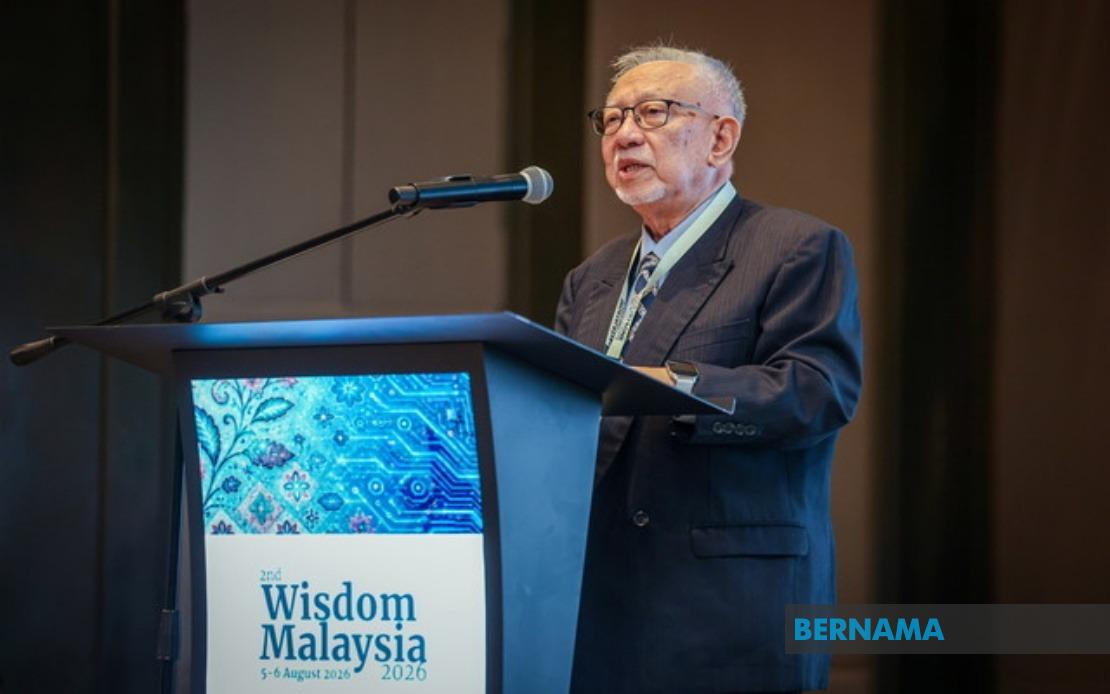
The integrity of any nation's fight against graft depends fundamentally on whether its institutions actively shield those brave enough to expose wrongdoing, according to Datuk Syed Ahmad Idid Syed Abdullah, a former High Court Judge of Malaya and Borneo. Speaking at the 2nd Wisdom Malaysia Conference 2026 in Kuala Lumpur, the retired jurist articulated a principle that resonates far beyond Malaysia's borders: systematic intimidation of whistleblowers inevitably corrodes institutional accountability and opens the door to increasingly brazen financial crimes.
The former judge's intervention into this contentious debate arrives at a pivotal moment for Malaysian governance. When officials who witness corrupt practices face retaliation, suspension, or social ostracism rather than recognition and protection, honest public servants retreat into silence. This creates a perverse dynamic where knowledge of wrongdoing becomes a liability rather than a civic responsibility. Syed Ahmad Idid stressed that organisations operating under such conditions become breeding grounds for undetected malfeasance, as potential witnesses calculate the personal cost of speaking up against the backdrop of institutional indifference or hostility.
The distinction he drew between whistleblowing and slander carries particular weight in contexts where those accused of corruption sometimes marshal legal threats or character assassination campaigns against their accusers. Whistleblowing, in the former judge's formulation, represents a deliberate act of institutional hygiene—a mechanism through which organisations can identify and remedy systemic problems before they metastasize into catastrophic scandals. Dismissing this as mere gossip or personal grievance fundamentally misunderstands the nature of accountability in complex bureaucratic systems where information asymmetries favour those in positions of power.
Beyond the moral imperative to foster courageous integrity lies a compelling economic argument. Syed Ahmad Idid articulated a vision of what becomes possible when corrupted assets are successfully recovered and redirected toward productive public goods. The financial quantum that leaks through corrupt channels across Southeast Asia annually dwarfs many national development budgets, yet remains largely invisible in official accounting. Were those illicit flows captured and legitimately deployed, the transformative potential would be staggering—not merely as abstract moral victory but as concrete capacity for infrastructure development, educational advancement, and human capital investment.
The former judge's proposal that recovered anti-corruption proceeds could fund two general hospitals per state represents more than aspirational accounting. Malaysia's healthcare system, like those across the region, faces persistent capacity constraints that directly impact service quality and accessibility for ordinary Malaysians. Similarly, his suggestion that funds could establish 20 to 50 high-quality schools nationwide addresses structural educational deficits that have become increasingly urgent as global competition for skilled talent intensifies. The calculation implicitly recognises that corruption imposes a double burden: not only does it misappropriate public resources, but it simultaneously starves legitimate institutions of investment they desperately require.
The connection between educational quality and broader societal outcomes extends to domains most citizens would not automatically associate with schooling. An education system elevated to world-class standards produces not only intellectually capable professionals but also security personnel with enhanced analytical capacity and discipline, as well as competitive athletes capable of representing national honour on international stages. This holistic vision of corruption's opportunity cost—its theft not merely of money but of potential human flourishing—reflects sophisticated understanding of how governance failures ripple through entire social ecosystems.
Syed Ahmad Idid's call for society to resist warped or lenient interpretations of corrupt conduct addresses a particularly insidious phenomenon observable across the region: the gradual normalisation of wrongdoing through rhetorical minimisation and definitional drift. When officials describe corrupt transactions as standard practice, or when judges develop jurisprudential frameworks that effectively decriminalise certain forms of embezzlement, society collectively absorbs a message that integrity operates on a spectrum rather than as a fundamental principle. The former judge's insistence on unwavering application of justice and integrity principles constitutes a direct challenge to this erosion.
The venue for these remarks—the 2nd Wisdom Malaysia Conference 2026, organised by Kerjaya One PLT as a platform for senior leaders to disseminate experience and insight—suggests an effort to embed anti-corruption thinking within elite consciousness. Current and former industry leaders' engagement with these principles matters because private sector integrity frequently mirrors and sometimes influences public sector ethics. When business leaders internalise that whistleblowing represents justice rather than disloyalty, that protection of integrity serves organisational health rather than undermining hierarchical authority, the cultural foundations for systemic reform strengthen considerably.
For Malaysian readers and policymakers contemplating institutional reform, Syed Ahmad Idid's intervention highlights a frequently overlooked prerequisite for meaningful anti-corruption progress: the psychological and institutional preconditions that enable honest people to act on their conscience without catastrophic personal consequence. Legislation criminalising corrupt conduct, investigative agencies with technical capacity, and judicial proceedings that enforce accountability all matter profoundly. Yet these formal mechanisms function effectively only when surrounded by a protective ecosystem that ensures potential witnesses perceive speaking up as morally permissible and personally survivable.
The regional context amplifies these considerations. Across Southeast Asia, countries continue wrestling with the relationship between governance legitimacy and corruption control. Nations that successfully demonstrate systematic commitment to protecting and validating whistleblowers develop institutional credibility that extends far beyond any single scandal or prosecution. Conversely, countries where accusations against whistleblowers are weaponised or where inconvenient truths are systematically suppressed experience progressive loss of public confidence in governance institutions. The trajectory proves difficult to reverse once initiated.
Fundamentally, Syed Ahmad Idid's argument rests on a recognition that institutional health represents a public good whose value extends infinitely beyond its immediate financial quantification. A public service characterised by genuine integrity, where capable people remain engaged precisely because honest conduct is recognised and valued, constitutes an asset of incalculable worth. The financial savings from prevented corruption matter, certainly, but pale beside the broader societal capacity to solve problems, innovate, and allocate resources according to rational prioritisation rather than patronage networks. For Malaysia and the broader region, cultivating this capacity represents perhaps the most consequential investment in national development possible.

