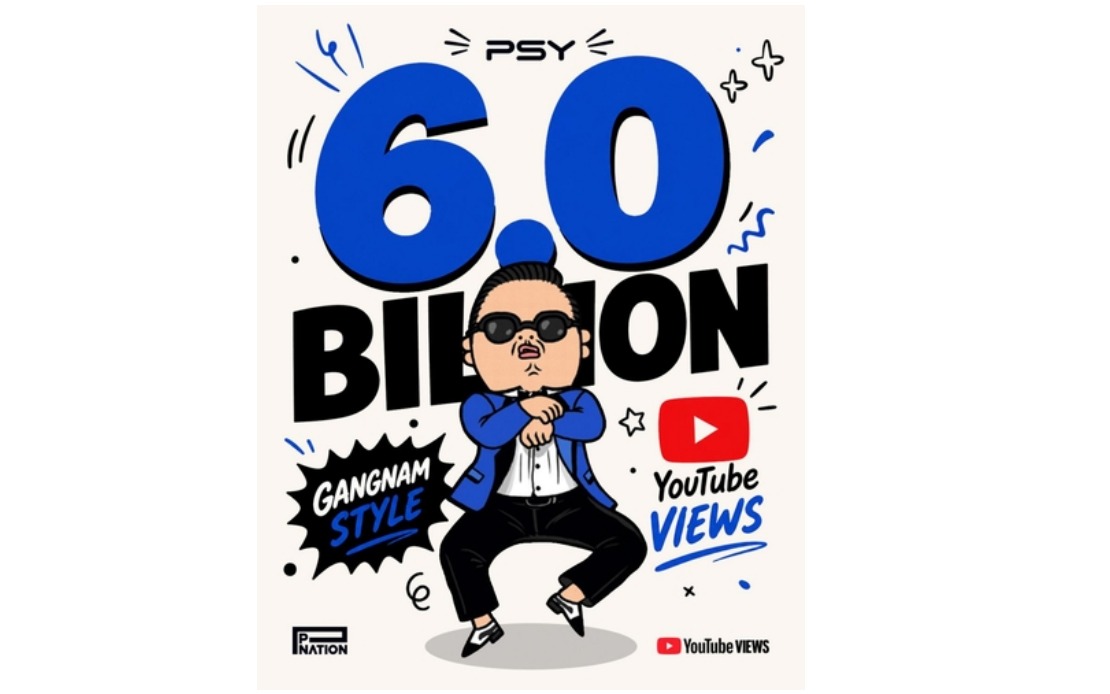
South Korean megastar Psy has achieved another historic milestone as his cultural phenomenon "Gangnam Style" surpassed 6 billion views on YouTube, reinforcing its unmatched dominance in the global K-pop landscape. The music video reached this unprecedented threshold on Friday, according to P Nation, the artist's agency, marking a remarkable 14-year journey since the track's debut in July 2012. The achievement underscores not merely a numerical milestone but a testament to the song's extraordinary staying power in an era of rapidly shifting entertainment tastes.
The leap from 5 billion to 6 billion views, accomplished in roughly seven months following the December 2023 milestone, demonstrates accelerating interest in the track rather than declining engagement. This trajectory suggests that "Gangnam Style" has transcended the fate of most viral phenomena, which typically experience rapid burnout. Instead, the video continues to attract viewers across diverse age groups and geographic regions, indicating its evolution from fleeting internet sensation to a permanent fixture of global pop culture. The numbers gain particular significance when contextualized against the fragmented attention economy of contemporary streaming platforms, where competition for viewership is fierce and unforgiving.
P Nation's official statement emphasized that surpassing this milestone represents far more than a statistical achievement within K-pop's annals. The agency articulated that the milestone reflects "the enduring power of content that continues to be enjoyed across countries and generations," acknowledging the video's transcultural resonance. This framing reveals an important reality about "Gangnam Style"—its appeal extends beyond dedicated K-pop enthusiasts to encompass casual viewers, nostalgia-seeking audiences, and newcomers discovering the phenomenon for the first time. The video's ability to maintain relevance across generational boundaries speaks to a universal quality in its composition and presentation.
Psy himself marked the achievement during a concert performance on Sunday, taking the opportunity to express gratitude to his global fanbase for their sustained support. Beyond ceremonial acknowledgment, the artist announced plans to upload new content to YouTube, signaling his intention to maintain engagement with audiences through the platform that catalyzed his international breakthrough. This gesture demonstrates commercial acumen—leveraging the milestone to refresh audience interest while simultaneously reinforcing his presence in the digital ecosystem where "Gangnam Style" originally flourished.
The song's original impact in 2012 cannot be overstated in the context of K-pop's global trajectory. "Gangnam Style" achieved what few Asian music exports had previously accomplished: it penetrated Western mainstream charts and consciousness simultaneously. The track peaked at number two on Billboard's Hot 100 chart, a remarkable achievement for a non-English language song that relied heavily on visual presentation and infectious choreography rather than lyrical accessibility. This chart performance opened pathways for subsequent Korean artists, establishing the viability of K-pop in Western markets and fundamentally reshaping global music industry dynamics.
The song's satirical critique of Seoul's Gangnam district—an enclave synonymous with affluence, luxury consumption, and social aspiration—proved unexpectedly universal in resonance. Psy's comedic deconstruction of conspicuous consumption transcended Korean-specific context, touching upon recognizable social commentary that audiences worldwide could appreciate regardless of linguistic proficiency. The lyrics and music video channeled local observation into globally comprehensible satire, a feat that explained much of the song's cross-cultural penetration. International audiences embraced the track not merely as dance music but as a tongue-in-cheek examination of wealth and status anxiety applicable to their own societies.
The signature horse-riding dance movement became perhaps the most significant cultural export embedded within the video. This distinctive choreography, simple enough for casual performers yet distinctive enough to be instantly recognizable, spawned countless cover versions, flash mobs, and amateur recreations globally. The dance democratized participation in the "Gangnam Style" phenomenon, enabling people without professional training or musical connections to engage creatively with the content. This accessibility component proved crucial to the video's viral expansion and sustained relevance, as amateur content creators continuously refreshed audience interest through novel interpretations and contextual variations.
"Gangnam Style" holds the additional distinction of being the first K-pop music video to achieve 1 billion YouTube views, a landmark that carried historical importance for the broader industry. This initial breakthrough proved psychologically and commercially significant, demonstrating to major Korean entertainment companies that international audiences possessed genuine appetite for Korean-language content. The success catalyzed substantial industry investment in English-language collaboration and international promotion strategies, ultimately contributing to the contemporary dominance of K-pop in global streaming markets. What began as a single artist's unexpected triumph evolved into a template for industry-wide internationalization.
The 6 billion view count places "Gangnam Style" in exclusive company on YouTube's all-time viewership rankings. Comparisons with other mega-viral videos reveal the track's enduring appeal relative to contemporary competitors. Many music videos that achieved rapid viral ascent during similar periods have since experienced relative neglect, their novelty exhausted and cultural relevance diminished. "Gangnam Style" defies this pattern through a combination of consistent search interest, nostalgic rewatching, educational discovery by younger audiences unfamiliar with early-2010s pop culture, and continued integration into dance classes, weddings, and celebrations worldwide.
For Malaysian and Southeast Asian audiences, the milestone carries particular relevance given the region's substantial K-pop fandom and the genre's deepening cultural penetration across the area. "Gangnam Style" remains a touchstone moment in many regional viewers' K-pop journey, often their initial exposure to Korean popular music before subsequent consumption of contemporary artists. The song's continued viewership growth suggests ongoing relevance across ASEAN markets, where Korean entertainment maintains robust commercial and cultural significance. The video's multilingual appeal and satirical content transcend regional boundaries, resonating with Southeast Asian audiences navigating similar urban development patterns and social dynamics as those Psy originally satirized.
The achievement also illuminates broader patterns in digital media consumption and the YouTube platform's evolution. The 6 billion figure accumulated across 14 years represents not a concentrated viewership surge but sustained, distributed engagement across two decades. YouTube's transition from novelty video platform to essential entertainment infrastructure directly enabled "Gangnam Style's" longevity, ensuring consistent discoverability and accessibility regardless of when potential viewers encountered the content. The platform's algorithmic promotion systems, recommendation engines, and accessibility across devices worldwide have facilitated viewing practices that maintain the video's prominence without requiring active promotion expenditure.
Looking forward, "Gangnam Style's" position as K-pop's most-watched music video appears virtually unassailable given the specific conditions that produced its success. While contemporary K-pop artists command substantial viewership numbers, few possess the combination of cross-generational appeal, satirical depth, distinctive choreography, and cultural moment timing that characterized Psy's breakthrough. The milestone stands as a testament not merely to individual artistic achievement but to the transformative moment when Korean popular culture achieved genuine global penetration, fundamentally altering international entertainment hierarchies and establishing frameworks within which modern K-pop's dominance became possible.

