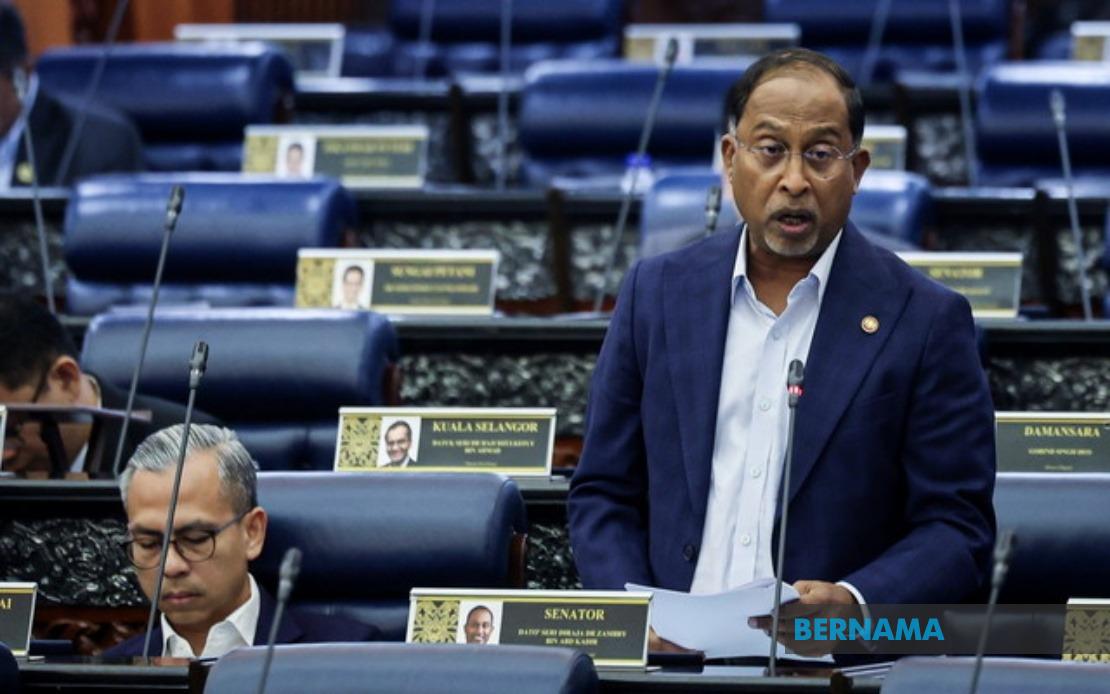
Malaysia's National Higher Education Fund Corporation (PTPTN) has recovered RM197 million in outstanding loan repayments through authorised debt negotiation agencies (APH) between July 2025 and May this year, according to Higher Education Minister Datuk Seri Dr Zambry Abdul Kadir. The recovery figure represents a noteworthy 6.4 per cent improvement compared to collections during the equivalent period in the previous financial year, signalling that the structured engagement approach adopted by these third-party agencies is yielding tangible results in encouraging defaulting borrowers to resume payments on their educational loans.
The expanding partnership between PTPTN and APH reflects a strategic shift in how the government tackles the mounting challenge of loan defaults across Malaysia's higher education system. By May this year, approximately 103,418 borrower accounts carrying accumulated arrears exceeding RM3 billion had been transferred to APH for recovery efforts. This concentration of delinquent accounts underscores the scale of the challenge facing the fund, which supports hundreds of thousands of tertiary education students across the nation. The involvement of negotiation agencies represents one of the few available mechanisms for pursuing recovery from borrowers whose non-payment stretches back years.
Crucially, the transfer of accounts to APH occurs only after PTPTN has exhausted its own internal collection mechanisms and determined that arrears have accumulated for more than 120 months—a decade or longer. Additionally, borrowers must have had a legal judgment recorded against them before their cases are escalated to debt negotiation agencies. This graduated approach ensures that only the most problematic accounts, those representing genuine insolvency rather than temporary difficulty, are handed over for external management. The stringent criteria reflect an acknowledgement that not all defaults stem from unwillingness to pay, and that many borrowers require differentiated handling.
Dr Zambry emphasised during parliamentary proceedings that appointing APH should not be construed as a punitive measure designed to harass or coerce borrowers into immediate payment. Rather, the minister characterised the mechanism as a carefully targeted tool deployed against accounts with extremely protracted arrears that have already navigated the legal process without resolution. This framing is significant for public perception, particularly given the sensitivity surrounding student loan defaults in Malaysia, where many borrowers cite genuine hardship, unemployment, or underemployment as reasons for non-payment. The government's willingness to distinguish between different categories of defaulters demonstrates a more nuanced understanding of the underlying causes of loan delinquency.
A critical assurance provided by the minister is that even after accounts reach APH, negotiation channels remain perpetually open. Borrowers whose accounts have been transferred to debt negotiation agencies retain the capacity to appeal their cases and engage directly with PTPTN legal officers to explore resolution pathways aligned with their genuine financial capacity. This commitment to maintaining dialogue rather than pursuing aggressive enforcement reflects international best practices in student loan recovery, where sustainable repayment arrangements typically yield better long-term outcomes than punitive collection tactics. The availability of appeal mechanisms also provides a safety valve for borrowers whose circumstances have genuinely changed since their defaults began.
The minister further highlighted that PTPTN undertakes individualized assessments of each legal case with fairness and prudence as guiding principles. When evaluating a borrower's capacity to repay, PTPTN considers multiple factors including current income levels, existing financial obligations, and the broader socio-economic circumstances of the individual. This holistic approach acknowledges that financial distress is rarely attributable to a single cause and that sustainable recovery solutions must account for borrowers' actual circumstances rather than imposing standardised repayment schedules. The emphasis on equitable treatment signals an institutional commitment to distinguishing between those truly unable to pay and those capable of meeting revised obligations.
The underlying policy objective, according to Dr Zambry, is to ensure that borrowers genuinely requiring assistance remain integrated within the repayment system rather than being permanently severed from it. This philosophy contrasts with enforcement-only approaches that can paradoxically reduce overall recovery by pushing defaulters further into the informal economy or out of contact with lenders entirely. By maintaining pathways for dialogue and compromise, PTPTN seeks to recover whatever payments are feasible while preserving borrowers' dignity and long-term financial rehabilitation. The 6.4 per cent improvement in collections through APH suggests this balanced approach is producing measurable results.
For Malaysian borrowers struggling with PTPTN obligations, the clarification of existing safeguards has immediate practical significance. Individuals with defaulted loans should recognise that transfer to APH, while serious, does not foreclose all options. The availability of appeals to PTPTN legal officers, coupled with the fund's stated commitment to assessing cases fairly based on genuine financial capacity, means that borrowers in financial distress have legitimate recourse mechanisms beyond simple payment or legal enforcement. Engaging proactively with either PTPTN or APH representatives remains preferable to prolonged silence, which typically results in further deterioration of terms and accumulation of additional costs.
The recovery programme also carries broader implications for Malaysia's higher education financing system. With over RM3 billion in arrears concentrated among roughly 103,000 borrower accounts, the default crisis represents a significant strain on PTPTN's ability to disburse new loans to current and prospective students. Every ringgit recovered through APH theoretically becomes available for new educational lending, potentially expanding access to tertiary education for economically disadvantaged Malaysians. However, the concentration of defaults also suggests systemic challenges in labour market outcomes for university graduates, employment stability, or the alignment between course costs and graduate earning potential. Addressing defaults at source requires parallel reforms in higher education pricing, graduate employment support, and income-contingent repayment frameworks.
Regionally, Malaysia's experience with PTPTN defaults mirrors similar challenges across Southeast Asia, where many countries have expanded university access faster than graduate employment opportunities have grown. Countries like the Philippines, Indonesia, and Thailand face comparable pressures in student loan systems as economic growth struggles to keep pace with credential inflation. The Malaysian government's measured approach to enforcement, emphasising negotiation and assessment of genuine capacity, offers a model worth studying by neighbouring countries grappling with analogous policy dilemmas. The relative success of APH in achieving a 6.4 per cent year-on-year improvement suggests that structured negotiation, when combined with legal clarity about eligibility for transfer, can yield meaningful results without resorting to overly coercive mechanisms.
Looking forward, the sustainability of PTPTN depends not merely on improved collection rates but on fundamental reforms addressing the root causes of default. These might include income-contingent repayment schemes that adjust obligations based on graduate earnings, enhanced financial literacy programmes for borrowers, improved tracking of student outcomes post-graduation, and closer alignment between course costs and realistic labour market returns. The current emphasis on collecting arrears from borrowers who defaulted years ago, while necessary for immediate liquidity, ultimately represents a reactive response to systemic imbalances. A proactive strategy would seek to prevent future defaults by ensuring that new borrowers enter the system with realistic expectations and genuine capacity to repay.

