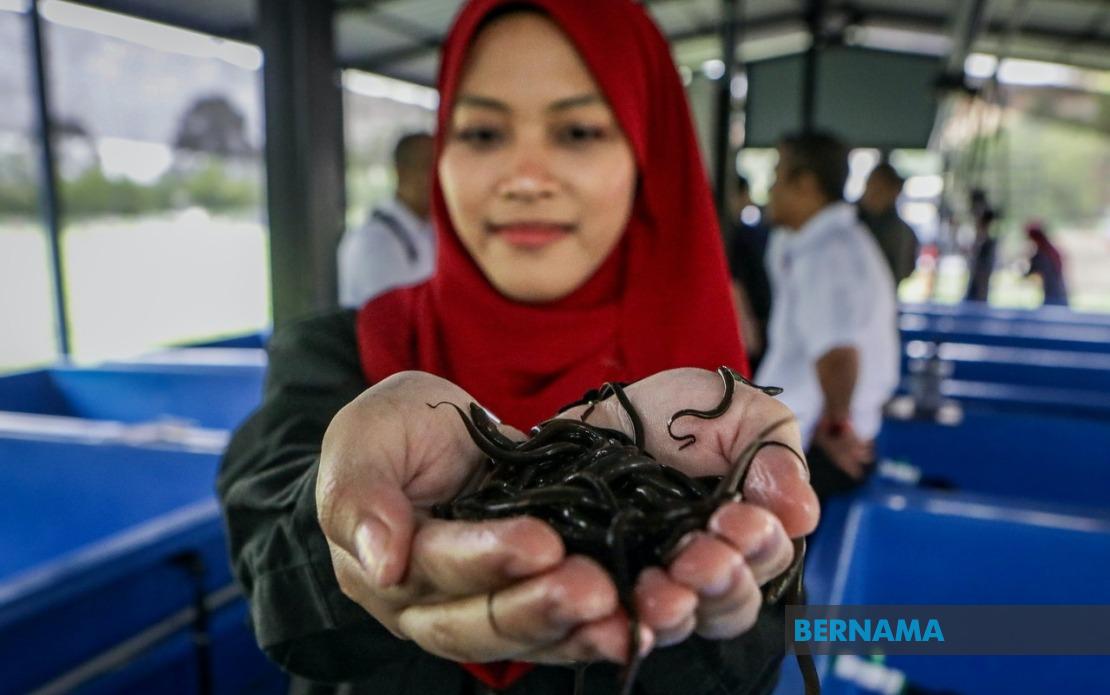
Vocational training institutions across Malaysia are increasingly stepping beyond classroom walls to become engines of rural economic development, as demonstrated by Politeknik Tuanku Syed Sirajuddin's ambitious foray into commercial eel farming in Arau. The Projek Penternakan Belut Komersial Geran Sejati MADANI, officially launched on July 1, represents a significant shift in how technical and vocational education can directly translate into community empowerment and income generation for disadvantaged populations.
The RM500,000 initiative, coordinated by PTSS in collaboration with the Prime Minister's Department's Implementation Coordination Unit (ICU JPM), targets five distinct communities in Perlis with the dual objective of skills development and immediate economic benefit. Each participating community will receive 15,000 eel seeds, the foundational resource required to establish viable aquaculture operations. This hands-on approach differs markedly from traditional educational models, as it enables students to gain practical experience while simultaneously delivering tangible value to their surrounding communities—a pedagogical approach that institutions across Southeast Asia are beginning to recognise as essential for relevant skills training.
PTSS director Khairul Anuar Ishak emphasised that the project exemplifies how TVET institutions function as more than graduate-producing facilities. Instead, they serve as critical intermediaries capable of transferring technical knowledge and modern farming technology to populations that might otherwise lack access to such expertise. The institutional framework allows the polytechnic to assume a comprehensive management role throughout a six-month implementation period, overseeing everything from infrastructure development and equipment procurement to seed sourcing, hands-on training delivery, and financial management protocols. Only after this intensive capacity-building phase will operational control transfer entirely to the communities themselves, ensuring local ownership and sustainability.
The financial projections underpinning this enterprise demonstrate realistic revenue potential for participating households. Industry estimates suggest that each community will harvest approximately 5,000 kilogrammes of eels following a standard five to six-month growth cycle, contingent upon proper husbandry practices and environmental management. These volumes will be marketed through established contract farming arrangements, eliminating the sales uncertainty that often deters smallholder farmers from entering new ventures. For rural Perlis residents seeking alternative income streams, eel farming represents a relatively capital-efficient aquaculture option compared to other aquatic species, with established supply chains and growing domestic demand.
The project's design philosophy reflects a broader recognition within Malaysian policymaking circles that TVET institutions must forge stronger linkages with industry and local government to address persistent employment gaps and rural stagnation. By positioning Politeknik Tuanku Syed Sirajuddin as a central actor in the value chain—rather than merely providing classroom instruction—the initiative demonstrates how educational institutions can leverage their technical expertise as a public good. This collaborative approach, encompassing educational bodies, government agencies, private enterprises, and community representatives, creates a multidirectional flow of knowledge and resources that strengthens the regional economy systematically.
The launch event, overseen by Azlan Abdul Samat, director of the Perlis Federal Development Office under ICU JPM, underscores the project's integration within the government's broader economic diversification agenda for the northern states. Perlis, historically reliant on traditional agriculture and light manufacturing, faces demographic challenges as younger residents migrate to urban centres seeking better-remunerated employment. By fostering knowledge-intensive agricultural enterprises managed through institutional support, initiatives like this eel farming project provide compelling reasons for young people to remain in or return to their home communities, potentially reversing patterns of rural depopulation.
The contractual farming methodology embedded within the project structure merits particular attention, as it addresses one of the principal barriers preventing smallholder farmers from adopting new production systems. Guaranteed marketing channels and predetermined pricing reduce the commercial risk associated with transitioning to unfamiliar crops or livestock. For eel farmers in particular, this arrangement ensures that their harvest will be absorbed by established buyers rather than requiring them to develop direct market linkages themselves—a significant operational advantage for producers new to the species. The model thus balances entrepreneurial autonomy with commercial security, creating conditions favourable to success.
From a broader Malaysian development perspective, the PTSS initiative exemplifies how TVET education can function as a practical instrument of inclusive growth policies outlined in national development frameworks. Rather than perpetuating a dichotomy between academic and vocational pathways, the project demonstrates that technical institutes can synthesise classroom learning, hands-on skill acquisition, and real-world enterprise development within a single coherent programme. This integrated approach addresses longstanding critiques that vocational education remains disconnected from labour market realities and community needs. Students gain currency-relevant skills while their surrounding communities benefit immediately from increased household income and local economic activity.
The two-phased structure of the project—intensive institutional management followed by community self-management—incorporates lessons from previous rural development initiatives regarding sustainability challenges. By ensuring that communities gradually assume responsibility rather than abruptly inheriting operationally complex enterprises, PTSS increases the likelihood of long-term viability. Knowledge transfer occurs organically through daily interaction and problem-solving rather than through didactic training alone. This pedagogical sequencing reflects international best practice in technology transfer to smallholder producers in developing economies.
Looking forward, the PTSS eel farming project may serve as a template for other vocational institutions seeking to expand their developmental impact. As Malaysia confronts persistent regional income disparities and seeks to maximise returns on educational investment, replicating models that generate immediate community benefit while simultaneously strengthening student learning outcomes becomes increasingly important. The programme demonstrates that technical institutions possess untapped capacity to function as economic development actors, particularly in regions where alternative growth engines remain limited. Success in Perlis could catalyse similar initiatives throughout the northern and eastern regions, gradually building a more distributed and resilient economic base across rural Malaysia.

