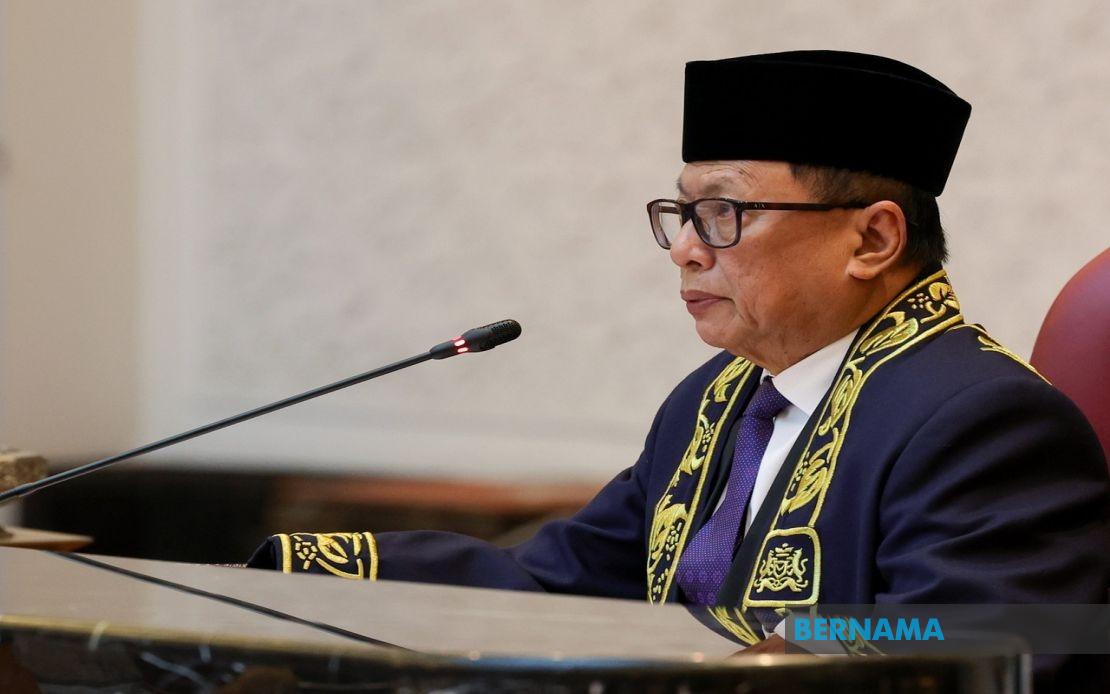
Datuk Dr Mohd Puad Zarkashi, a long-serving member of UMNO's Supreme Council and incumbent Rengit state assemblyman, formally resigned from the party on June 25, signalling growing tensions within Johor UMNO's leadership hierarchy. The veteran politician's departure marks a significant fracture in a party that has governed Johor for decades and remains critical to UMNO's federal strength. His decision to exit rather than face potential expulsion underscores deteriorating internal dynamics, particularly regarding how the party selects candidates and allocates resources at the state level.
In announcing his withdrawal through a Facebook statement, Mohd Puad framed his decision as a deliberate choice to preserve his political autonomy and speak candidly about internal party matters. He emphasized that he was leaving voluntarily to avoid the stigma of expulsion and to create space for critical commentary without accusations of disloyalty. This calculated framing suggests the resignation was driven by substantive disagreements rather than superficial disputes, hinting at deeper fractures within the Johor UMNO machinery that have festered beneath the surface.
The crux of Mohd Puad's criticism centred on Johor Chief Minister Onn Hafiz Soppian, whom he characterized as a "pak turut"—a Malay colloquialism for a yes-man or puppet subordinate. By extension, Mohd Puad argued that Johor UMNO itself had become a "tethered puppet," stripped of real authority and beholden to external pressures. Such language implies that decision-making in the state party branch has been compromised, with leaders unable to exercise genuine discretion or defend party interests independently. For Malaysian political observers, this critique suggests dysfunction in party governance structures that should enable regional leaders to function with reasonable autonomy within party frameworks.
Mohd Puad's claims regarding irregularities in Barisan Nasional candidate selection for the Johor state election carry particular weight given his position and track record. Candidate selection processes in Malaysian political parties are frequently contentious, as they determine who gains access to electoral resources and state-level patronage networks. If the selection process lacks transparency or fairness, it undermines party cohesion and demoralizes members who feel sidelined. For Johor UMNO, a state party historically known for its organizational strength, such allegations raise questions about whether centralized authority has overridden consultation mechanisms that traditionally gave regional divisions meaningful input.
The timing of Mohd Puad's departure is strategically significant. He announced his decision to step down from the Rengit seat ahead of the state election, citing a desire to create opportunities for younger candidates. However, his subsequent resignation from UMNO entirely suggests his earlier decision was not merely about generational succession but reflected frustration with leadership direction and decision-making processes. The sequential nature of these announcements—first declining to defend his seat, then abandoning the party—implies he was signalling discontent before finally severing ties completely.
Mohd Puad's political résumé commands attention in assessing the seriousness of his departure. As a former Deputy Education Minister between 2009 and 2013, former Director-General of JASA from 2015 to 2018, and previous Speaker of the Johor State Legislative Assembly, he occupies an elevated tier of UMNO's organizational hierarchy. His exit signals that dissatisfaction extends beyond junior party ranks to individuals who have demonstrated competence in federal and state administration. When figures of his stature become vocal critics, it typically indicates systemic grievances rather than isolated personal disputes.
Mohd Puad's parliamentary history further contextualizes his credibility as a critic. He captured the Batu Pahat seat in the 12th General Election with a substantial majority of 12,968 votes, subsequently losing it by a narrower 1,524-vote margin to PKR's Datuk Mohd Idris Jusi in the 13th General Election. This electoral track record demonstrates his capacity to command grassroots support and campaign effectively, making his decision to abandon UMNO a loss of tangible political capital and organizational infrastructure for the party in a crucial state.
The broader implications of this resignation extend beyond Johor state politics into the national UMNO calculus. Johor remains one of UMNO's strongholds, and defections by senior figures—particularly those with federal administrative experience—can inspire similar departures among mid-tier party members. If Mohd Puad's criticisms resonate with other state leaders or divisional chiefs who harbour similar concerns about leadership autonomy and decision-making processes, UMNO could face cascading resignations that weaken organizational cohesion ahead of state elections.
Mohd Puad's explicit framing of his departure as an act of "political courage" designed to expose wrongdoing before it escalates deserves scrutiny. This language suggests he believes current trajectories in Johor UMNO represent not merely stylistic differences but fundamental problems threatening the party's long-term viability in the state. Whether his concerns will resonate with rank-and-file UMNO members or prove to be the grievances of a single dissatisfied senior figure remains unclear. However, his departure provides ammunition for political competitors, particularly PKR and DAP, who can cite internal UMNO discord when challenging the ruling coalition's credibility in Johor.
The question of where Mohd Puad's political future lies now emerges as a secondary consideration. Whether he joins another coalition party, contests as an independent, or withdraws from active politics will partly depend on his health and financial circumstances, but also on whether other UMNO figures approach him with overtures to defect collectively. Malaysian political realignments often accelerate when prominent individuals abandon ruling parties, potentially triggering broader repositioning among similarly discontented politicians seeking new political homes or negotiating improved terms with existing parties.
For Malaysian observers tracking UMNO's internal dynamics, Mohd Puad's resignation exemplifies how centralized leadership structures, when perceived as unresponsive to regional concerns, can generate significant friction among experienced operatives accustomed to greater autonomy. The allegation that Johor UMNO has become a "tethered puppet" specifically targeting Chief Minister Onn Hafiz suggests that the state's political machinery may require realignment of authority relationships to preserve party unity going forward. Whether UMNO's national leadership will address these concerns or dismiss them as individual grievances will significantly influence the party's cohesion and electoral performance in Malaysia's second-largest state.

