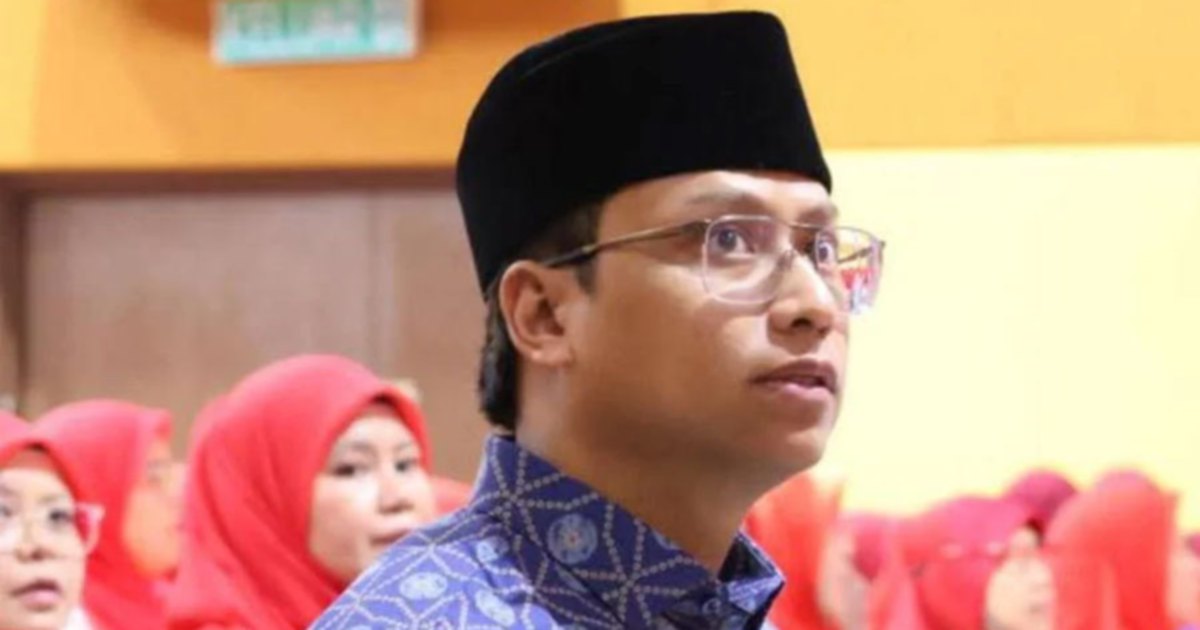
Kuala Lumpur has witnessed a significant family intervention in ongoing debates about Umno's future, with the offspring of a former senior party official mounting a robust defence of remarks that appear to have stirred considerable discussion within Malaysia's longest-established political organisation. Datuk Dr Mohd Puad Zarkashi, who previously occupied a prominent position in Umno's upper echelons, has evidently made statements concerning the party's direction and strategic orientation. His son has now stepped into the arena to contextualise these comments, asserting that they reflect genuine concern for the movement's long-term viability and institutional health.
The timing of this family defence underscores deeper tensions within Umno regarding its positioning in contemporary Malaysian politics. The party, which has dominated the nation's political landscape for seven decades, faces mounting scrutiny over its relevance, internal cohesion, and capacity to respond effectively to shifting electoral expectations. For a former Supreme Council member to articulate reservations about party direction, and for his son to subsequently amplify and defend those concerns, signals that questioning of current trajectories extends into circles historically associated with institutional conservatism. This dynamic reflects the complexity of intra-party politics where respected figures sometimes feel compelled to speak candidly about organisational challenges.
The son's characterisation of his father's remarks as attempts to preserve Umno's future introduces an important interpretive frame. Rather than portraying critical commentary as factional positioning or personal grievance, the defence positions intervention as principled concern for institutional continuity and relevance. This framing proves significant because it stakes a claim to legitimacy grounded in patrimonial concern for the party's welfare rather than narrow factional advantage. In Malaysian political discourse, such framings carry considerable weight, particularly when invoked by representatives of established families with longstanding party connections.
Historical perspective becomes crucial for understanding how Umno members and observers assess internal criticism. The party has previously navigated periods of substantial internal discord, from the 1980s divisions under different leadership contests to more recent iterations of internal debate regarding governance, representation, and electoral strategy. Comments from former Supreme Council members carry particular symbolic weight because these individuals typically possess deep institutional memory and understanding of party mechanics. Their willingness to articulate concerns, therefore, often signals issues that organisational insiders view as sufficiently grave to warrant public commentary despite norms favouring internal deliberation.
The invocation of historical judgment by extension in the son's defence reflects a common rhetorical strategy in Malaysian politics. When contemporary positions prove contentious, politicians frequently appeal to history as ultimate arbiter, implicitly positioning themselves on the correct side of eventual vindication. This approach acknowledges that immediate acceptance or rejection of criticism matters less than whether subsequent events validate or invalidate the positions articulated. For Umno, which possesses an extended record of electoral dominance and periods of organisational stress, such appeals resonate within party membership and broader political audiences familiar with cycles of internal renewal and reform.
The substance of Datuk Dr Mohd Puad Zarkashi's concerns, while not elaborated in available reports, likely encompass recurring preoccupations within Umno circles. These typically include membership engagement, generational renewal, ideological coherence in multi-ethnic democracy, electoral competitiveness relative to competing Malay-Muslim oriented parties, and the balance between institutional tradition and contemporary adaptation. Former Supreme Council members approaching such matters from publicly articulated positions effectively signal that these are not marginal concerns but issues central to party sustainability and efficacy.
For Malaysian and Southeast Asian observers of Malaysian politics, the phenomenon of senior figures articulating party criticism carries broader implications. It demonstrates that even within institutionally conservative movements with deep roots and extensive networks, voices emerge questioning established trajectories. The family dimension adds another layer, as it suggests that institutional concern transcends individual political actors and extends into family networks whose stakes in organisational success often extend across generations. This intergenerational continuity makes such defences particularly significant for understanding how party leadership interprets institutional health.
The defence mounted by Datuk Dr Mohd Puad Zarkashi's son also illustrates how Malaysian political families navigate periods of organisational transition and internal debate. Rather than allowing critical remarks to stand undefended or allowing opponents to frame them as factional positioning, the son provides contextualisation and elaboration. This approach protects family standing within the party, clarifies the intent behind critical commentary, and establishes a record should events subsequently vindicate the concerns articulated. It represents a common defensive strategy in Malaysian political culture where family reputation and party standing prove intimately connected.
Looking forward, this episode suggests that Umno will likely continue to experience tension between those satisfied with current trajectories and those convinced substantial adjustment is necessary. Whether such internal discussions ultimately produce reforms remains uncertain, but the willingness of figures with considerable institutional standing to articulate concerns publicly indicates that complacency is unlikely to characterise the party's internal discourse. The son's defence therefore serves not merely as justification for his father's remarks but as signal that questions about Umno's direction will persist and likely intensify as the party confronts evolving political circumstances.

