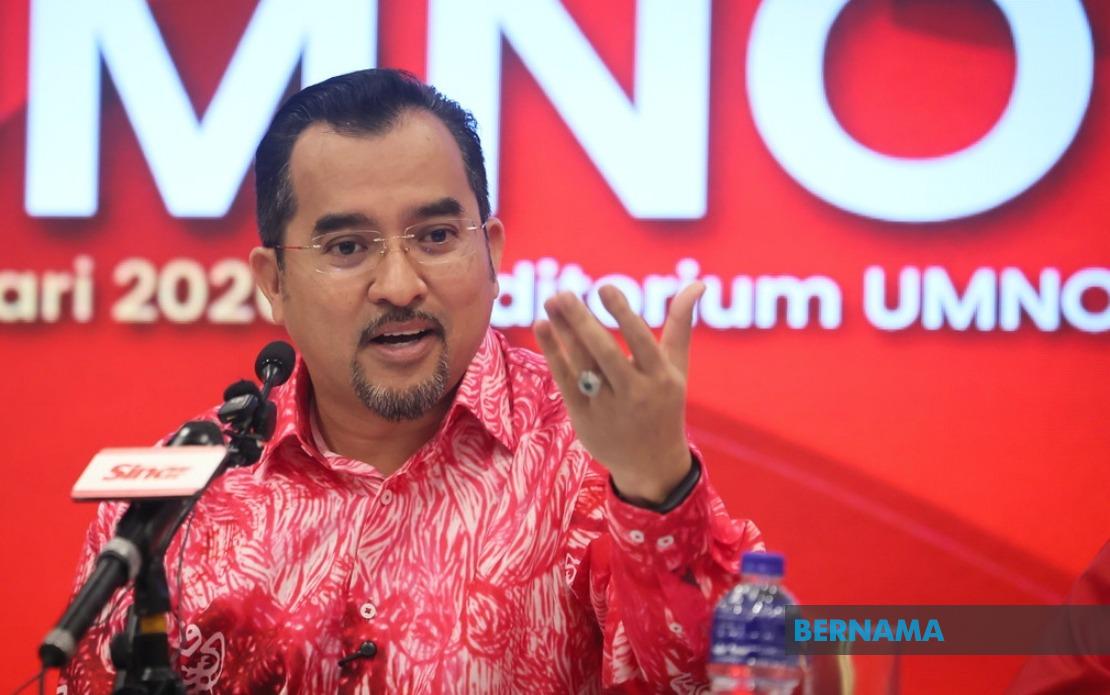
The departure of prominent UMNO figure Datuk Dr Mohd Puad Zarkashi from Malaysia's ruling party stems directly from frustration that his son was not chosen as a candidate for the Rengit state assembly seat in the forthcoming Johor election, according to UMNO secretary-general Datuk Dr Asyraf Wajdi Dusuki. The party leadership has characterised the exit as a reaction to unmet personal demands rather than a principled political stance, setting the stage for an awkward intra-party dispute as Johor voters prepare to head to the polls next month.
Asyraf Wajdi disclosed the underlying tensions through a Facebook post on June 25, shortly after Puad announced his resignation from UMNO with immediate effect. The secretary-general alleged that Puad had previously written at length threatening to leave the party and launch public attacks against UMNO unless the leadership agreed to field his son as the Rengit candidate. This narrative directly contradicts Puad's own public statement, in which the departing member framed his decision as a personal choice that would permit him greater freedom to voice his opinions without party constraints.
The timing of this internal rupture is particularly significant given that Johor's political calendar is now compressed. The state assembly was dissolved on June 1, triggering a cascading sequence of election-related deadlines. Nomination day has been set for June 27, with polling scheduled for July 11, meaning candidate selection decisions had to be finalised swiftly. In such a compressed timeframe, any disagreement between senior party figures over candidacy represents a potentially damaging distraction for UMNO's electoral preparation in a state that has long been a party stronghold.
Asyraf Wajdi's comments reveal deeper tensions within UMNO's candidate selection machinery. He acknowledged that Puad's son possesses youth and considerable potential for development as a future political leader, suggesting that the rejection was not based on an assessment of unfitness for office. Instead, the secretary-general emphasised that UMNO's selection process must weigh numerous factors beyond individual merit or family connections. This reasoning underscores that candidate decisions involve strategic calculations about electoral viability, demographic representation, factional balance, and broader party objectives—considerations that cannot always accommodate the preferences of individual party members, however senior.
The secretary-general sought to establish that this was not Puad's first attempt to leverage his position within party structures to secure preferential treatment. According to Asyraf Wajdi, Puad had made a comparable threat during Datuk Seri Najib Tun Razak's presidency, warning that he would resign from UMNO if he were not renominated as the Member of Parliament for Batu Pahat. That historical parallel was intended to paint a pattern of behaviour in which Puad apparently viewed his party membership and position as entitling him to certain privileges, a characterisation that paints the current exit as consistent with his established approach rather than a sudden act of principle.
A central element of Puad's original resignation statement that Asyraf Wajdi explicitly refuted concerns alleged palace interference in UMNO's affairs. Puad had claimed that the Johor palace controlled the party's direction in the state and had effectively ordered the dissolution of the State Legislative Assembly. Asyraf Wajdi dismissed this allegation as slander, implicitly suggesting that Puad had fabricated or grossly exaggerated claims of external interference as a way to add gravitas to his departure and deflect from the actual reason—disappointment over his son's exclusion from the candidacy roster. The denial itself, however, does not address or clarify the degree to which traditional institutions exercise informal influence over UMNO's decision-making in Johor, a question that continues to generate speculation in Malaysian political circles.
Asyraf Wajdi's response articulates UMNO's self-conception as a party transcending family dynasties and hereditary succession within its own structures. He emphasised that UMNO is not a hereditary organisation that reserves leadership opportunities for relatives or close family members, positioning this as a core principle distinguishing the party from other forms of political organisation. By invoking this principle, Asyraf Wajdi attempted to reframe the candidate selection as an application of consistent, impersonal party standards rather than a personal rejection of Puad or his family. This rhetorical move also implies that yielding to Puad's demands would have violated fundamental party norms, rendering the rejection inevitable from a governance perspective.
The broader context for this dispute involves UMNO's ongoing efforts to rehabilitate its image and internal structures following the party's 2018 electoral defeat and the subsequent political turbulence of subsequent years. Accepting demands for candidacy based on family connections or seniority would have undercut narratives of merit-based selection and party renewal. Conversely, rigidly maintaining selection standards in the face of threats from influential members risks losing talent, institutional knowledge, and political capital. This tension between principles and pragmatism regularly confronts political parties managing internal discipline while maintaining cohesion among ambitious members.
From a Malaysian electoral perspective, Puad's departure removes one voice from UMNO's internal debates during a crucial state election campaign. Although his direct influence may be limited, his public departure and subsequent statements risk amplifying narratives of internal discord within a party that still dominates Johor's political landscape. Opposition parties may seek to weaponise the dispute to suggest that UMNO prioritises personal interests and factional squabbles over coherent governance or policy vision. For voters assessing which coalition merits their support, visible signs of intra-party friction can erode confidence in institutional stability and decision-making competence.
Asyraf Wajdi's statement that UMNO must remain steadfast and not yield to pressure from any individual represents a necessary reassertion of party discipline and decision-making authority. However, the public airing of these tensions, complete with competing narratives about motivations and historical precedent, demonstrates that Malaysian politics at the party level remains deeply personalised. The dispute ultimately reflects a familiar pattern in Malaysian politics where senior figures leverage their positions to advance family members, face rejection, and then depart amid mutual accusations. Unless UMNO can institutionalise its candidate selection process in ways that reduce such disputes, similar episodes will likely recur during future election cycles.
The Johor state election now proceeds with this internal wound exposed. UMNO's challenge is to contain the reputational damage while maintaining voter support among a population that has demonstrated willingness to punish parties perceived as internally fractious or self-serving. For Southeast Asian observers monitoring Malaysian political dynamics, the episode illustrates persistent governance challenges within established parties: balancing meritocratic principles against the demands of senior figures accustomed to privilege, maintaining party discipline while accommodating diverse internal interests, and preventing personal disputes from undermining electoral performance. How UMNO manages these tensions over the coming weeks will offer insights into the party's institutional health and its capacity to govern effectively should voters return it to power.

