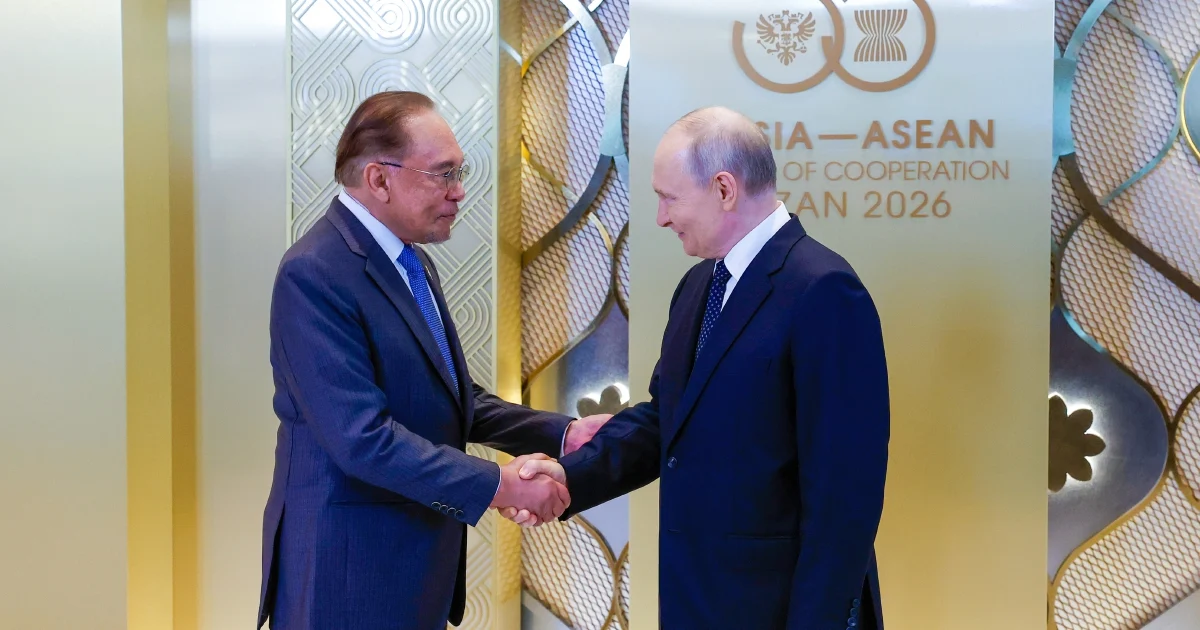
Malaysia is fortifying its energy security framework by cultivating relationships with the world's largest fuel producers, according to Prime Minister Datuk Seri Anwar Ibrahim, who confirmed today that Russian President Vladimir Putin has pledged sustained supply commitments to the Southeast Asian nation.
The assurance from Moscow comes amid intensifying global competition for reliable energy sources and reflects Malaysia's deliberate approach to avoiding dependency on any single supplier. As the region grapples with volatile commodity prices and geopolitical tensions affecting traditional energy corridors, such diversification agreements carry substantial weight for long-term economic stability and industrial planning.
Anwar made the announcement during remarks in Bintulu, the heart of Sarawak's energy sector and home to major liquefied natural gas facilities. The location underscores the significance of the energy pledge, given that LNG exports represent a critical revenue stream for both Sarawak and federal coffers. Bintulu's position as a global energy hub makes it symbolic ground for discussing international fuel partnerships.
Malaysia's energy landscape has undergone considerable transformation in recent years. The nation remains a net exporter of liquefied natural gas while simultaneously managing domestic demand from rapidly industrializing regions and growing household consumption. Balancing these competing pressures requires strategic foresight and multiple supply channels to insulate the economy from external shocks or supply disruptions that could derail manufacturing competitiveness and power generation stability.
Russia's role in global energy markets has shifted dramatically following international sanctions, pushing Moscow to reorient trade relationships toward Asia. For Malaysia, cultivating ties with Russia presents an opportunity to access diversified suppliers beyond traditional Middle Eastern partners while simultaneously positioning itself as a pragmatic actor in geopolitical affairs. The energy arrangement reflects both nations' mutual interest in transcending ideological divisions to pursue commercial cooperation.
The broader context reveals Malaysia's multifaceted approach to energy diplomacy. Recent years have seen the country nurture partnerships with Middle Eastern producers, negotiate regional agreements through ASEAN frameworks, and explore renewable energy transitions to reduce fossil fuel reliance. Adding Russia to this portfolio strengthens Malaysia's negotiating position and provides backup sources if primary suppliers face disruptions or escalate pricing.
Domestically, such security assurances carry political weight as well. Malaysian policymakers face pressure to maintain affordable energy costs while supporting industrial production. Guaranteed access to reasonably priced Russian energy helps stabilize the cost structure for power generation and petrochemical industries, both critical employers and foreign exchange earners. The psychological impact of confirmed long-term commitments also allows Malaysian enterprises to make confident investment decisions in energy-intensive sectors.
The announcement arrives at a time when energy markets worldwide remain sensitive to supply uncertainties and geopolitical variables. Global LNG competition has intensified, with new suppliers entering markets and demand patterns shifting as countries transition toward decarbonization. Malaysia, possessing established LNG infrastructure and technical expertise, benefits from positioning itself as a reliable hub that welcomes partnerships from diverse producers rather than aligning exclusively with any single bloc.
However, Malaysia must carefully navigate these partnerships while maintaining credibility with long-standing Western allies and respecting international norms. The energy relationship with Russia does not signal broader political realignment but rather reflects the practical reality that energy security transcends political boundaries. Regional stability depends on regular fuel supplies and predictable pricing, concerns that supersede ideological considerations.
For Southeast Asia more broadly, Malaysia's energy diplomacy carries implications beyond its borders. As the region's second-largest economy and a significant energy player, Malaysian decisions influence supply patterns and pricing across ASEAN. The nation's willingness to establish diversified supplier relationships encourages other regional states to pursue similar strategies, reducing vulnerability to any single producer's leverage or pricing manipulation.
Looking forward, the Putin assurance provides Malaysia with negotiating flexibility and supply redundancy. However, the country must continue investing in domestic renewable infrastructure and energy efficiency to reduce absolute import requirements. True energy security combines diversified international partnerships with accelerated domestic production and consumption optimization, recognizing that no single arrangement guarantees complete insulation from future disruptions.
Anwar's announcement reflects sophisticated energy statecraft, where Malaysia balances commercial pragmatism with strategic caution. As global energy markets continue restructuring around climate imperatives and geopolitical realignments, such partnerships will remain central to Malaysia's development calculus and regional economic influence.