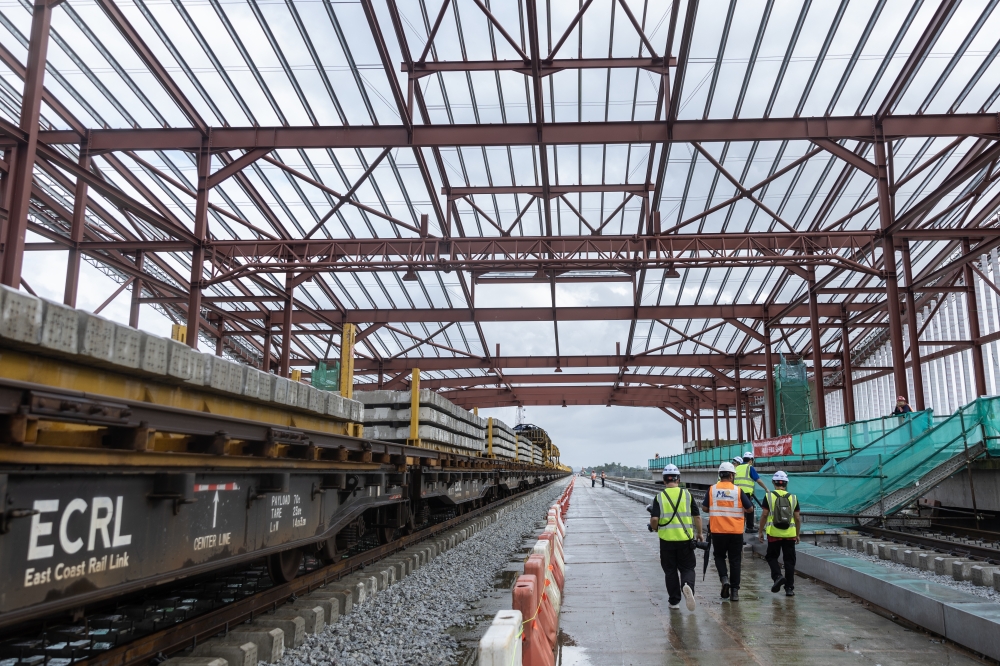
The federal government has earmarked RM207 million for 46 infrastructure and development projects across the Pasir Puteh parliamentary constituency, signalling a coordinated effort to leverage the transformative potential of the East Coast Rail Link (ECRL) project as it traverses through the Terengganu region. This substantial investment package represents a strategic initiative to ensure that peripheral constituencies along the ECRL corridor capture tangible economic dividends from the major transportation artery, which is expected to reshape regional connectivity and commerce across Malaysia's east coast.
The approval of this comprehensive project slate underscores a deliberate policy shift toward distributing development benefits beyond major urban centres, with particular emphasis on constituencies that have historically received fewer infrastructure allocations. Pasir Puteh, a constituency with electoral significance in an important state, has been identified as a key location for targeted government spending that aims to stimulate local economic activity and improve quality of life for residents. The timing of this announcement reflects broader efforts to demonstrate governmental commitment to balanced development across all regions of the country.
The ECRL, when fully operational, will connect Port Klang in Selangor through multiple states including Pahang, Terengganu, Kelantan, and Perlis, fundamentally altering trade patterns and logistics networks across the peninsula. Pasir Puteh's position along this corridor positions it to become a nexus for economic activity, distribution networks, and potential manufacturing or commercial development. By frontloading infrastructure investment now, the government aims to ensure that local communities and businesses are adequately prepared to capitalise on the opportunities that the rail link will generate.
These 46 projects span multiple sectors critical to sustainable development, encompassing transportation infrastructure, urban amenities, educational facilities, healthcare services, and utilities expansion. The diversified nature of the investment portfolio suggests a comprehensive approach to addressing various development gaps identified through consultations with local stakeholders. Rather than concentrating funds on a single sector, the government has distributed resources across complementary areas that collectively strengthen the constituency's economic foundation and quality of life indicators.
Infrastructure upgrades form a substantial component of the RM207 million allocation, addressing roads, bridges, water supplies, and sewage systems that underpin economic activity and daily living standards. Many constituencies along development corridors suffer from inadequate basic infrastructure that limits both residential attractiveness and commercial viability. By systematically upgrading these foundational systems, Putrajaya is removing barriers to growth that would otherwise persist despite the presence of the ECRL.
Educational and healthcare investments within the project basket reflect recognition that human capital development is inseparable from infrastructure-led growth. New or upgraded schools, vocational training centres, clinics, and medical facilities will improve service accessibility while generating local employment and attracting residents seeking better opportunities. These softer infrastructure elements are equally critical to transforming Pasir Puteh into a destination rather than merely a transit point along the ECRL.
The announcement arrives at a crucial juncture in Malaysia's infrastructure development timeline, as the ECRL enters advanced stages of construction with completion targets approaching. Constituencies that have delayed preparing their local environments risk losing competitive advantage when the rail link becomes operational and businesses make location decisions. Pasir Puteh's early investment positioning may attract logistics firms, light manufacturing, warehousing operations, and service enterprises seeking accessibility to the new transport spine.
From a regional perspective, this Pasir Puteh initiative demonstrates a deliberate strategy to catalyse development across Terengganu and neighbouring states by synchronising government spending with major infrastructure opening schedules. Other constituencies will likely anticipate similar announcements, creating momentum for comprehensive corridor development that extends beyond individual projects to encompass integrated economic zones. This approach contrasts with ad hoc spending patterns and suggests more systematic long-term planning.
The RM207 million represents meaningful allocation for a parliamentary constituency, though observers will scrutinise implementation capacity and timeline execution. Past infrastructure projects have sometimes experienced delays or cost overruns that undermined their developmental impact. The speed at which these 46 projects move from approval to completion will significantly influence whether Pasir Puteh captures the anticipated ECRL-related economic benefits or sees momentum dissipate through construction delays.
For investors and businesses evaluating locations along the ECRL corridor, the scale of government spending in Pasir Puteh signals confidence in the constituency's potential and commitment to reducing investment risk through infrastructure readiness. Local contractors and service providers will find expanded opportunities through procurement processes tied to these 46 projects, generating employment and business activity during construction phases. The multiplier effects of this spending may prove as significant as the final infrastructure assets themselves.
Looking forward, the success of this Pasir Puteh model will likely inform approaches to other constituencies positioned to benefit from major infrastructure projects. As Malaysia continues investing in transportation networks, special economic zones, and corridor development, the principle of complementary local infrastructure spending may become standard policy. Pasir Puteh thus serves as both an immediate development intervention and a potential template for future government planning that recognises the interdependence between major infrastructure and local readiness.

