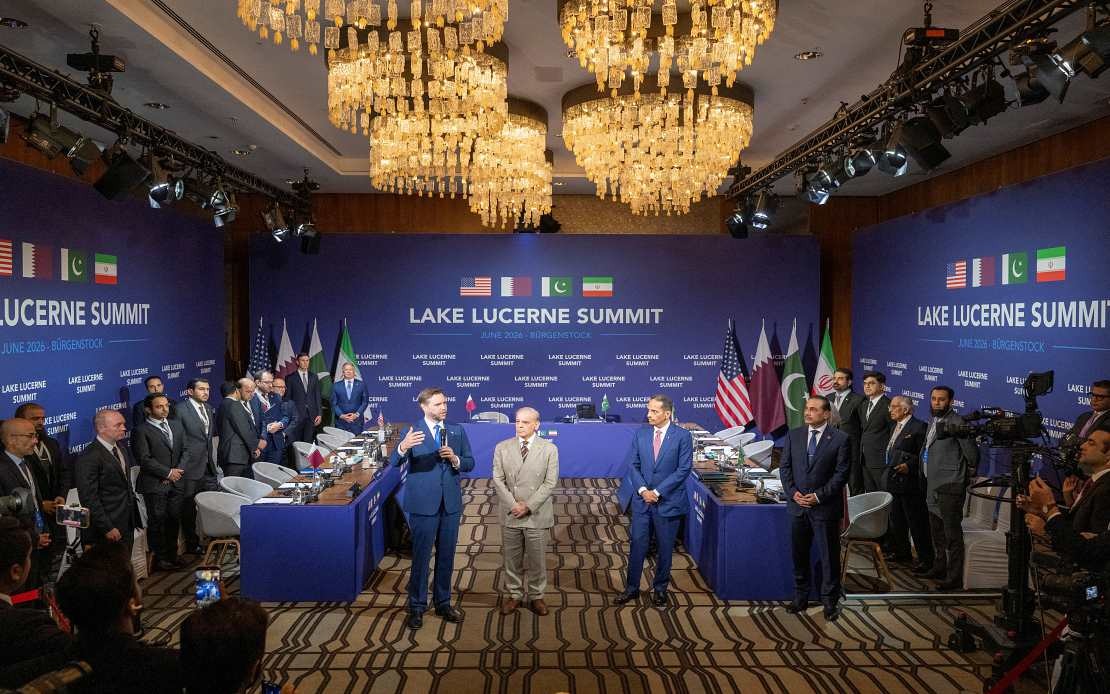
The first high-level round of negotiations between the United States and Iran has yielded tangible results, with Qatar and Pakistan declaring that constructive momentum has been established at the Lake Lucerne Summit in Switzerland. The two nations, serving as facilitators in these sensitive diplomatic discussions, released a joint statement on Monday indicating that the initial day of talks unfolded in a positive atmosphere, producing concrete institutional mechanisms designed to sustain the negotiating process through its next critical phases.
The establishment of technical discussion channels represents one of the cornerstones of the agreement reached at the summit. Rather than leaving future engagement to chance or ad-hoc arrangements, the parties have deliberately constructed a framework to ensure continuity in their dialogue. This architectural approach to diplomacy reflects lessons learned from previous negotiating cycles and acknowledges the complex, multi-layered nature of resolving disputes between Washington and Tehran that span nuclear, sanctions and broader regional security dimensions.
Central to the emerging structure is the creation of a high-level committee tasked with managing the political dimensions of the mediation effort. This body represents more than ceremonial involvement; it will regularly receive briefings from lead negotiators and maintain oversight of specialised working groups addressing the most contentious issues dividing the two capitals. The committee's supervisory role suggests recognition that technical discussions require periodic political guidance to ensure negotiating teams remain aligned with their governments' strategic objectives and red lines.
The working groups themselves have been delineated with specific mandates. One focuses exclusively on the Iranian nuclear programme, arguably the most technically complex and politically sensitive issue in these discussions. A second addresses sanctions mechanisms, seeking common ground on what restrictions might be lifted, under what conditions, and according to what verification protocols. The third working group concentrates on dispute resolution frameworks, reflecting the parties' determination to establish binding procedures for resolving disagreements that might otherwise derail the entire process.
The 60-day timeline announced for reaching a final agreement represents an ambitious but apparently achievable target. This compressed schedule suggests both parties recognise the political costs of prolonged negotiations and face domestic constituencies impatient for results. For the United States, resolution could ease Middle Eastern tensions and secure its engagement elsewhere. For Iran, breakthrough could bring sanctions relief that would provide immediate economic stimulus to its struggling economy. Qatar and Pakistan, as mediators, understand that momentum must be maintained and that each day of delay risks unravelling the delicate consensus achieved thus far.
Particularly noteworthy is the establishment of direct communication channels between Washington and Tehran, specifically designed to prevent accidents or misunderstandings during the negotiation period. This commitment to maintaining open lines addresses a critical vulnerability in previous iterations of US-Iran diplomatic engagement, where miscalculation or failed communication has occasionally escalated tensions rather than resolved them. The agreement to keep these channels active reflects mature statecraft and recognition that even adversaries conducting serious negotiations require mechanisms to manage the inherent risks of their interaction.
The memorandum of understanding, signed in the week preceding the Lake Lucerne Summit, forms the foundation upon which these new structures rest. The document apparently contains provisions—most notably paragraph five—that define the parameters and duration of the communication channel arrangement. This specificity suggests the parties have thought through not merely the establishment of dialogue but also its temporal boundaries and operational modalities, demonstrating attention to implementation details that separates successful diplomatic agreements from those that languish in ambiguity.
For Southeast Asian countries like Malaysia, these developments carry distinct significance. The Strait of Hormuz, through which approximately one-third of global seaborne oil trade transits, depends on freedom of navigation and regional stability. Any escalation in US-Iran tensions threatens Malaysian energy security and commerce, as crude oil imports remain central to the nation's industrial and transportation sectors. The express commitment in the joint statement to ensure safe passage of commercial vessels signals that the negotiating parties understand their responsibility to the broader global economy and shipping community dependent on these vital sea lanes.
The role of Qatar and Pakistan as mediating powers also merits attention from a regional perspective. Qatar's established diplomatic channels with both Washington and Tehran, combined with its investment in sophisticated conflict resolution infrastructure, position it as a natural broker. Pakistan's historic ties to multiple powers and its geographic location within South Asia provide additional leverage and perspective. Their joint mediation suggests a broader trend of middle powers and regional actors stepping into diplomatic vacuums created by direct superpower antagonism, a pattern increasingly evident across global affairs.
The success of these Lake Lucerne talks should not be overshadowed by recognition that previous negotiating efforts have foundered despite initial optimism. The Joint Comprehensive Plan of Action, agreed in 2015, demonstrated that nuclear diplomacy with Iran can succeed but also showed how fragile such arrangements remain when political circumstances shift. The current initiative must navigate similar treacherous terrain, building sufficient institutional resilience and mutual accountability to survive changes of government or shifts in regional dynamics.
Moving forward, the specialised working groups will determine whether initial diplomatic goodwill translates into substantive agreements on nuclear limitations, sanctions architecture, and dispute mechanisms. Technical experts will need to resolve verification questions, sequencing of commitments, and the pace of sanctions relief—issues that have repeatedly blocked progress. The 60-day timeline will test whether the positive atmosphere established at Lake Lucerne can be maintained through the grinding work of negotiation, compromise and the inevitable moments when positions harden and progress stalls.