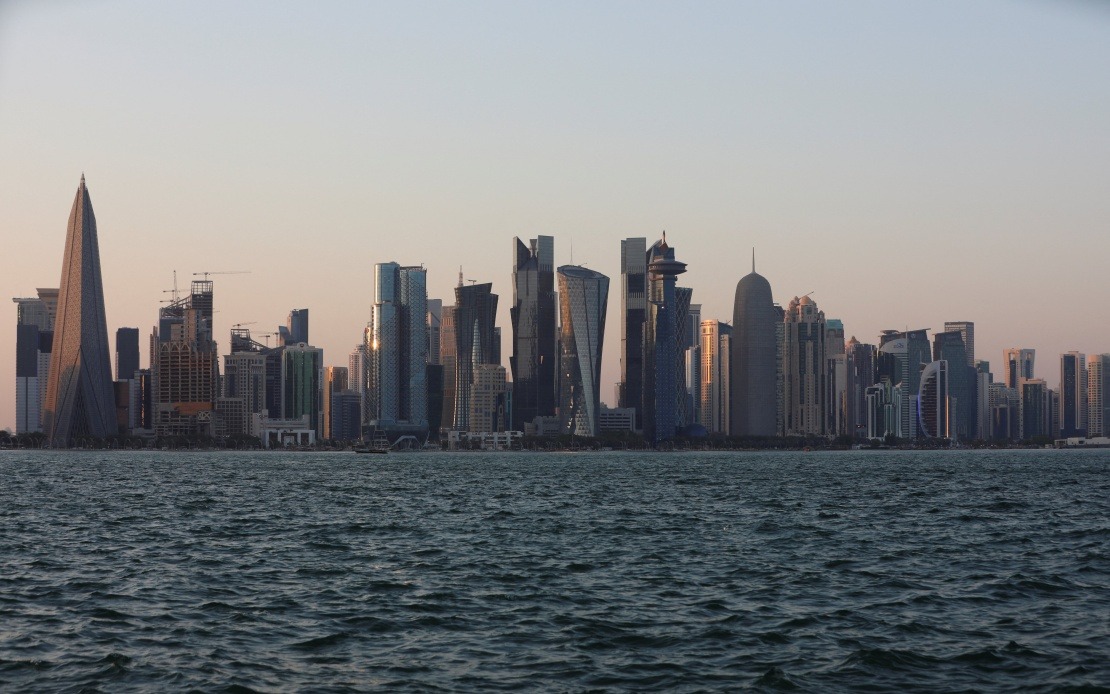
Qatar has moved swiftly to dismiss Israeli media reports suggesting the Gulf nation had agreed to participate in military operations targeting Iran, a denial that underscores the delicate diplomatic balancing act the emirate is attempting to maintain amid heightened Middle Eastern tensions. The International Media Office issued a formal statement on Thursday rejecting what it characterized as deliberate attempts to misrepresent Doha's position and compromise its standing as a neutral interlocutor in regional disputes.
According to the statement, those circulating such allegations are seeking to entangle Qatar in the expanding conflict while simultaneously weakening its critical mediation role. The office argued that these claims are part of a broader campaign designed to push the broader Middle East towards greater instability and confrontation. By framing the reports as malicious disinformation, Qatar signaled that it views the allegations as threats to its carefully cultivated position as a bridge-builder between opposing sides.
Doha emphasized that it has maintained a consistent stance throughout the escalating tensions between Washington and Tehran. The state has repeatedly declared that it neither has participated nor will participate in any form of military campaign against neighbouring countries. This declaration carries particular weight given Qatar's geographic proximity to Iran and its longstanding ties across the Persian Gulf region, making neutrality a cornerstone of its foreign policy approach.
The Qatari response demonstrates the state's determination to preserve its diplomatic credentials at a time when regional powers are increasingly polarized. By publicly reiterating its non-participation commitment, Qatar is signaling to all parties that it remains available for peace negotiations and good-faith mediation without fear of being drawn into hostilities. This positioning is crucial for a nation that has invested significantly in building relationships across sectarian and geopolitical divides.
Qatar further stressed that it will not allow unsubstantiated allegations to impede its active diplomatic initiatives aimed at ending the conflict. The statement pledged continued engagement with both regional and international partners to broker a comprehensive and sustainable agreement that addresses the legitimate concerns of all involved parties. This language suggests that Doha views itself as indispensable to any lasting settlement in the region.
Notably, the International Media Office did not identify which Israeli media outlets had published the contested reports, nor did it elaborate on the specific claims being refuted. This measured response, while providing categorical denial, avoided amplifying potentially inflammatory narratives or engaging in a detailed point-by-point rebuttal that might itself escalate tensions. The approach reflects professional diplomatic restraint.
The current regional crisis has its roots in February when the United States and Israel jointly launched military operations against Iran, prompting Tehran to respond with extensive missile and drone strikes directed at Gulf facilities hosting American military personnel and assets. This exchange marked a dramatic escalation from rhetorical tensions to direct military confrontation, fundamentally altering the security calculus across the Arabian Peninsula and beyond.
However, diplomatic channels have not completely closed. Last month, Pakistan successfully mediated a memorandum of understanding between Iran and the United States intended to terminate their conflict and establish the foundation for a durable peace arrangement. This development offered a glimmer of hope that the cycle of tit-for-tat military strikes could be halted through negotiated settlement. Yet momentum towards peace has remained fragile and uneven.
The optimism generated by the Pakistan-brokered agreement has been undermined by fresh tensions centred on the Strait of Hormuz, one of the world's most strategically vital shipping corridors. Recent days have witnessed a renewed pattern of attacks and counter-attacks between American and Iranian forces in and around these contested waters, suggesting that underlying disagreements remain profound. The control and security of this waterway, through which enormous volumes of global energy supplies transit daily, remains a fundamental point of contention.
For Malaysia and other Southeast Asian nations, the persistence of these tensions carries significant implications. Malaysia depends heavily on freedom of navigation through the Strait of Hormuz, and any sustained military escalation could disrupt regional energy supplies and increase insurance and transportation costs that ultimately affect Malaysian consumers and businesses. Moreover, the failure of diplomatic efforts in the Persian Gulf could embolden similar confrontational approaches to dispute resolution elsewhere in Asia.
Qatar's insistence on maintaining its mediation role becomes increasingly important in this context. As a state that has established working relationships with both Western and Islamic-aligned powers, Doha possesses unique capacity to facilitate dialogue. The emirate's emphasis that it will continue its good offices through coordination with multiple partners suggests that it views comprehensive agreement-building as requiring simultaneous engagement with various regional and international stakeholders.
The broader challenge facing Middle Eastern diplomacy is that military incidents and escalatory cycles can develop momentum of their own, making even willing interlocutors struggling to restore restraint. Qatar's categorical denial serves partly to reinforce its commitment to remaining outside the conflict, but whether such declarations prove sufficient to preserve mediation space depends heavily on the strategic choices made by Iran, the United States, and Israel in the coming weeks.

