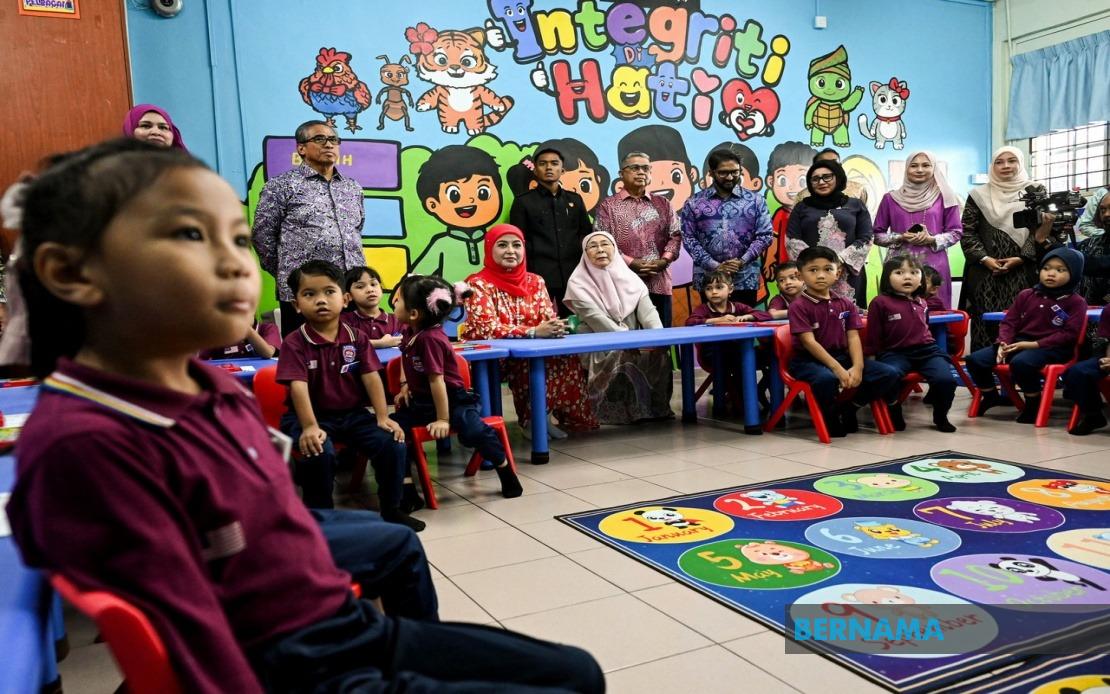
Queen Raja Zarith Sofiah unveiled the Children's Integrity Module (MIKa) at Tabika Perpaduan Taman Bukit Cheras in Kuala Lumpur on August 27, marking a significant step in Malaysia's effort to cultivate moral character from the earliest stages of child development. The royal patronage of this initiative underscores the government's commitment to embedding integrity within the nation's foundational educational systems, signalling that ethical development is viewed as equally important as academic achievement in shaping future citizens.
The Queen's engagement with the programme extended beyond ceremonial duties. Accompanied by National Unity Minister Datuk Aaron Ago Dagang, Chief Secretary to the Government Tan Sri Shamsul Azri Abu Bakar, and Bandar Tun Razak Member of Parliament Datuk Seri Dr Wan Azizah Wan Ismail, Her Majesty toured a classroom to observe how MIKa functions in practice, interacting directly with pupils and witnessing the learning simulation designed to embed integrity concepts through age-appropriate activities.
The genesis of MIKa reflects sophisticated educational planning spanning several years. The Malaysian Institute of Integrity (IIM), under the leadership of Tan Sri Shamsul Azri Abu Bakar, developed this module beginning in 2024 through consultation with 35 early childhood education experts. This collaborative approach ensures the curriculum aligns with established best practices in early childhood development while addressing the specific cultural and social contexts of Malaysian society. The breadth of input from specialists across the field suggests a rigorous methodology rather than a top-down imposition of values.
The module targets a critical demographic window, focusing on children aged two to six when psychological research indicates that foundational habits and moral instincts crystallise most rapidly. This developmental stage offers Malaysia an opportunity to inculcate ethical principles before competing influences and behavioural patterns become entrenched. By anchoring integrity education at the earliest institutional point of contact outside the home, the programme maximises its potential impact across diverse socioeconomic backgrounds.
Ambitions for MIKa's expansion reveal the scale of this initiative. By 2030, the government aims to implement the module across Malaysia's entire early childhood education ecosystem, encompassing more than 31,000 childcare centres, kindergartens, and preschools nationwide. This nationwide rollout would represent one of Southeast Asia's most comprehensive attempts to systematically embed ethical education at the grassroots level, potentially establishing a model that regional neighbours might emulate.
Tan Sri Shamsul Azri articulated a philosophical foundation distinguishing this approach from conventional discipline-focused integrity frameworks. Rather than relying solely on legal enforcement or punitive measures, the module operates from the premise that integrity must become habitual—woven into children's instinctive decision-making processes before they encounter formal institutional rules. This preventative educational model targets the formation of character itself, proposing that trustworthiness and ethical conduct emerge most naturally when rooted in early childhood experience rather than imposed through external compliance mechanisms.
The collaborative institutional support behind MIKa extends significantly beyond the IIM, involving multiple government ministries, agencies, higher education institutions, and civil society organisations focused on early childhood welfare. This network approach distributes implementation responsibilities while ensuring that diverse stakeholder perspectives—from developmental psychologists to childcare practitioners to parents—inform the module's application. Such coordination also facilitates resource-sharing and creates pathways for ongoing refinement as the programme expands.
Parental involvement remains integral to MIKa's success, as Tan Sri Shamsul Azri emphasised during the launch. Children's integrity development cannot be confined to institutional settings; parents serve as primary role models whose daily conduct either reinforces or undermines classroom instruction. The programme implicitly recognises that achieving generational transformation in ethical standards requires simultaneous engagement with the adult figures most influential in young children's lives, creating alignment between home environments and educational spaces.
The timing of this initiative reflects broader regional concerns about institutional trust and ethical governance. Southeast Asia has witnessed recurring public sector corruption scandals and private sector misconduct that erode citizen confidence. By cultivating integrity consciousness from age two, Malaysia positions itself to gradually shift cultural norms surrounding right conduct. A generation raised with embedded ethical reflexes could theoretically demonstrate lower corruption propensity and higher institutional trust across subsequent decades of public and private leadership.
For childcare operators and early childhood educators, MIKa represents both opportunity and responsibility. Training requirements to deliver the module effectively will necessitate upskilling across Malaysia's fragmented childcare sector, potentially improving overall professional standards. Yet implementation consistency across 31,000 institutions presents logistical challenges, particularly in ensuring rural and underfunded facilities receive adequate support and resources.
The international context of this initiative merits consideration. While Singapore's civics education and other regional programmes address integrity, few countries systematically embed such values at the two-to-six age group across entire national systems. Malaysia's approach positions the nation as a pedagogical innovator within Southeast Asia, though success will ultimately depend on sustained funding, consistent educator training, and evidence-based curriculum refinement throughout the decade-long implementation timeline.
The Queen's presence at this launch transcends ceremonial significance, effectively placing the monarchy's symbolic weight behind early childhood integrity education. This royal endorsement may facilitate political persistence across government transitions and strengthen public perception of the initiative's legitimacy and importance. Whether MIKa successfully transforms Malaysia's ethical landscape will ultimately depend not on launch ceremonies but on the daily quality of implementation across thousands of institutions and millions of children over the coming decade.

