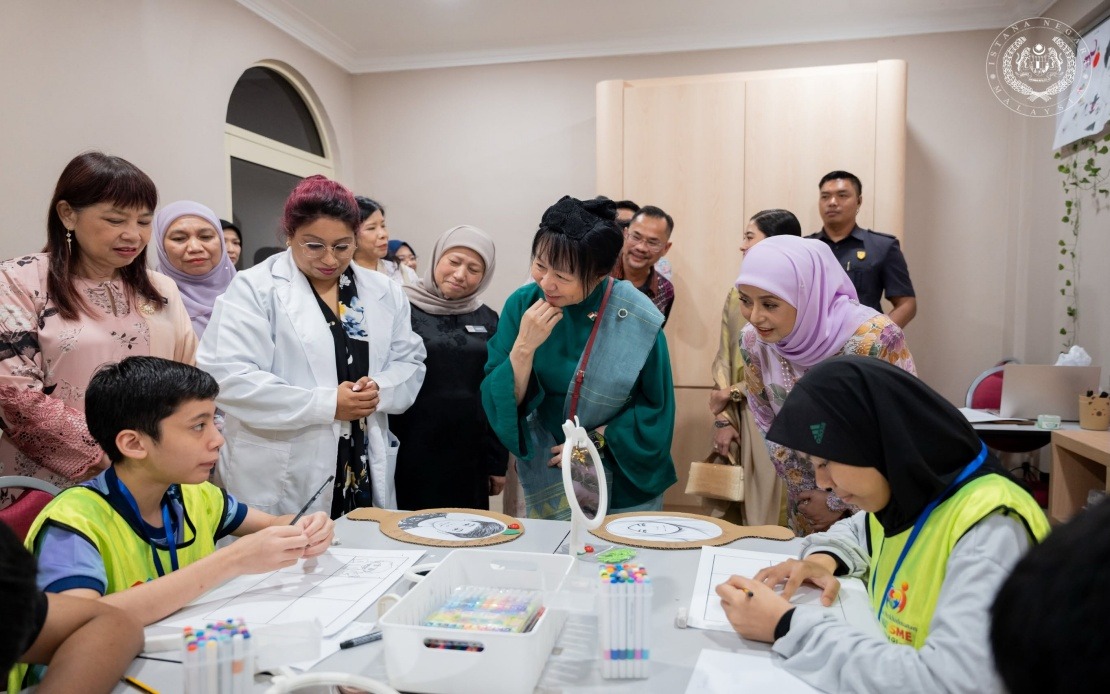
Her Majesty Raja Zarith Sofiah, Queen of Malaysia, received Singapore First Lady Jane Ittogi Shanmugaratnam at the Bangi Autism Service Centre near Kuala Lumpur on July 14, marking a significant moment in bilateral relations during the state visit of Singapore President Tharman Shanmugaratnam. The engagement underscored the commitment of both nations to advancing social welfare and support systems for individuals with developmental needs.
The visit formed part of a broader diplomatic programme that commenced the previous day, as confirmed through official announcements. Tunku Tun Aminah Sultan Ibrahim joined Her Majesty in welcoming the Singapore First Lady, establishing a warm reception that reflected the strong institutional ties between Malaysia and Singapore. The presence of multiple government officials highlighted the collaborative nature of the engagement.
Amongst those attending were Prime Minister's wife Datuk Seri Dr Wan Azizah Wan Ismail, Women, Family and Community Development Minister Datuk Seri Nancy Shukri, Deputy Minister Lim Hui Ying, ministry secretary-general Datuk Dr Maziah Che Yusoff, and Social Welfare Department director-general Datuk Che Murad Sayang Ramjan. The high-level attendance demonstrated Malaysia's prioritisation of autism advocacy and social services development.
During the facility tour, Her Majesty and Jane Ittogi examined core operational areas including the Activities of Daily Living Room, where beneficiaries learn essential self-care competencies, the Occupational Therapy Room, and the gymnasium facilities. Observers noted the centre's integrated approach to rehabilitation, emphasising practical skill-building and functional independence for individuals on the autism spectrum.
Minister Nancy Shukri disclosed that 93,199 individuals with autism had registered with the Social Welfare Department as of June, a figure reflecting both the prevalence of autism spectrum disorder in Malaysia and improved diagnostic reach. The minister projected further growth in registration numbers, attributing this trend to enhanced public understanding and expanded access to screening mechanisms. This expansion in awareness carries implications for resource planning and service capacity across Malaysia's welfare infrastructure.
The Bangi Autism Service Centre represents a distinctive model of service delivery in Malaysia, operating through structured collaboration between government agencies and the non-profit sector. The National Autism Society of Malaysia and the Damansara Damai Community-Based Rehabilitation Centre jointly manage operations, pooling expertise and resources to maximise programme effectiveness. Such partnerships demonstrate how public and civil society institutions can integrate capabilities to address complex social needs.
For Malaysian policymakers and social welfare administrators, the visit presented an opportunity to benchmark practices with Singapore, which has developed comprehensive frameworks for managing developmental disabilities. The exchange of insights between both nations' social service ecosystems contributes to knowledge-sharing on intervention methodologies, training standards, and accessibility standards. Singapore's experience in scaling services across a densely populated city-state offers relevant lessons for Malaysia's expanding autism care network.
The diplomatic nature of the visit carries broader significance for Malaysia-Singapore relations. While both nations maintain robust economic and security partnerships, engagement in social welfare domains reflects deepening institutional cooperation beyond traditional diplomatic channels. The participation of First Ladies in such activities signals mutual recognition of social issues as legitimate subjects for high-level engagement and knowledge exchange.
From an autism advocacy perspective, the royal patronage and ministerial attention provide validation and visibility for individuals and families navigating spectrum disorders. Malaysia's autism community has increasingly advocated for expanded services, better trained professionals, and improved integration into mainstream education and employment. Official visits such as this amplify the urgency of these demands and may catalyse policy attention to service gaps and funding constraints.
The session concluded by mid-morning, providing a structured yet substantive exchange that satisfied both diplomatic protocol and substantive engagement objectives. Moving forward, the momentum generated by such high-level visits often translates into concrete follow-up initiatives, including technical working groups, capacity-building programmes, and resource-sharing arrangements between Malaysian and Singaporean autism support organisations.

