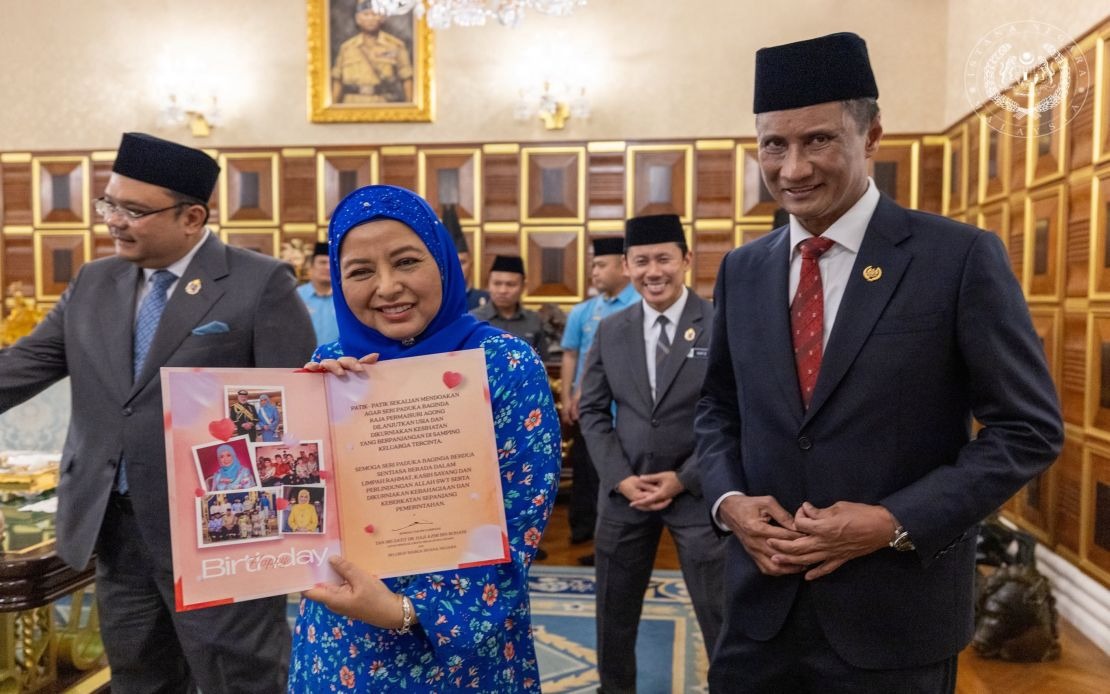
Her Majesty Raja Zarith Sofiah, Queen of Malaysia, was honoured with a formal courtesy visit from the senior leadership of Istana Negara on the occasion of her birthday. The meeting on Wednesday brought together the key administrative figures who oversee the day-to-day operations of the royal household, reflecting the palace's customary recognition of significant dates within the royal family calendar.
The gathering took place at Istana Bukit Serene in Johor, the royal residence that serves as one of the primary official seats during the King's visits to the state. The attendance of Tan Sri Dr Azmi Rohani, the Comptroller of the Royal Household, underscored the formal nature of the occasion. Dr Azmi holds one of the most senior administrative positions within the palace structure, responsible for coordinating all matters relating to royal protocol, household management, and the execution of official functions. Alongside him came Datuk Azuan Effendy Zairakithnaini, the Grand Chamberlain, whose role encompasses ceremonial responsibilities and the management of court proceedings.
The presence of Puan Sri Dr Noor Azizah Abdul Latif, the wife of the Comptroller, added a personal dimension to what was otherwise an official representation. Her attendance reflected the significance of the occasion and the warmth with which the palace marks milestones within the royal family. The composition of the visiting delegation demonstrated how the palace balances formal protocol with genuine expressions of regard.
One of the most visible aspects of the celebration involved the presentation of ceremonial gifts that carried cultural significance. The Queen received a specially prepared cake alongside yellow glutinous rice, traditional foods that held meaning within Malaysian court customs. These items were not merely tokens but represented a collective gesture from the entire management structure and staff complement of Istana Negara, symbolising unity within the royal household and shared appreciation for the Queen's role.
The choice of yellow glutinous rice was particularly symbolic within the Malaysian royal context. Yellow carries auspicious connotations in traditional Malay and Islamic ceremonies, while glutinous rice dishes have long featured in celebratory occasions throughout Southeast Asia. The presentation of such items reflected the palace's commitment to maintaining cultural traditions even in contemporary ceremonial settings.
During the meeting, the officials conveyed formal wishes on behalf of the entire palace workforce. Tan Sri Dr Azmi Rohani delivered a statement expressing the prayers and heartfelt sentiments of those who work within Istana Negara, emphasising their collective hopes for the Queen's continued good health, personal well-being, and sustained happiness. Such formal articulations of goodwill, while ceremonial in nature, carry weight within palace culture and reflect the respect accorded to the Queen's position and person.
The announcement of this courtesy visit came through Sultan Ibrahim Sultan Iskandar's official Facebook page, indicating how modern communication channels have become integrated into the palace's approach to sharing information about royal activities. This method of disclosure ensures that official events reach the wider Malaysian public and demonstrate the transparency increasingly expected in contemporary monarchical systems.
The gathering represented a continuation of established palace traditions that have evolved over decades. These courtesy calls on significant occasions serve multiple purposes within the royal household's functioning. They provide formal opportunities for senior officials to engage directly with members of the royal family, strengthen institutional bonds within the palace structure, and create occasions for staff to feel recognised and valued for their service.
For Malaysia's broader institutional context, such events illustrate the functioning of formal protocols that have sustained the constitutional monarchy. The deliberate involvement of key household officials in marking the Queen's birthday reflects the palace's emphasis on maintaining structured relationships and clear hierarchies of engagement. These practises contribute to the stability and continuity that characterises Malaysia's royal institutions.
The Queen's role as Malaysia's Queen Consort carries significant responsibilities in representing the nation alongside the King. Public recognition of her birthday through official palace ceremonies helps underscore her position and contributions to the monarchy's responsibilities. Such occasions also provide opportunities for the palace to reinforce its commitment to ceremonial traditions and institutional continuity during periods of transition or change in government and public affairs.

