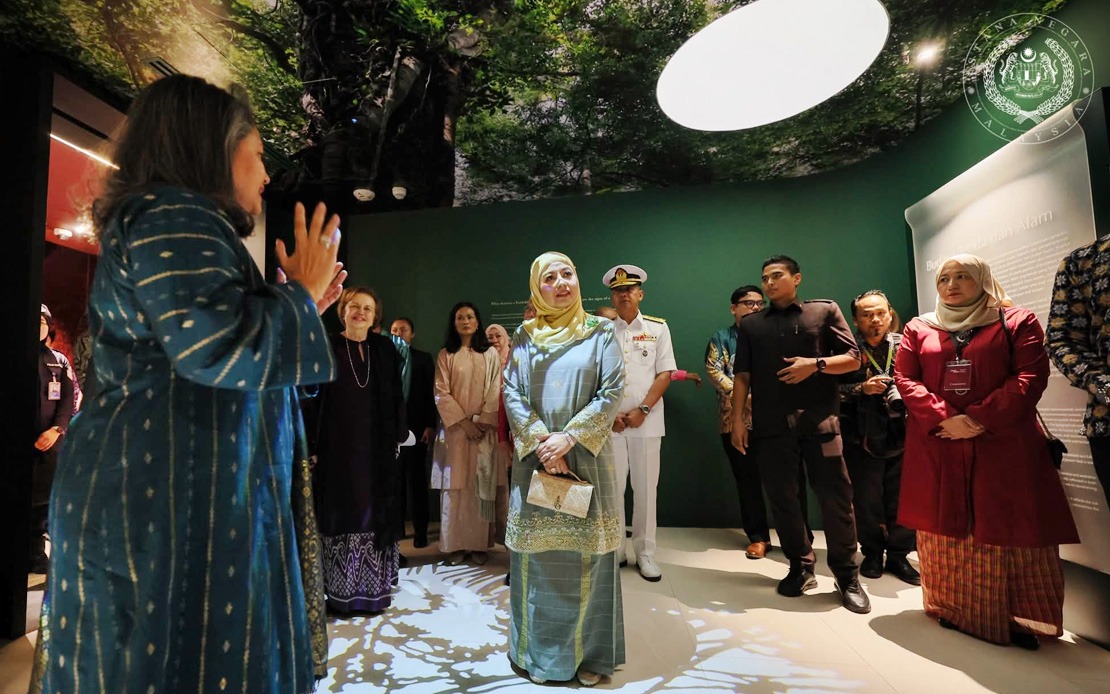
Her Majesty Raja Zarith Sofiah, Queen of Malaysia, officially opened the Merdeka Textile Museum on August 21 at the Menara Merdeka Maybank compound in Kuala Lumpur, marking a significant milestone in the nation's efforts to safeguard its rich cultural heritage. The museum represents a substantial institutional commitment to documenting and celebrating the textile traditions that have defined Malay society across centuries, with interactive exhibitions designed to engage visitors of all ages in meaningful cultural dialogue.
The institution was established by PNB Merdeka Ventures Sdn Bhd, a subsidiary wholly owned by Permodalan Nasional Berhad, an investment arm deeply embedded in Malaysia's economic development infrastructure. This backing underscores the importance accorded to textile preservation within Malaysia's broader national agenda, positioning the museum as more than a conventional repository of historical artefacts but rather as an active cultural institution intended to shape contemporary understanding of identity and heritage.
Her Majesty emphasised during the ceremony that every nation carries distinctive cultural legacies requiring deliberate conservation and intergenerational transmission. The Queen articulated a vision whereby cultural practices serve as tangible expressions of societal identity and fundamental values, effectively framing textile traditions not as peripheral curiosities but as central to understanding Malaysian civilisation. This rhetorical framing elevates the museum's mission beyond preservation toward a more ambitious goal of cultural and national self-definition.
The Queen further addressed the museum's role in inspiring both contemporary and future generations of Malaysian women, acknowledging the particular significance of textile arts within feminine cultural expression historically. She expressed concern that without conscious preservation efforts, such heritage risks disappearing entirely from collective memory and practice. Her remarks, shared via Sultan Ibrahim Sultan Iskandar's official social media channels, carry particular weight as expressions of the institution's values and priorities.
The museum's core collection originates from the personal holdings of the late Sharifah Azah Syed Mohammed Alsagoff, widely known as Azah Aziz, whose life connected her intimately to Malaysia's intellectual and financial elite. As wife of the late Professor Diraja Ungku Abdul Aziz Abdul Hamid and mother of Tan Sri Dr Ungku Zeti Akhtar Aziz, former governor of Bank Negara Malaysia, Azah Aziz occupied a position enabling her to accumulate exceptionally significant textile specimens across multiple decades. Her family's decision to donate this collection represents a notable gesture of national cultural stewardship.
The donated assemblage comprises 240 distinct textile garments alongside 69 pieces of traditional jewellery, with particular emphasis on songket sarongs, Limar Baju Kurung ensembles, and intricately embroidered Tekat Emas pieces. These items represent not merely aesthetic achievements but embodiments of technical mastery, cultural symbolism, and historical contexts stretching across generations. The concentration on formal and ceremonial dress reflects the collection's focus on textiles associated with significant life events and social occasions within Malay cultural practice.
The physical infrastructure supporting the museum reflects contemporary museological standards and conservation requirements. Eight distinct galleries provide thematic organization of materials, allowing visitors to progress through various aspects of textile history and cultural significance in structured progression. The accompanying study centre incorporates specialized facilities addressing the practical demands of textile preservation, including a dedicated conservation laboratory equipped for scientific analysis and restoration work.
Complementing the gallery spaces, a fabric library permits detailed examination of textile samples, fibres, and production techniques, while a textile knowledge centre aggregates scholarly resources, archival materials, and research documentation. This multifaceted approach positions the museum as a functional research institution rather than a passive display facility, enabling scholars, artisans, students, and cultural practitioners to access comprehensive information supporting deeper engagement with Malaysia's textile traditions.
The opening ceremony attracted significant official representation, including Hannah Yeoh, Minister in the Prime Minister's Department handling Federal Territories matters, Tan Sri Shamsul Azri Abu Bakar, the Chief Secretary to the Government, and Raja Tan Sri Arshad Raja Tun Uda, chairman of the PNB group. This concentration of high-level ministerial and bureaucratic presence signals government recognition of the museum's cultural and institutional importance within Malaysia's contemporary national narrative.
For Malaysian and regional audiences, the museum's establishment addresses longstanding concerns regarding the systematic documentation and celebration of Southeast Asian textile traditions. As industrialisation and globalisation reshape production patterns and consumption preferences, cultural institutions serving preservation functions acquire heightened significance. The Merdeka Textile Museum positions Malaysia as actively invested in safeguarding indigenous knowledge systems and traditional artistic practices, potentially influencing cultural policy discussions across the broader Southeast Asian region.
The museum furthermore acknowledges the particularly female-coded nature of textile production and expertise within traditional societies, offering a platform for recognising feminine contributions to cultural development historically often overlooked in predominantly male-focused institutional narratives. By centering textile arts and the female collectors and practitioners associated with them, the museum implicitly advances a more inclusive approach to national heritage documentation and celebration.
Looking forward, the Merdeka Textile Museum establishes a model for heritage institution development that combines private collection stewardship with public accessibility and scholarly research support. As Malaysia continues negotiating the balance between economic modernisation and cultural preservation, such institutions provide concrete mechanisms for ensuring that traditional knowledge remains accessible to younger generations and integrated into contemporary educational frameworks.

