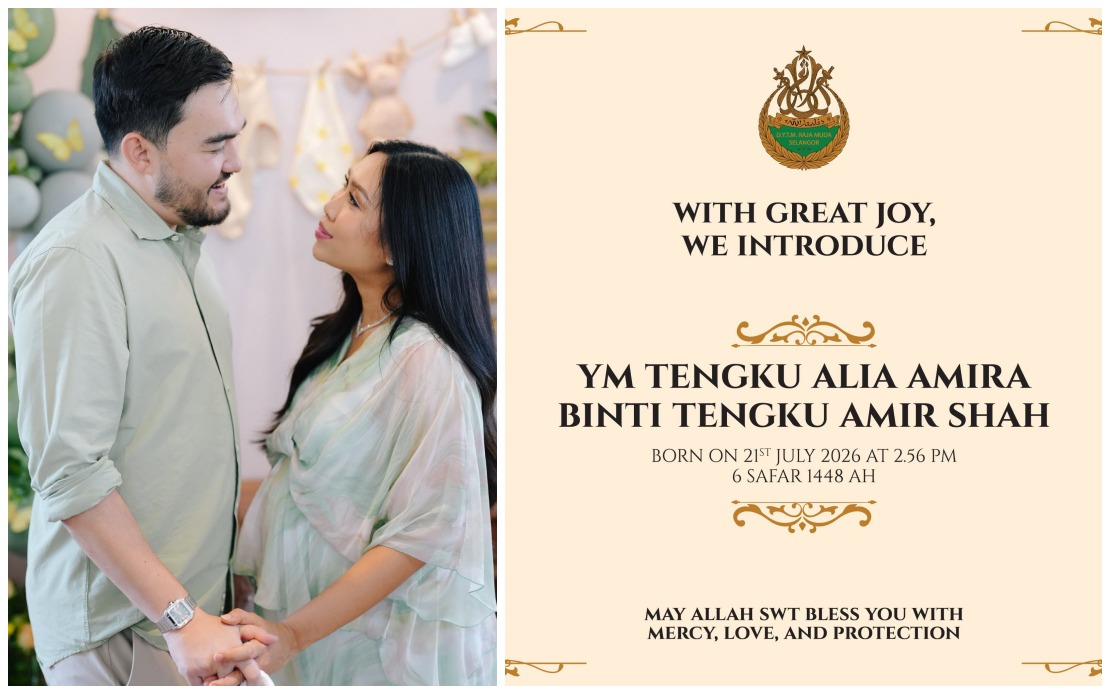
The Raja Muda of Selangor, Tengku Amir Shah Sultan Sharafuddin Idris Shah, and his wife Datin Paduka Seri Afzaa Fadini Abdul Aziz have announced the arrival of their first child, marking an important moment for the Selangor royal household. Their daughter, Tengku Alia Amira Tengku Amir Shah, entered the world on July 21, 2026, at 2.56 pm, as confirmed through an official announcement posted on the Raja Muda's Instagram account. The announcement carries significant symbolic weight for the state's monarchy, as the birth of the young princess represents continuity within one of Malaysia's most prominent royal families and adds a new generation to the line of succession.
In his public statement marking the occasion, Tengku Amir Shah expressed deep gratitude, invoking religious sentiments that resonate across the Muslim-majority nation. His words reflected both personal joy and acknowledgement of the spiritual dimensions of the birth, emphasizing prayers for his daughter's wellbeing and the family's appreciation for public support. The tone of the announcement, while formal as befits a member of the royal hierarchy, conveyed warmth and genuine emotion, striking a balance between maintaining royal dignity and connecting with the broader Malaysian public who have followed developments within the Selangor palace.
The couple's journey to parenthood represents a relatively recent chapter in their lives together. Tengku Amir Shah and Datin Paduka Seri Afzaa Fadini formalized their union through a royal solemnization ceremony conducted on October 2, 2025, at Masjid Istana Diraja within Istana Alam Shah in Klang. The marriage ceremony, steeped in royal protocol and Islamic tradition, was solemnized by Selangor Mufti Datuk Dr Anhar Opir and witnessed by senior members of the royal household, including Tengku Panglima Raja Selangor Tengku Ahmad Shah Alhaj and Tengku Indera Pahlawan Diraja Tengku Datuk Setia Putra Alhaj. The proceedings demonstrated the importance the royal institution places on adhering to established customs while fulfilling religious obligations.
The wedding ceremony itself reflected the grandeur and formality expected of royal occasions in Selangor, though it maintained its private character in keeping with contemporary sensibilities around royal celebrations. The presence of the Sultan of Selangor and Tengku Permaisuri Norashikin at the ceremony underscored the family's centrality within the state's governance structure and symbolized the continuity of royal lineages. Such occasions within Malaysia's royal families carry broader implications for the institution of monarchy itself, which continues to command significant cultural and constitutional importance across the federation.
For Selangor specifically, the birth of the princess holds particular relevance given the state's position as the nation's economic powerhouse and most urbanized jurisdiction. The state's royal household functions not merely as a ceremonial institution but as a significant cultural anchor within a rapidly modernizing society. The Raja Muda, as heir apparent to the throne, represents the future of state leadership and the continuation of institutional traditions that many Selangor residents view as integral to their provincial identity.
The announcement of the birth also arrives at a juncture when Malaysian royal institutions have been navigating evolving public expectations regarding transparency and engagement. The decision to share news of the princess's arrival through social media reflects how contemporary Malaysian royalty balances traditional protocols with modern communication channels. This approach allows broader segments of the population to feel connected to significant royal milestones while maintaining appropriate boundaries around the family's private life.
Within the context of Malaysia's constitutional monarchy, births within the royal family carry implications extending beyond simple family announcements. The line of succession, succession planning, and the demographic composition of the royal hierarchy remain matters of constitutional and national significance. The arrival of Tengku Alia Amira contributes to broader conversations about the future composition of Malaysia's royal institutions and the roles various family members will occupy as the nation continues its political and social evolution.
The timing of the announcement, released publicly several days after the actual birth on July 21, reflects careful consideration of how and when to share significant royal news with the broader population. This deliberate approach ensures proper notification of relevant state and federal authorities while allowing the immediate family period to bond and adjust to parenthood before facing intense public scrutiny. Such practices demonstrate the sophisticated protocols that continue to govern Malaysia's royal households despite their engagement with modern communication technologies.
Datin Paduka Seri Afzaa Fadini Abdul Aziz's transition into her role as the wife of the Raja Muda represents another important dimension of this royal milestone. As the mother of an heir to potential future succession, her position within the palace hierarchy has been significantly elevated. The support and well-wishes directed toward the royal couple following the announcement reflect broader Malaysian appreciation for the maintenance of stable, functioning royal institutions that continue to serve important constitutional and ceremonial functions within the federation's political system.

