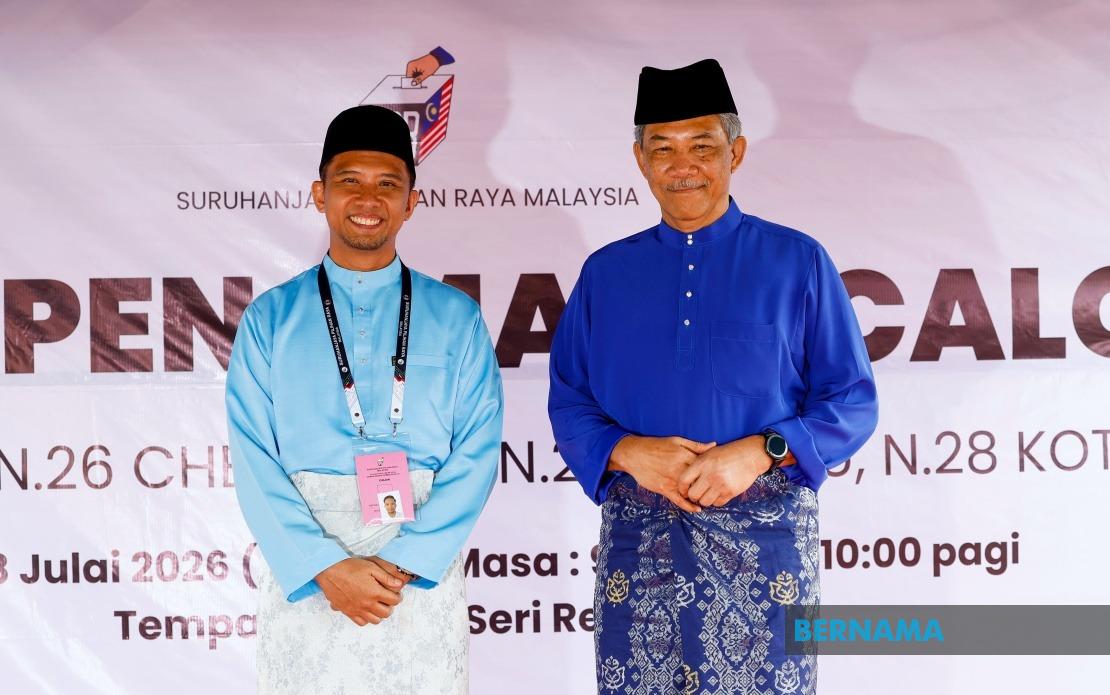
The Rantau state constituency will become the stage for a direct confrontation between two competing visions for Negeri Sembilan when voters head to the polls on August 1. Barisan Nasional's Datuk Seri Mohamad Hasan, who doubles as the state coalition chairman and Malaysia's Foreign Minister, will defend his long-held seat against Pakatan Harapan's Dr Azizul Hakim Mahdi following the conclusion of the nomination process at Dewan Sri Rembau in Rembau. The returning officer Mohd Zamri Mohd Esa confirmed the straight fight after all nomination papers were accepted, setting the stage for what analysts view as a significant electoral test for the ruling coalition in the state.
Mohamad's political dominance in Rantau stretches back two decades, having first won the seat in 2004 and successfully retained it ever since. His position as UMNO deputy president adds weight to his candidacy, representing the party's establishment machinery and resources. In the 2023 state election, he secured a commanding 16,957 votes, defeating then-PH candidate Rozmal Malakan by an overwhelming margin of 10,280 votes—a demonstration of the deep political roots he has cultivated within the constituency. Addressing reporters after nominations closed, Mohamad emphasised that Barisan Nasional's campaign strategy would centre on articulating the coalition's manifesto while mobilising the party machinery to maximise grassroots engagement during the officially sanctioned campaign period.
Despite facing an incumbent with two decades of electoral experience, Dr Azizul Hakim Mahdi presents himself as a representative of fresh perspectives and professional expertise. At 35 years old, the PH candidate brings credentials as a practising medical doctor with a decade of professional experience and personal stakes in three healthcare clinics spanning Senawang, Puncak Alam and Melaka. This background allows him to position his candidacy around tangible healthcare policy priorities, moving beyond traditional partisan rhetoric to focus on constituent concerns about medical accessibility and public health infrastructure—issues that resonate deeply in constituencies where residents have expressed frustration with healthcare delivery gaps.
The healthcare angle represents a strategic differentiation in a contest where experience levels markedly differ. Rather than attempting to match Mohamad's two-decade political track record, Dr Azizul emphasises his ability to understand community health needs through professional practice rather than political service. His campaign messaging centres on ensuring Rantau residents enjoy improved access to healthcare facilities and better preventive health services, framing the election as an opportunity for voters to elect someone whose daily professional life involves solving the exact problems affecting their constituents. This approach appeals particularly to voters frustrated with health system shortcomings during the post-pandemic period.
Negeri Sembilan's 16th state election encompasses a broader competitive landscape that extends well beyond the Rantau spotlight. The state assembly's 36 seats are being contested following the dissolution announced on June 5, with the Election Commission scheduling early voting for July 28 and the general polling date for August 1. Nearly 890,000 registered voters across the state will participate, comprising mainly ordinary voters but also including military personnel and police staff voting early. This overall electoral framework means Rantau's outcome will form part of a wider assessment of voter sentiment regarding BN's governance record and PH's ability to present viable alternatives across Negeri Sembilan's diverse constituencies.
Other significant contests will shape the overall election narrative. In Paroi, the sitting Menteri Besar's press secretary Ahmad Shahir Mohd Shah contests a three-way race against Perikatan Nasional's Kamarol Ridzuan Mohd Zin and Bersatu's Mohd Nazree Mohd Yunus, illustrating how opposition fragmentation may benefit certain candidates. Meanwhile, Chembong features a straight fight between BN incumbent Datuk Zaifulbahri Idris and PH challenger Danish Nazran Murad, while Kota presents another three-cornered contest involving BN's Suhaimi Aini, PH's Muhammad Allif Ibrahim and Bersatu's Akmal Noradzmi Abdul Rahim. These varied contest formats across different constituencies suggest voters will be presented with different strategic calculations regarding how their ballot might best serve their preferences.
For Malaysian observers and particularly those tracking Negeri Sembilan politics, the Rantau contest embodies broader questions about electoral stability and power transitions. Mohamad Hasan's dual role as state BN chairman and Foreign Minister underscores how state elections remain consequential for national-level political figures, with electoral defeats carrying implications for political standing at higher levels. Conversely, if PH can articulate compelling reasons for voters to reject an entrenched incumbent, it might signal shifting attitudes toward opposition governance even in constituencies where BN has established deep organisational roots. The result will likely influence conversations about whether Negeri Sembilan remains a reliable BN stronghold or whether opposition advances are becoming more credible across the state.
Mohamad's confidence in the campaign machinery reflects BN's substantial organisational advantages, particularly at the state level where the coalition controls executive resources and can mobilise administrative apparatus for campaigning purposes. His emphasis on systematic and well-organised groundwork acknowledges that electoral victories, especially in contested constituencies, depend on converting structural advantages into actual voter support. The phrase suggests awareness that complacency—a risk when facing candidates from significantly smaller political organisations—could undermine even substantial vote margins from previous elections. The 2023 result, while decisively favourable, occurred in a different political context, and intervening developments may have shifted voter calculations.
The recruitment of Dr Azizul Hakim as PH's candidate represents a deliberate strategy of fielding professional practitioners who can challenge incumbents on competence and service delivery grounds rather than purely on political experience. This approach has gained currency in Malaysian opposition politics as a means of distinguishing campaigns from simple partisan rivalry. By presenting a candidate whose professional standing derives from medical practice rather than political careers, PH creates openings for voters who respect professional expertise and wish to see government positions held by practitioners with sectoral knowledge. The success of this model across various constituencies will partly determine PH's electoral trajectory in this election and subsequent contests.
The campaign period between nomination day and August 1 will likely intensify scrutiny of both candidates' records and policy commitments. Mohamad will need to defend BN's state governance record while emphasising development projects and government services delivered to Rantau constituents. Dr Azizul will attempt to raise awareness among voters and explain how his professional background translates into superior policy solutions compared to career politicians. Both camps will marshal their resources, with national figures potentially visiting to campaign on behalf of their respective parties' candidates. The outcome will provide important signals about whether Rantau voters remain convinced that experience in electoral politics constitutes the primary qualification for state assembly representation, or whether they prefer delegates whose professional credentials offer alternative forms of legitimacy and expertise.

