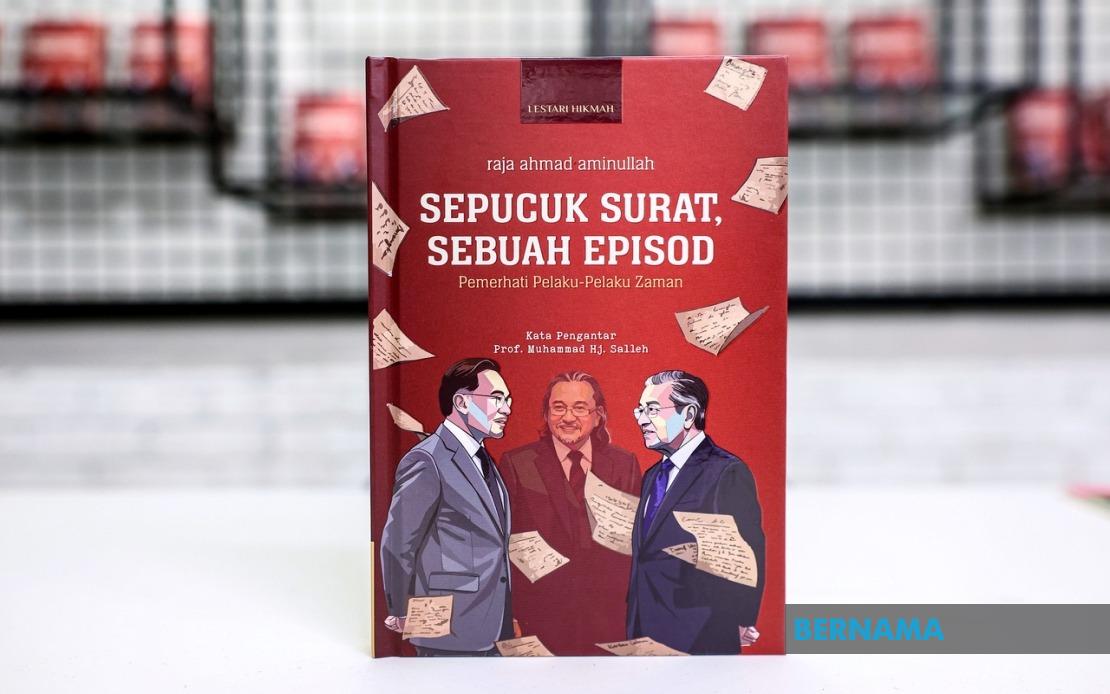
The literary world gathered in Kuala Lumpur on July 23 to witness the unveiling of a unique historical document: a collection of personal correspondence between celebrated cultural figure Raja Ahmad Aminullah and some of Malaysia's most influential personalities. Titled "Sepucuk Surat Sebuah Episod: Rakaman Pelaku-Pelaku Zaman", the work presents an intimate window into the lives and thoughts of key figures who have contributed to shaping the nation's trajectory, distinguished by its focus on human connection rather than partisan politics.
Raja Ahmad Aminullah, known affectionately as Pak Engku, has positioned this compilation as a documentary achievement rooted in social and cultural observation rather than political commentary. During the launch ceremony, attended by the National Book Council of Malaysia (MBKM) director Mohd Khair Ngadiron alongside artists, academics, and long-time colleagues, he articulated his intention to capture moments in time that might otherwise disappear from historical record. The author's approach reflects a deliberate choice to step back from the noise of contemporary political discourse and instead examine the broader social fabric and human interactions that define a society's evolution.
The distinction between chronicling political events and documenting socio-cultural phenomena runs through the heart of this project. Rather than analysing power struggles or governmental decisions, Raja Ahmad has chosen to focus on the observations and reflections that emerge from sustained personal relationships with individuals across various walks of Malaysian life. This methodological choice allows the book to transcend traditional historical narratives that often emphasise institutional structures and high-level political manoeuvres, instead offering readers the texture of actual human correspondence and thought from different perspectives.
In explaining the collection's scope and purpose, Raja Ahmad deliberately distanced the work from biographical narratives of specific individuals, whether prominent national leaders or himself. By insisting that the book neither centres on Tun Dr Mahathir Mohamad nor Datuk Seri Anwar Ibrahim, nor indeed on his own role, he signals an intention to present material that invites readers to draw their own conclusions. This positioning reflects a mature authorial stance that recognises the value in presenting primary source material—personal letters—without imposing a singular interpretive framework, thereby enabling multiple generations of readers to extract different meanings and lessons.
The temporal aspect of this collection warrants particular attention for Malaysian readers and regional historians. The correspondence documented within spans approximately 25 years, capturing a significant period of Malaysia's development that encompasses economic transformation, political transitions, and social change. By preserving these intimate communications from that era, Raja Ahmad has created a resource that allows future scholars and citizens to revisit how individuals of influence understood their times, what preoccupied their thinking, and how they articulated their concerns to one another. This archival function serves historians and researchers in ways that official records and public statements often cannot.
The decision to publish this material as a commercial book represents a significant act of cultural stewardship. Rather than confining these letters to private archives or academic institutions, making them accessible through bookstores and online channels democratises access to insights into Malaysian social and cultural history. The 169-page volume, published by Lestari Hikmah and priced at RM30 for softcover and RM80 for hardcover editions, positions the work as an accessible resource for general readers, literary enthusiasts, and students of Malaysian affairs alike. This pricing strategy and distribution approach suggest an intention to reach beyond academic circles.
For Malaysian readers accustomed to heavily politicised historical narratives, this book offers a refreshing alternative perspective grounded in personal observation and cultural documentation. The author's explicit disavowal of interest in "the politics of confrontation" or "the political process itself" does not render the work apolitical—all human observation carries political implications—but rather signals a different methodological approach. By observing communities and the socio-cultural issues that affect them, Raja Ahmad invites readers to consider how personal interactions, cultural values, and social dynamics shape national consciousness in ways that election cycles and parliamentary debates might obscure.
The book's reception among cultural figures and academics at its launch reflects broader recognition of the value in preserving such personal documentation. In an era when much communication occurs digitally and ephemerally, the existence of carefully curated personal correspondence from influential figures across multiple sectors of Malaysian society becomes increasingly precious. These letters potentially reveal nuances in thinking, expressions of doubt, moments of reflection, and human vulnerability that public statements rarely convey. For Southeast Asian readers seeking to understand Malaysia's development from a humanistic perspective, such primary sources offer invaluable texture.
Raja Ahmad's assertion that the work should serve as "a source of reflection and learning" positions readers as active participants in extracting meaning rather than passive consumers of interpretation. This pedagogical approach aligns with a long tradition of letter-based historical documentation that privileges voice and perspective over editorial analysis. The letters themselves become the primary text, with minimal authorial intervention shaping their presentation. This method allows readers with different backgrounds and viewpoints to find resonance with different correspondences, generating diverse insights rather than a univocal message.
The publication also represents an important contribution to Malaysia's documentary heritage at a moment when such materials risk permanent loss. Personal correspondence from influential figures spanning recent decades often exists in precarious conditions—stored in private homes, vulnerable to deterioration, dispersal, or destruction. By bringing such materials into the public realm through professional publication, Raja Ahmad ensures their preservation for future generations. Historians, sociologists, and cultural scholars will potentially draw upon this collection for years to come, extracting insights into how Malaysian society understood itself during a formative period.
For regional observers interested in Malaysian affairs, the book offers insight into how cultural intellectuals conceptualise their role in national development. Raja Ahmad's positioning of himself as an observer rather than a protagonist reflects a particular understanding of intellectual responsibility—one that values documentation and reflection over direct political engagement. This stance has implications for how Malaysian cultural figures navigate the relationship between their work and political systems, a question relevant across Southeast Asia as nations grapple with cultural autonomy and state influence. The book thus becomes a statement about intellectual independence as much as a collection of historical correspondence.

