German explosives experts are mobilising near Cologne to neutralise a substantial World War II-era aerial bomb that emerged from the Rhine River due to extraordinary drought conditions affecting Central Europe. The 500-kilogramme American ordnance, discovered on Wednesday evening in the Rheinpark district, represents one of thousands of munitions still scattered across German waterways decades after the war's conclusion in 1945. The defusing operation carries significant complexity and risk, necessitating the temporary displacement of approximately 360 people residing or employed within a 400-metre exclusion zone surrounding the discovery site.
The affected population encompasses residents of a retirement home and personnel working at nearby RTL television studios, illustrating the continuing intersection of wartime legacy and contemporary civilian life in European cities. Authorities have announced precautionary evacuations but have not yet released specific timing for the critical defusing procedure, indicating the operation's inherent unpredictability and the need for careful preparation by bomb disposal specialists. The delay in announcing exact timings reflects standard protocol when handling unexploded ordnance of this magnitude, where even minor variables can influence operational safety.
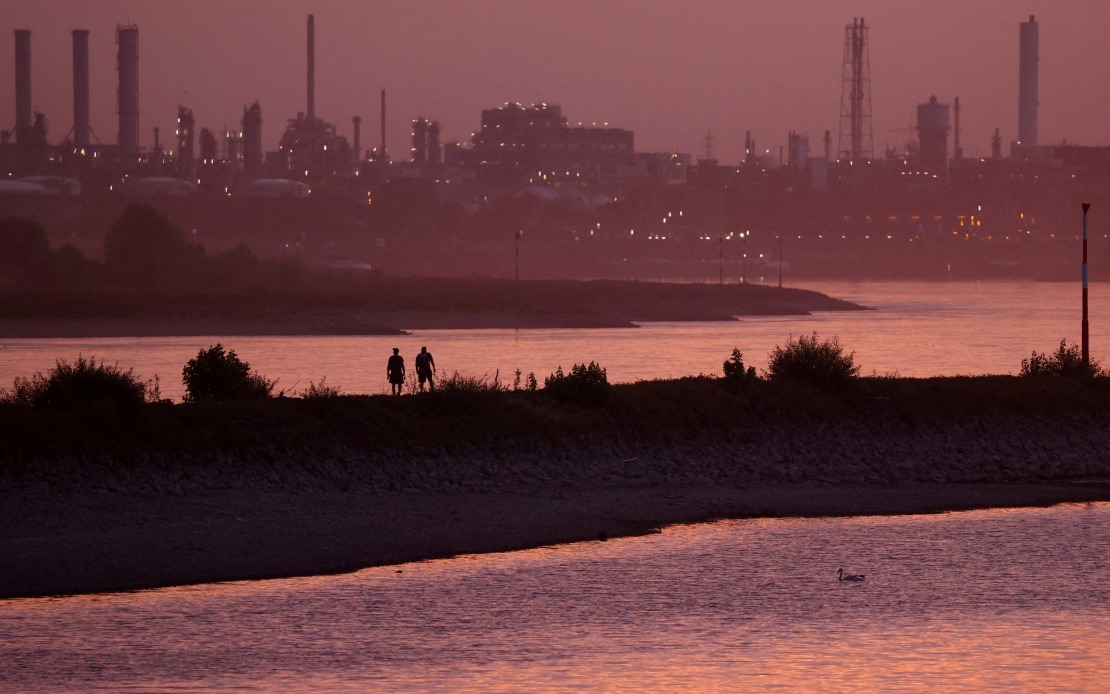
The bomb's emergence traces to unprecedented hydrological stress affecting the Rhine, Europe's principal commercial waterway. On Thursday, the water gauge at Cologne registered 67 centimetres, matching a historic minimum achieved mere days earlier, with forecasts suggesting further deterioration to 66 centimetres within hours. This cascading decline represents the consequence of extended heat waves and drought conditions plaguing Central Europe throughout summer 2022, phenomena increasingly attributed to climate change patterns that intensify extremes in regional weather systems.
Such dramatically reduced water levels carry profound economic ramifications for German commerce and transportation infrastructure. Shipping operators along the Rhine—traditionally one of the world's busiest inland navigation routes—have implemented emergency measures, including mandatory cargo load reductions that constrain vessels to approximately half their normal carrying capacity. This transportation bottleneck reverberates through European supply chains, affecting industrial production and consumer goods availability across the continent during a period already strained by geopolitical tensions and energy shortages.
Beyond immediate commercial disruption, the receding waters resurrect hidden remnants of historical violence. Throughout the war, Allied bombing campaigns devastated German cities, with thousands of tonnes of ordnance falling across inhabited and industrial zones. Many bombs failed to detonate upon impact, instead embedding themselves in riverbeds, soft soil, and urban foundations where they remain dormant but dangerous. As water tables fluctuate dramatically due to climatic shifts, these buried hazards progressively resurface, creating recurring crises for civilian populations in affected regions.
Cologn's discovery exemplifies a broader pattern evident throughout Germany and neighbouring countries, where low-water episodes routinely expose forgotten munitions, sometimes triggering large-scale evacuations and emergency responses. The psychological and logistical burden this places on communities remains substantial, forcing periodic disruptions to normal life and demanding sustained expertise and resources from government emergency services. For residents and businesses, such episodes underscore the persistent physical scars that warfare inflicts across generations.
The broader environmental context adds another dimension to this situation. Hydrological stress on the Rhine reflects systemic climate vulnerabilities affecting Europe's water infrastructure, with cascading consequences for agriculture, energy production, and transportation. Germany and neighbouring nations face intensifying pressure to adapt infrastructure and planning frameworks to accommodate more volatile hydrological cycles. The Rhine's low-water episodes, once rare, appear increasingly frequent, suggesting permanent shifts in precipitation and evaporation patterns across the continent.
For Malaysia and other Southeast Asian nations, the Rhine situation illustrates interconnected global challenges: how climate change exacerbates resource scarcity, disrupts international commerce, and resurrects historical liabilities. Southeast Asia's own river systems, including the Mekong and Irrawaddy, face comparable pressures from drought and changing monsoon patterns, with potential consequences for agriculture-dependent economies and millions of dependent populations. Understanding Europe's adaptation strategies and emerging vulnerabilities offers instructive lessons for regional policymakers.
The immediate priority for Cologne authorities remains executing the bomb defusion safely while minimising disruption to displaced residents and commercial operations. Explosives experts possess sophisticated equipment and protocols refined through repeated encounters with similar discoveries, yet each operation retains inherent risks. The psychological toll on evacuated populations—particularly elderly retirement home residents—warrants consideration alongside technical safety considerations. Once the bomb is neutralised, authorities must address broader questions concerning how climate volatility will reshape infrastructure resilience and civil preparedness across riverine Europe.

