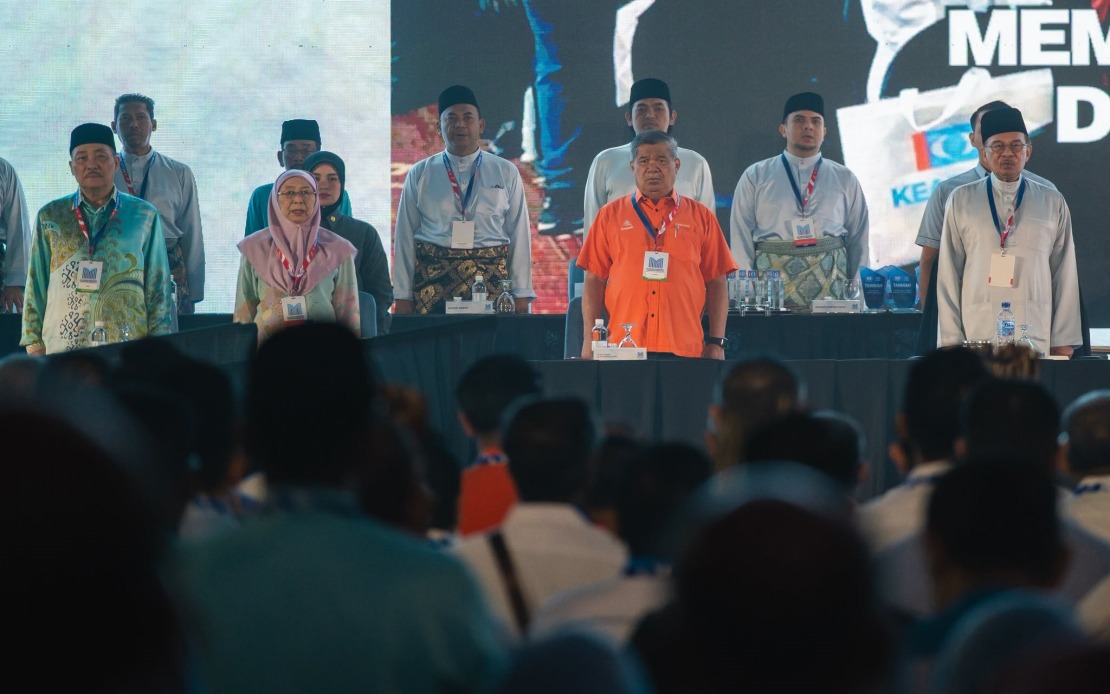
Parti Amanah Negara (Amanah) president Datuk Seri Mohamad Sabu has emphasised that the nation's reform momentum must remain a governing priority even after electoral victory, rejecting the notion that reform measures are temporary campaign rhetoric deployed to win public support. Speaking at the 2026 Parti Keadilan Rakyat (PKR) National Congress in Melaka on Wednesday, the Agriculture and Food Security Minister reinforced a vision where systemic overhaul and enhanced accountability become embedded institutional practices rather than transitional political promises.
The Amanah leader's remarks reflect a deepening recognition within Malaysia's reform-oriented coalition that public expectations have shifted fundamentally. Citizens increasingly distinguish between pledges made during campaigning and the tangible delivery of governance improvements once elected officials occupy ministerial positions and parliamentary benches. For Mohamad Sabu, this distinction holds particular significance—reform, he argued, cannot be performance theatre or selective application based on convenience. The mandate awarded by Malaysian voters, he contended, demands demonstration through concrete work and measurable action, irrespective of political affiliation or hierarchical status within government structures.
At the heart of Mohamad Sabu's message lies an uncompromising stance toward financial impropriety and abuse of public resources. He declared that individuals siphoning taxpayer money would face sustained prosecution and accountability measures, with no consideration given to their identity, previous standing, or current administrative rank. This positioning carries symbolic weight in Malaysian political discourse, where historical tolerance for elite-level corruption has been gradually replaced by popular demand for equal application of anti-corruption mechanisms. The minister's language—firm and categorical—signals that reform extends beyond rhetorical condemnation to prosecutorial reality.
Mohamad Sabu's contributions at the PKR congress complemented broader remarks from party president Datuk Seri Anwar Ibrahim, whose address similarly championed continuity of reform trajectories. This alignment between Amanah and PKR leadership underscores coalition-wide commitment to maintaining reform momentum as a governing philosophy. For coalition members and observers monitoring internal political dynamics, such synchronized messaging reduces potential fractures around implementation priorities and demonstrates unity on fundamental governance principles, even as parties retain distinct organisational identities and policy emphases.
Beyond anti-corruption frameworks, Mohamad Sabu articulated a commitment to advancing Malaysia Agreement 1963 (MA63) provisions benefiting Sabah and Sarawak. This emphasis responds to longstanding grievances from East Malaysian constituencies regarding fiscal arrangements and constitutional protections under the historic agreement. By positioning MA63 implementation as integral to the reform agenda, the Amanah president signals that governmental reform encompasses federalism-related issues and regional equity considerations alongside corruption control and institutional strengthening.
The minister further contextualized Malaysia's economic trajectory within lived experience rather than headline statistics alone. Whilst economic growth figures command media attention and international investor interest, Mohamad Sabu stressed that meaningful governance must translate macroeconomic expansion into household-level improvements in living standards. This distinction proves crucial for Malaysian households navigating persistent cost-of-living pressures, where nominal growth rates fail to translate into proportional wage increases, housing affordability improvements, or reduced consumer price burdens. The government's role, he suggested, extends beyond stimulating aggregate demand to ensuring growth distributes across income segments and addresses infrastructural constraints affecting ordinary Malaysians.
Cost-of-living challenges have emerged as defining electoral issues across Malaysia and Southeast Asia broadly. Voters increasingly evaluate governments on bread-and-butter concerns—transportation expenses, food prices, housing affordability, and utility costs—rather than abstract development indices. Mohamad Sabu's framing acknowledges this political reality, positioning the coalition government as responsive to material hardships affecting daily routines rather than preoccupied exclusively with balance sheet indicators. This approach aligns governance legitimacy with tangible household impact rather than technocratic achievement metrics.
Another substantive reform component highlighted involves universities and academic freedoms. Mohamad Sabu welcomed the announced repeal of the Universities and University Colleges Act 1971 (AUKU), characterizing the legislative change as expanding democratic space and expressive liberty for campus-based communities. AUKU restrictions have historically constrained student activism and political expression on university grounds, generating tensions between administrative control and academic freedom principles. Repeal represents symbolic and substantive movement toward permitting campus-based civic participation, potentially reshaping how universities function as sites of intellectual contestation and democratic practice. For younger Malaysian voters, particularly those within academic settings, such reforms address concerns about state restrictions on political expression.
For Malaysian regional observers and Southeast Asian analysts, Mohamad Sabu's statements carry implications extending beyond immediate domestic politics. Malaysia's coalition government operates within a Southeast Asian context increasingly characterized by authoritarian backsliding across multiple nations. Emphasis on sustained anti-corruption mechanisms, federalism principles, academic freedoms, and cost-of-living responsiveness positions Malaysia as potentially countervailing such trends. However, the distance between reform rhetoric and implementation reality remains substantial, with subsequent governmental actions either validating or undermining these professed commitments.
The credibility of sustained reform depends substantially on whether Malaysian officials prosecute anti-corruption cases consistently across political factions, implement constitutional provisions fairly, protect institutional independence, and deliver measurable improvements in household economic circumstances. Public cynicism regarding reform sincerity stems partly from historical instances where anti-corruption campaigns targeted political opponents whilst protecting allies. Genuine institutional reform requires transcending such selective application, establishing procedures independent of factional interests, and permitting courts, anti-corruption bodies, and regulatory agencies autonomous operation despite political pressures.
Moving forward, the Malaysian coalition government's capacity to maintain reform momentum whilst managing competing fiscal demands, navigating coalition partner interests, and responding to evolving security and foreign policy challenges will determine whether reform constitutes governing practice or campaign narrative recycled during subsequent elections. Mohamad Sabu's emphasis on sustained commitment provides important framing, yet institutional capacity and political will ultimately determine whether reform transcends aspirational rhetoric.

