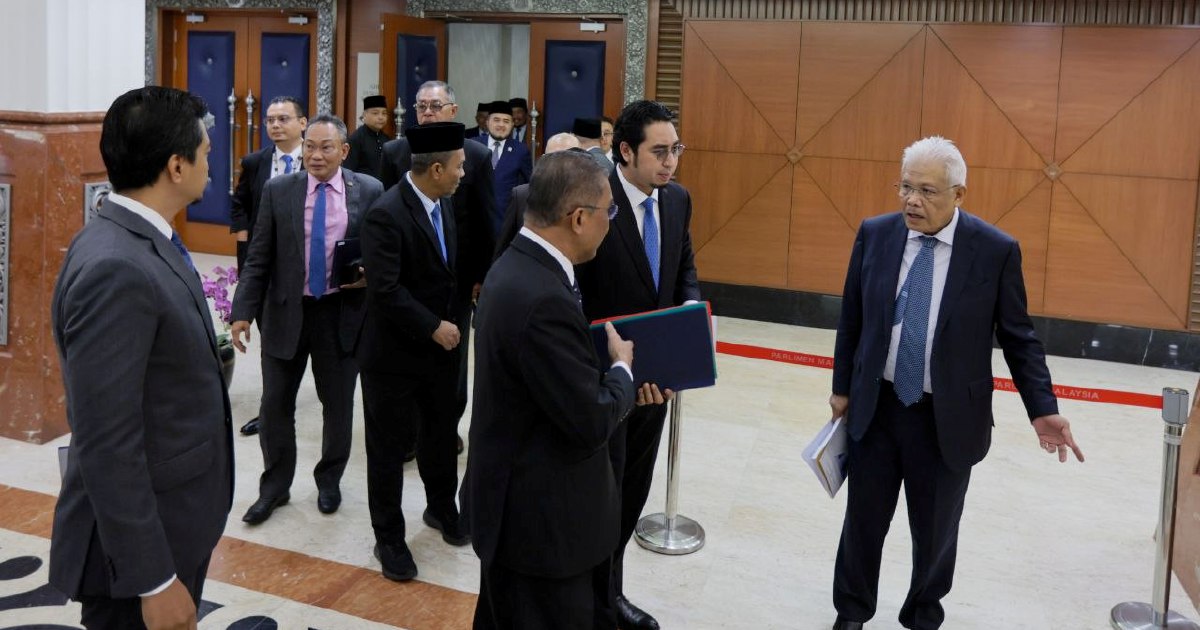
Minister in the Prime Minister's Department (Religious Affairs) Dr Zulkifli Hasan has issued a public invitation for opposition parliamentarians to rejoin proceedings in the Dewan Rakyat, specifically to participate in substantive discussions surrounding the Royal Commission of Inquiry findings related to Tabung Haji. The call represents an attempt by the government to encourage broader legislative engagement on what remains one of Malaysia's most sensitive institutional matters affecting millions of Muslim pilgrims and investors.
Tabung Haji, the pilgrim and investment fund that has long occupied a sacred position in Malaysia's Islamic financial architecture, has endured sustained scrutiny following revelations of significant financial irregularities and management failures. The establishment of the RCI itself reflected extraordinary public concern about how the institution had been administered, with particular focus on whether proper governance standards had been maintained and whether beneficiaries' interests were adequately protected. The inquiry's conclusions carry substantial implications for restoring public confidence in an organisation that traditionally enjoys deep reverence among Malaysian Muslims.
Dr Zulkifli's intervention signals frustration within the executive about the nature and tenor of parliamentary discussions on this issue. Opposition lawmakers have adopted a strategy of selective participation or boycott regarding certain government-initiated debates, a tactic increasingly employed as parliamentary tensions heighten across legislative sessions. By publicly appealing for their return, the Religious Affairs Minister appears to be positioning the government as the party advocating for transparent, inclusive legislative dialogue while implying that opposition absence undermines democratic accountability.
The significance of the Tabung Haji matter extends well beyond parliamentary procedure. For Malaysian Muslims, particularly those of modest means who contribute regularly to the fund as they save toward performing the hajj pilgrimage, the integrity of the institution remains paramount. Any perception that management failures have compromised their savings carries profound psychological and financial consequences. The RCI process itself represented official acknowledgment that systemic problems had occurred, necessitating independent investigation and public accounting.
Parliamentary debate on the RCI report offers an opportunity for the opposition to scrutinise government responses, question whether proposed reforms adequately address identified deficiencies, and hold administrators accountable for decisions made during periods of alleged mismanagement. Opposition MPs historically have leveraged such discussions to highlight governance failures and demand remedial action. Their absence from such debates, whether voluntary or strategic, paradoxically weakens the parliament's capacity to function as an effective check on executive power regarding institutional reform.
The timing of Dr Zulkifli's appeal coincides with a broader pattern of parliamentary tension characterised by walkouts, boycotts, and procedural disputes. Opposition parties have occasionally withdrawn from sessions to protest what they characterise as unfair procedural decisions or government overreach. This escalating pattern of non-participation, regardless of justification, raises questions about whether Malaysia's parliament is functioning optimally as a forum for national problem-solving. When legislators abandon the chamber rather than engage substantively, the legislative institution itself suffers credibility damage.
The Tabung Haji RCI report likely contains detailed recommendations for structural and procedural reforms intended to prevent recurrence of identified problems. These recommendations require serious parliamentary consideration, constructive questioning, and informed debate to assess their adequacy. Opposition expertise and institutional knowledge become particularly valuable during such evaluative phases, particularly when previous mismanagement has been identified. Their informed critique could strengthen proposed reforms or expose gaps requiring additional attention.
For Malaysian investors and pilgrims who depend on Tabung Haji's reliable administration, parliamentary debate represents a crucial mechanism through which public representatives can demonstrate commitment to institutional accountability. When either side of parliament withdraws from such discussions, it sends an unfortunate signal that protecting the organisation's interests matters less than pursuing partisan advantage. The institution's long-term health depends on restored public confidence, which only comprehensive parliamentary engagement can facilitate.
Dr Zulkifli's call also reflects the government's apparent confidence in the quality and defensibility of the RCI report itself. An administration uncertain about the inquiry's conclusions might prefer limited parliamentary scrutiny. The appeal for opposition participation suggests the government believes sustained questioning will ultimately validate the RCI process and demonstrate the seriousness with which findings and recommendations are being addressed. This interpretive approach requires backing through concrete implementation of recommended reforms and transparent communication regarding progress.
The broader context involves questions about whether Malaysian parliamentary culture currently supports the robust inter-party dialogue that complex institutional problems require. The Tabung Haji matter represents exactly the kind of issue where partisan divides should be subsumed beneath shared concern for protecting the institution and its beneficiaries. Political competition remains legitimate, but not at the expense of institutional integrity that affects millions of Malaysians directly.
Moving forward, the extent to which opposition MPs return to debate Tabung Haji RCI matters will indicate whether parliamentary discussion on critical governance issues can transcend partisan posturing. The institution itself, along with the Muslims who depend upon it, ultimately benefits most when all legislators engage seriously with reform proposals rather than allowing boycotts or absences to prevent adequate scrutiny.

