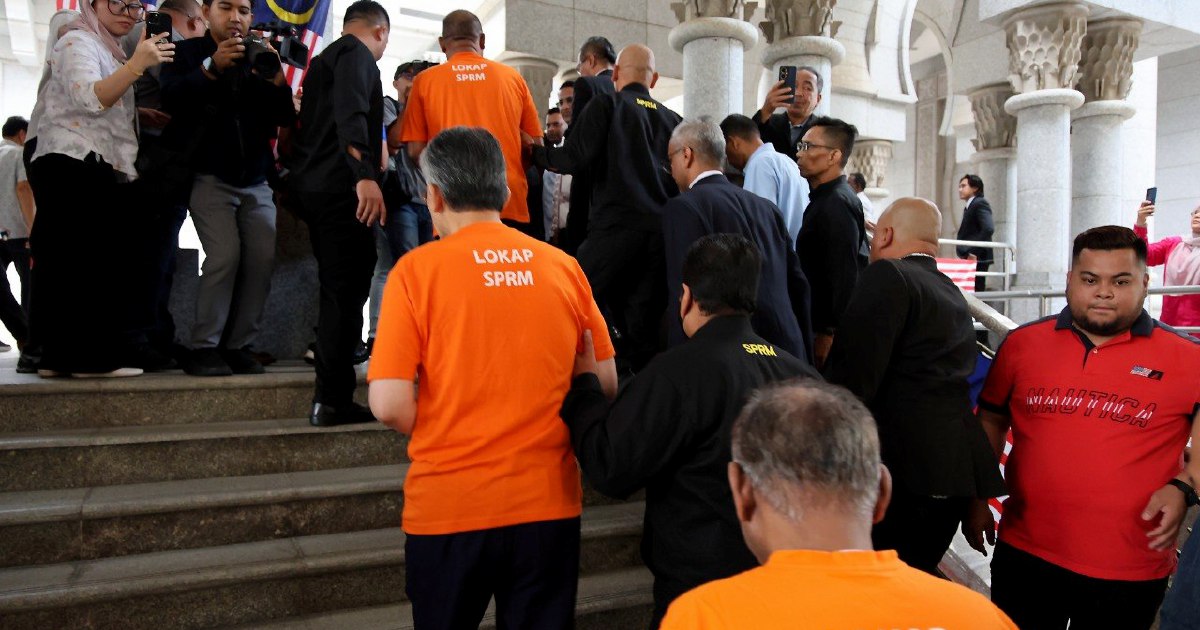
Two prominent figures from Malaysia's financial and pilgrimage administration sectors faced the court system on Wednesday when they arrived at the Putrajaya magistrates' court for remand proceedings. The appearance of the former Lembaga Tabung Haji chairman alongside the former Treasury secretary-general has drawn heightened scrutiny to the handling of one of the nation's most sensitive institutional portfolios.
Lembaga Tabung Haji serves a critical function within Malaysia's broader religious and financial ecosystem. The sovereign wealth fund manages savings and investments primarily for Muslim pilgrims preparing for hajj journeys to Mecca, holding the accumulated contributions of hundreds of thousands of Malaysian worshippers. The significance of this institution cannot be overstated—it safeguards funds entrusted by ordinary Malaysians fulfilling one of Islam's five pillars, making governance lapses particularly consequential for public confidence.
The appearance at Putrajaya, Malaysia's administrative capital, signals that investigative authorities have moved beyond preliminary inquiry stages. Remand hearings represent a formal judicial step where prosecutors establish probable grounds for detention while investigations proceed. The involvement of a former Treasury secretary-general introduces an additional dimension of complexity, suggesting that questions may extend beyond single-institution management to encompass broader fiscal oversight and interagency coordination failures.
The pairing of these two officials in simultaneous court proceedings suggests investigators are pursuing a connected narrative rather than isolated incidents. The former Treasury official would have held significant responsibility for monitoring government-linked financial institutions, creating a potential avenue for accountability regarding oversight mechanisms. Their joint appearance hints that authorities may be examining whether administrative safeguards proved inadequate or were circumvented.
Context within Malaysia's broader institutional landscape matters considerably. The nation has undertaken successive phases of anti-corruption enforcement and governance reform over recent years, with specialized agencies expanding investigative capabilities. When senior officials from different organizational hierarchies appear together before the courts, it typically indicates a systematic review rather than individual misconduct targeting.
For the Malaysian pilgrimage sector specifically, institutional integrity directly affects millions. Hajj savings represent decades of accumulated family contributions in many households. Any mismanagement or poor governance affects not merely abstract financial metrics but the tangible aspirations of ordinary Muslims planning their spiritual obligations. Public confidence in Lembaga Tabung Haji's stewardship underpins continued participation in what should function as a straightforward facilitation mechanism for religious observance.
The remand hearing process itself carries procedural significance. The magistrate must determine whether continued detention serves investigative purposes or whether alternatives suffice. These decisions often hinge on whether authorities can demonstrate either flight risks or evidence contamination concerns. The judicial analysis of such factors provides insight into investigative confidence and the strength of preliminary evidence.
Regionally, Malaysia's handling of governance lapses involving senior financial officials commands attention. Southeast Asian financial systems benefit from institutional credibility, with investments and external confidence partially dependent on perceived standards of administrative accountability. High-profile court appearances by former treasury and state-fund leadership send important signals about systemic willingness to examine institutional performance regardless of official seniority.
The Treasury's dual role as both fiscal policymaker and institutional overseer places former secretaries-general in particularly sensitive positions regarding any governance inquiry. These officials bore responsibility for monitoring numerous government agencies and linked entities. Their involvement in proceedings related to specific institutional performance raises broader questions about oversight effectiveness and whether structural checks adequately protected beneficiary interests.
Transparency and judicial process assume heightened importance in cases involving public-sector figures and government-linked financial institutions. Malaysian jurisprudence on administrative accountability continues evolving as courts encounter increasingly complex cases involving senior officials and institutional governance failures. The remand proceeding decisions will contribute to developing jurisprudential standards for such matters.
For Malaysian pilgrims and families with accumulated Lembaga Tabung Haji savings, developments in this court process carry direct relevance. They need assurance that their contributions enjoy adequate protection and that institutional leadership operates within appropriate governance frameworks. The judicial examination of former leadership provides an opportunity to identify and address any structural vulnerabilities in the fund's oversight architecture.
The case also reflects broader regional patterns of examining government-linked companies' governance structures. Throughout Southeast Asia, authorities increasingly scrutinize institutional leadership practices and fiscal stewardship. Malaysia's willingness to pursue investigations involving former senior officials contributes to evolving norms around accountability and institutional integrity across the region.

