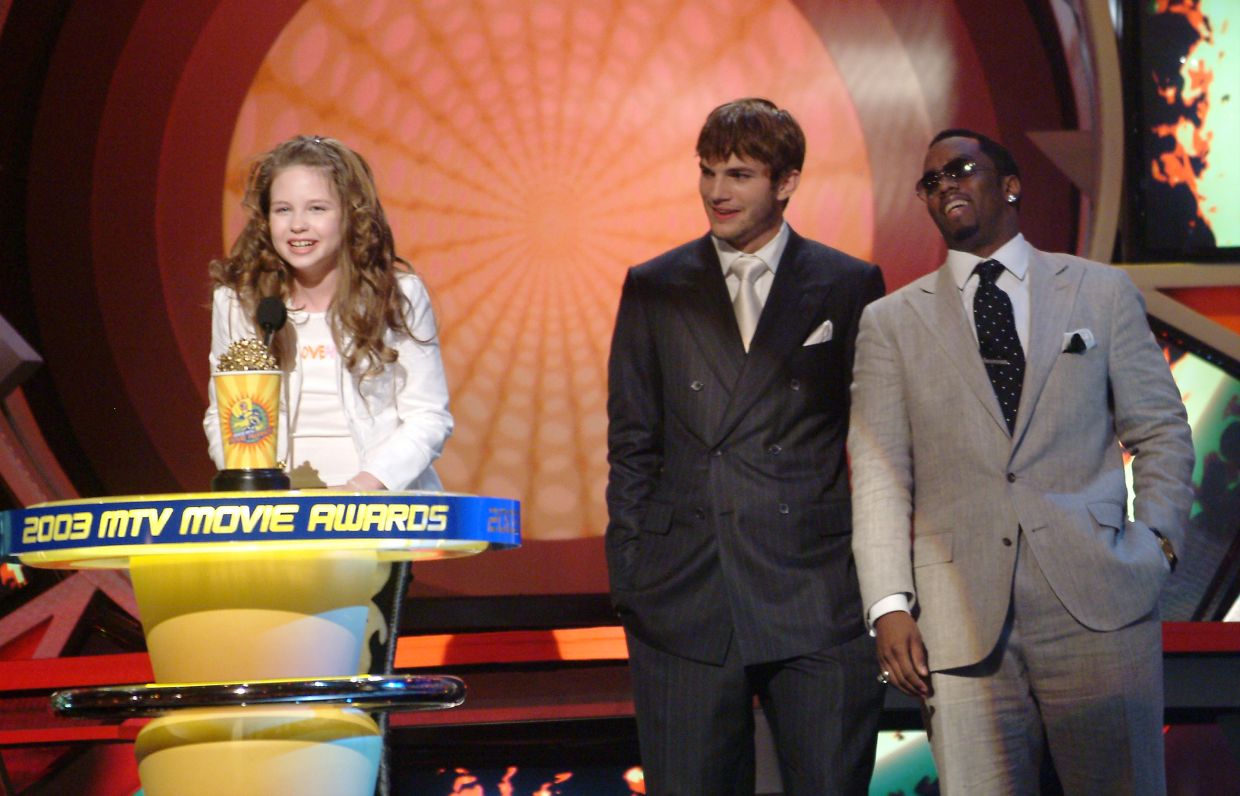
A decades-old video clip has renewed scrutiny of Sean 'Diddy' Combs following the death of Daveigh Chase, the actress best known for her chilling role in The Ring. The footage, captured at the 2003 MTV Awards, shows the music mogul approaching the preteen winner of Best Villain and casually inviting her to his after-party. The exchange, which includes Ashton Kutcher's apparent amusement at the moment, has taken on a troubling dimension in the context of subsequent revelations about Combs' activities and Chase's own tragic circumstances.
Chase passed away on June 16 at a Los Angeles hospital at the age of 35, according to confirmation from her father, John Schwallier. The cause involved a combination of medical complications, including bacterial meningitis, a blood infection, and severe malnutrition. The circumstances surrounding her death paint a picture of profound decline, as she had been battling addiction and living without stable housing in the area near the hospital where she ultimately died. Her final years appeared marked by the kind of vulnerability and instability that can leave individuals exposed to exploitation.
The young actress had earned the Best Villain accolade at the MTV Awards for her portrayal of Samara Morgan, the supernatural antagonist in The Ring—a role that showcased her remarkable acting ability at such a tender age. When she received the trophy alongside Kutcher, she was presented with what seemed like a glamorous industry moment. However, the footage of Combs approaching her with drink in hand and asking whether she would be attending the after-party carries distinctly uncomfortable implications now, particularly given what has subsequently emerged about the nature of these gatherings.
Combs' arrest in September 2024 at the Park Hyatt Hotel in Midtown Manhattan marked a dramatic turning point in his public standing. Investigations into his activities led to detailed allegations surrounding what prosecutors termed 'freak-off' parties—described as multi-day events characterised by drug use and sexual activity, frequently involving sex workers recruited through coercion and manipulation. These celebrations of excess had been central to Combs' brand for decades, but the legal revelations exposed their darker operational aspects and the systematic nature of alleged misconduct.
The scale of accountability now facing the 55-year-old hip-hop entrepreneur underscores how completely his legal and reputational fortunes have collapsed. In July 2025, he was convicted on two counts of transportation to engage in prostitution following a comprehensive federal sex trafficking trial conducted in New York. The conviction carried a 50-month prison sentence, positioning him behind bars at FCI Fort Dix in New Jersey. These criminal charges represent only the beginning of his legal battles, as he also faces more than 100 civil lawsuits, suggesting a torrent of allegations from multiple complainants.
The resurfacing of the 2003 footage carries particular weight because it documents a moment when Combs was at the height of his cultural influence, operating without apparent constraint or concern. At that time, his party invitations were considered coveted social currency within entertainment circles. The clip captures him in his element—powerful, celebrated, and comfortable with approaching a child at an industry event with an invitation to an adult gathering. The casual nature of the interaction, and Kutcher's seemingly reflexive laugh, reflect an era when such behaviour may have been normalised or dismissed within entertainment spaces.
For Malaysian and Southeast Asian observers, this case illustrates broader patterns concerning the exploitation vulnerabilities that exist within global entertainment industries. The entertainment sector across Asia has grappled with similar scandals involving power imbalances, the targeting of young performers, and systemic failures to protect vulnerable individuals. Chase's trajectory—from celebrated young talent to someone struggling with addiction and homelessness—raises uncomfortable questions about the support systems available to child performers and the long-term psychological impacts of early industry exposure.
The contrast between Chase's childhood moment of recognition and her adult circumstances reflects the particular precarity faced by child actors. Without robust protections, industry connections, and proper guardian oversight, young performers can find themselves isolated when their marketability declines or when they encounter exploitative figures. The fact that she was living on the streets and battling severe health issues at the time of her death suggests a complete absence of the safety net that should theoretically exist for someone with her profile and industry history.
Combs' case has broader implications for how the entertainment industry addresses power dynamics and accountability. His conviction represents a rare instance of significant consequences following high-profile allegations, though it came only after multiple survivors came forward and authorities developed substantial evidence. The accumulation of over 100 civil suits indicates that the pattern of alleged misconduct was neither isolated nor subtle—it was systematic and affected numerous individuals over an extended period.
The timing of this video's circulation—arriving in the aftermath of Chase's death and Combs' incarceration—creates a narrative moment that invites reflection on institutional responsibility. The question of whether anyone in that 2003 MTV Awards environment recognised something concerning about a powerful adult man inviting an unaccompanied 12-year-old to a private party remains unanswered. Equally important is whether entertainment industry protocols have evolved sufficiently to prevent similar scenarios from occurring with current young performers. Chase's death, preceded by years of undocumented struggle, serves as a sobering reminder that the industry's casual relationship with child safety has documented human costs.