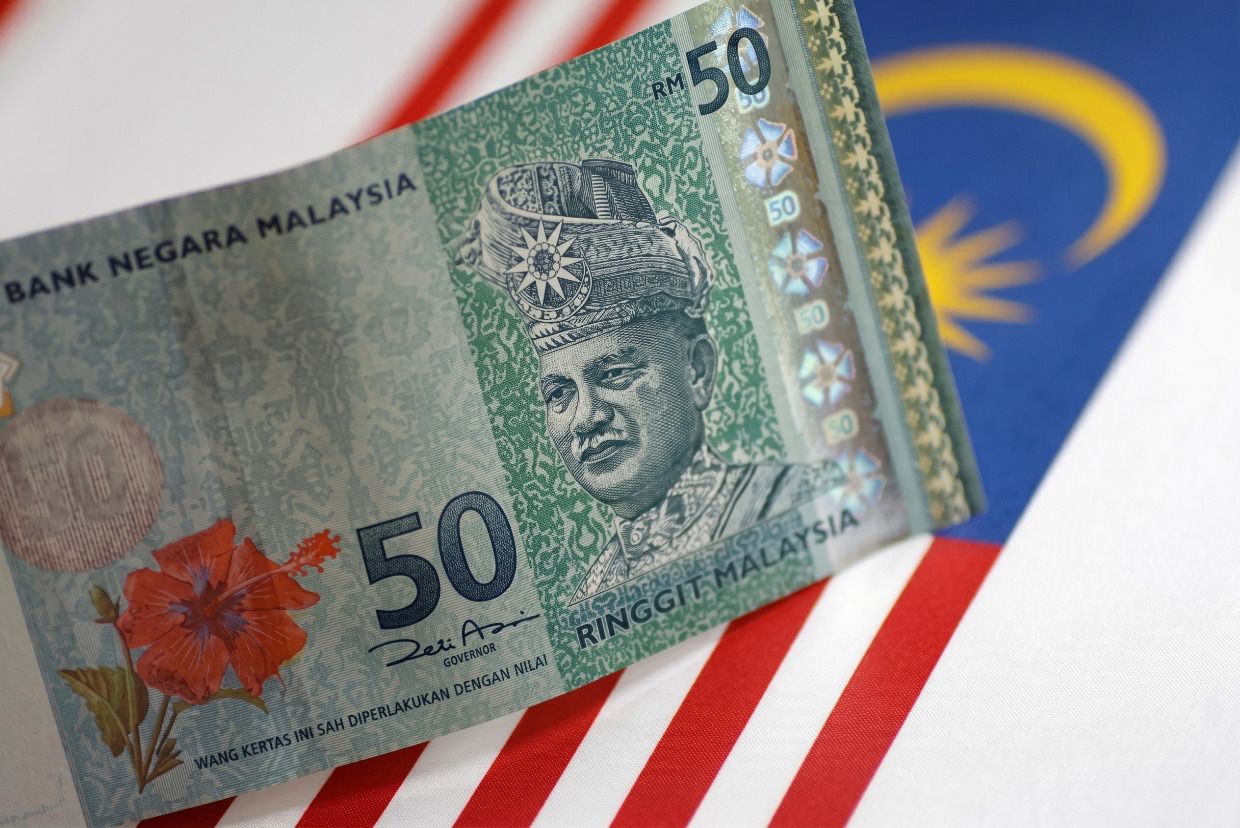
After a disappointing first half that saw the ringgit lag behind all other Asian currencies, Malaysia's monetary authorities are taking decisive steps to engineer a recovery, with financial analysts now predicting a substantial rebound toward 3.95 per dollar by the end of 2025. The optimism surrounding the ringgit's prospects reflects Bank Negara Malaysia's commitment to boost foreign-exchange inflows through targeted policy measures announced in late June, combined with underlying economic momentum that shows few signs of abating.
The specific recovery targets identified by major international banks underscore the market's conviction in the currency's turnaround. Royal Bank of Canada has projected the ringgit will reach 3.95 against the dollar, whilst analysts at Australia & New Zealand Banking Group hold even more bullish expectations, forecasting a climb to 3.80—a level not seen since 2015. The ringgit closed Friday's trading at 4.0722 per dollar, representing modest gains of 0.2%, though the momentum has visibly shifted since Bank Negara pledged on June 24 to intensify its efforts to encourage the repatriation and conversion of Malaysian companies' earnings held overseas.
The policy framework underpinning this expected recovery mirrors successful approaches deployed in 2024, when similar initiatives helped the ringgit rebound dramatically from its weakest level against the dollar since 1998 to ultimately rank as Asia's strongest performer for that year. Bank Negara's current push focuses specifically on encouraging multinational corporations and local enterprises to convert foreign-currency deposits into ringgit, creating a direct conduit between Malaysia's robust trade surpluses and stronger currency valuation. This approach acknowledges that even with substantial export earnings, currency weakness can persist if those proceeds remain in foreign denominations rather than flowing into domestic financial markets.
Malaysia's economic fundamentals present a compelling backdrop for the ringgit's anticipated strengthening. The nation has emerged as a significant beneficiary of the global artificial intelligence expansion, with surging demand for data centre infrastructure and corresponding foreign investment flows. This technological shift has complemented longstanding strengths in electrical and electronic manufacturing, sectors where Malaysia maintains globally competitive advantages. The scale of export momentum became apparent in May's figures, which showed total exports surging 45 percent year-on-year and lifting the nation's monthly trade surplus to a record 40 billion ringgit, equivalent to approximately $9.8 billion.
The financial inflows accompanying this trade strength have begun to manifest in Malaysia's bond markets, traditionally a barometer of foreign investor confidence in ringgit-denominated assets. Global funds have purchased approximately $2.1 billion of local bonds through June 29, data released by Bank Negara shows, putting the market on course for its largest monthly inflow since May 2025. This surge reflects renewed foreign appetite for Malaysian fixed-income securities, driven by the combination of attractive yields and improved currency stability expectations. Such bond inflows matter significantly because they represent longer-term capital commitments rather than speculative flows, suggesting a more sustainable foundation for currency strength.
Analysts view the convergence of policy initiatives and economic performance as mutually reinforcing. Abbas Keshvani, macro strategist at RBC in Singapore, articulates this perspective by emphasizing that Malaysia's solid trade surplus and sustained foreign demand for local debt securities should naturally support ringgit outperformance within the Asian region. However, he stresses that Bank Negara's specific measures to encourage foreign-exchange conversion represent the critical mechanism linking abstract trade advantages to actual currency appreciation. Without such policy intervention, substantial export earnings could remain locked in foreign-currency accounts, failing to exert upward pressure on the ringgit's value.
The evidence of corporate participation in these schemes is already accumulating. Data spanning March through May indicates that foreign-currency deposits held by Malaysian businesses have increased measurably, suggesting companies are accumulating overseas earnings before executing conversions in response to Bank Negara's incentive framework. Kausani Basak, an FX analyst at ANZ, notes this pattern and projects that as Bank Negara's measures take hold, these deposits will be progressively converted to ringgit, providing a substantial tailwind for currency appreciation. Simultaneously, resilient foreign direct investment inflows into Malaysia—particularly from firms seeking to establish or expand operations to serve the regional AI and technology sectors—should add additional strength to the ringgit over coming quarters.
Yet the currency's recovery trajectory faces genuine headwinds that could constrain the pace of appreciation or even puncture optimistic forecasts. The United States Federal Reserve has signaled a more hawkish policy stance than many investors anticipated, potentially supporting dollar strength globally and limiting currency gains for emerging-market currencies like the ringgit. Additionally, domestic political uncertainty presents a risk factor that international investors monitor carefully. Upcoming state elections will serve as a crucial test of public support for Prime Minister Anwar Ibrahim and his ruling coalition before national polls take place, and any political instability could spook foreign investors and reduce capital inflows.
The timing of Bank Negara's intensified push for foreign-exchange inflows arrives at a moment when Malaysia's growth trajectory appears solid but faces enough medium-term uncertainties to justify continued policy support. Unlike the dramatic recovery witnessed in 2024, when the ringgit rebounded from crisis levels, the current recovery involves marginal gains on already-moderate valuations. This suggests the strengthening anticipated by analysts may proceed gradually rather than dramatically, offering opportunities for medium-term investors without creating sharp daily volatility. For Malaysian households and businesses with exposure to foreign currencies or dollar-denominated liabilities, a steady ringgit recovery would translate into tangible financial benefits.
The broader regional context further supports expectations for ringgit outperformance. Across Southeast Asia, Malaysia maintains distinctive advantages in attracting technology-sector foreign investment and possesses the financial market infrastructure to absorb substantial capital inflows. The combination of these structural advantages with targeted policy measures positions the ringgit favourably relative to regional peers, particularly those facing less robust export performance or less credible central bank commitment to currency stability. International investors increasingly recognize this positioning, explaining the recent surge in demand for Malaysian bonds and setting the stage for further ringgit appreciation if political risks remain contained and external conditions permit.

