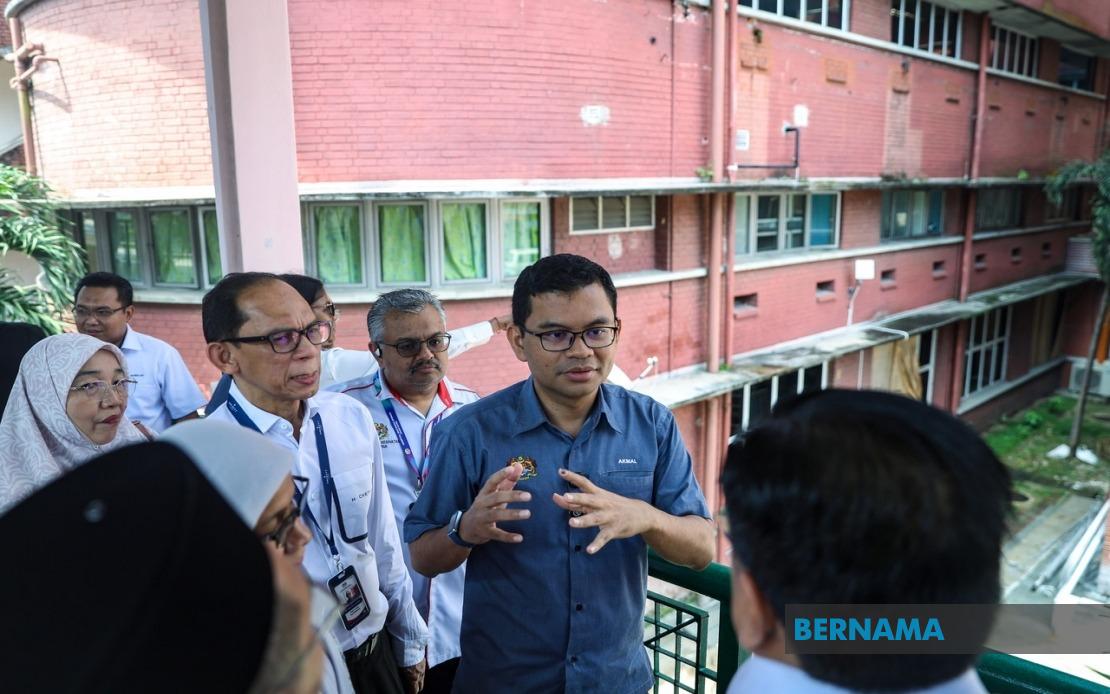
A comprehensive RM1.139 billion health infrastructure programme is reshaping Sultanah Aminah Hospital (HSA) in Johor Bahru, with Economy Minister Akmal Nasrullah Mohd Nasir confirming that multiple facility enhancement initiatives are progressing across the state's largest public medical facility. The integrated development agenda represents a significant commitment to bolstering tertiary healthcare capacity in one of Malaysia's most populous states, where demand for specialised medical services has intensified alongside rapid urban expansion and demographic shifts.
The electrical infrastructure modernisation component, budgeted at RM159 million, has achieved 76.49 per cent physical completion and constitutes the immediate priority among the projects. This foundational upgrade encompasses the main electricity supply overhaul alongside comprehensive electrical and mechanical systems replacement—critical investments that ensure hospital operations remain resilient during the ongoing construction phase. Such infrastructure work typically operates invisibly to public perception yet forms the backbone enabling modern diagnostic and therapeutic capabilities that contemporary healthcare delivery demands.
The more visible expansion comes through construction of the Accident & Casualty Centre (ACC), which incorporates integrated multi-storey car parking infrastructure alongside two phases of specialist clinic development, collectively valued at RM877.54 million. These components are expected to substantially increase the hospital's functional capacity, particularly addressing chronic congestion in emergency departments and outpatient services that characterise many Southeast Asian public hospitals operating at or beyond design capacity. The specialist clinic phases represent strategic differentiation, allowing HSA to consolidate and expand non-emergency medical consultations in purpose-built environments rather than competing for space with acute-care operations.
Contractor appointment for the ACC, car park, and Specialist Clinic Complex bundle is targeted for February of the following year, indicating that the pre-construction mobilisation phase remains underway. This timeline suggests that major physical construction activity will intensify significantly during the next financial cycle, with corresponding acceleration in employment generation and local economic stimulus within Johor Bahru's construction sector. The staggered implementation approach reflects sophisticated project management, attempting to maintain clinical continuity while progressively expanding infrastructure—a delicate balance frequently compromised in other public hospital upgrade programmes across the region.
Operating theatre expansion constitutes another critical element of the development programme. The hospital will add three new operating rooms to its existing complement of twelve, yielding a total of fifteen surgical suites. For a tertiary facility serving southern Johor's population approaching three million residents, this 25 per cent expansion in surgical capacity addresses a recognised bottleneck in elective procedure scheduling. The additional theatre capacity carries particular significance given Malaysia's ageing demographic profile and corresponding increases in chronic disease prevalence requiring surgical intervention.
Akmal Nasrullah identified the paramount implementation challenge as ensuring that construction-related disruptions remain manageable within active clinical operations. This reflects a fundamental tension in public hospital renovations: the need for comprehensive facility modernisation must be reconciled with uninterrupted patient care delivery across emergency departments, intensive care units, and operating theatres. The varied implementation timelines for different project components suggest a deliberate effort to sequence construction to minimise service interruption, though hospitals throughout Asia have frequently struggled to achieve this balance successfully.
Within the broader Johor development context, these HSA investments form part of a substantially larger infrastructure programme spanning more than two decades. Since 2000 through the current year, a total of 613 development initiatives worth RM56.12 billion have been completed or remain under implementation across the state. This portfolio comprises 154 entirely new projects alongside 459 extension or enhancement initiatives, reflecting the cumulative infrastructure demands accompanying Johor's status as Malaysia's second-largest economy by gross domestic product and a critical node within the Klang Valley extended metropolitan region.
Budgetary execution data offers insight into implementation momentum. Through late July of the current financial year, RM2.5 billion had been expended from the RM4.95 billion annual allocation for Johor development projects—representing 50.51 per cent utilisation at a point roughly midway through the fiscal year. This spending trajectory suggests reasonably robust project execution across the state's development portfolio, though variations certainly exist between individual initiatives. The HSA projects themselves likely display accelerating expenditure as electrical works progress toward completion and construction activity for the larger ACC and specialist clinic components accelerates.
Healthcare facility expansion in Malaysia's second-largest state carries implications extending beyond Johor's borders. As a major regional medical hub, HSA serves as a referral centre for patients from eastern Malaysia and southern Thailand, positioning infrastructure investment in this facility as contributing to broader Southeast Asian healthcare ecosystem resilience. The expanded specialist clinic capacity and additional operating theatres potentially reduce waiting periods for elective procedures, benefiting not only Johor residents but medical tourists and cross-border patients currently travelling to Singapore or other regional centres for procedures available locally at competitive cost.
Economy Ministry oversight of these health infrastructure projects reflects recognition that healthcare facility expansion constitutes crucial economic infrastructure supporting workforce productivity, foreign investor confidence, and regional competitiveness. Well-resourced tertiary hospitals with modern facilities and adequate surgical capacity represent competitive advantages in attracting skilled migration and international medical tourism revenue—externalities that justify framing health infrastructure investment alongside traditional economic development initiatives.
The phased implementation of these projects through the coming years will substantially transform Johor's healthcare landscape. As existing bottlenecks in emergency care, specialist consultations, and surgical scheduling progressively alleviate, HSA's role as the state's flagship tertiary facility will be enhanced considerably. Whether implementation proceeds according to the stated timelines and budget parameters will merit close monitoring, particularly as construction commences on the ACC and specialist complex components expected to dominate activity during the subsequent fiscal years.

