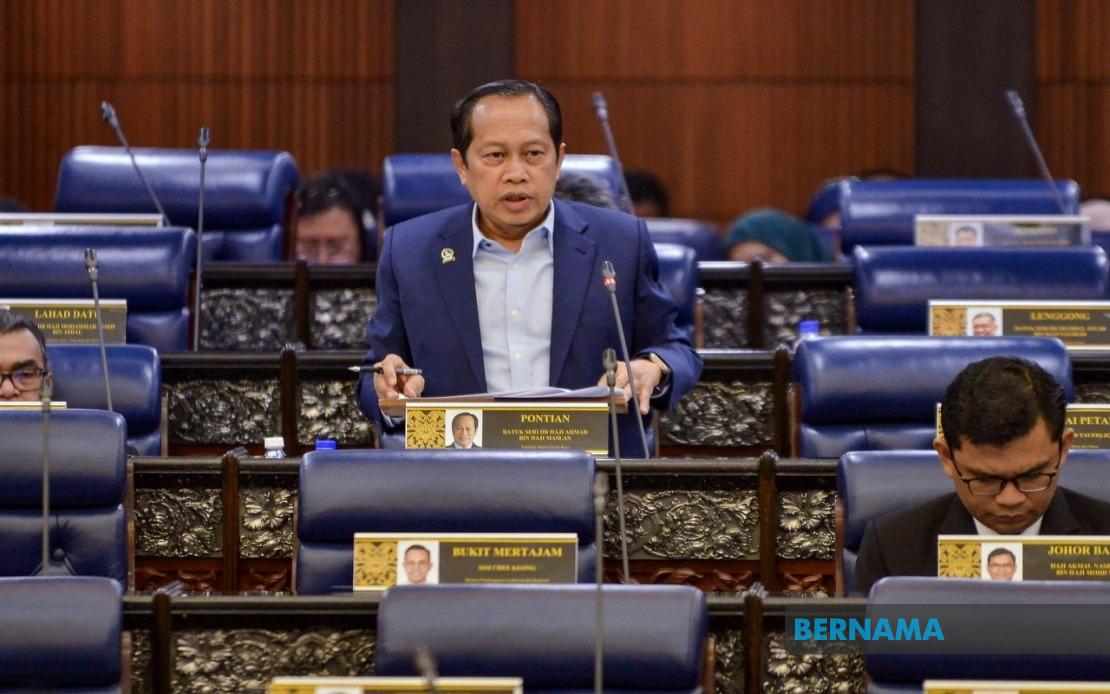
The federal government has so far disbursed RM1.2 billion to compensate landowners affected by the Sabah Pan Borneo Highway Phase 1 project, according to Deputy Minister of Works Datuk Seri Ahmad Maslan. Speaking during parliamentary question time, he noted that the corresponding compensation for Sarawak's portion of the Pan Borneo Highway totalled RM737 million. The minister emphasised that the federal government assumes full responsibility for all compensation, losses, and associated administrative expenses, a policy designed to shield affected property owners from financial hardship.
This disclosure emerged in response to concerns raised by WARISAN-Kota Belud MP Isnaraissah Munirah Majilis regarding the dramatic escalation in the Sabah project's financial envelope. The highway's price tag has almost doubled since initial planning, climbing from an estimated RM12.86 billion in 2015 to the current RM24.889 billion—a staggering increase that has drawn parliamentary scrutiny and prompted explanations from the government.
Ahmad attributed the substantial cost escalation primarily to a fundamental shift in project delivery methodology. In 2019, the government terminated the Project Delivery Partner model and transitioned to the Federal Conventional Contractor approach. This restructuring necessitated a comprehensive reassessment of all outstanding construction works and project specifications, given that nearly five years had elapsed since the original 2015 appraisal. The change reflected broader considerations of national interest, though the minister did not elaborate extensively on the specific governance rationale underpinning the decision.
From an engineering perspective, multiple technical factors contributed to rising expenditure. The scope and design specifications underwent revisions, while geotechnical assessments revealed more complex ground conditions requiring enhanced soil treatment protocols. Additionally, the relocation of major utility infrastructure—including water, electricity, telecommunications, and other services running through the project corridor—emerged as a significant cost driver. These utility works, which often prove unpredictable and labour-intensive, accounted for substantial portions of the budget overrun.
The Phase 1 component itself is subdivided into two tranches with distinct cost profiles. Phase 1A encompasses 16 separate work packages carrying a combined cost of RM10.9 billion, while Phase 1B comprises 19 work packages valued at RM13.989 billion. This granular breakdown underscores the project's complexity and the multiplicity of contractors and suppliers involved across the extended corridor.
Macroeconomic headwinds further amplified construction costs throughout the implementation period. Inflationary pressures eroded purchasing power, while global and domestic commodity markets experienced significant price movements. Iron, bitumen, and cement—all critical construction materials—saw their costs fluctuate substantially, directly impacting the project's material procurement expenses. Labour costs similarly escalated as wage pressures mounted across Malaysia's construction sector, while heavy machinery rental and purchase prices climbed in tandem with commodity inflation.
For Malaysian stakeholders, particularly those in Sabah and the broader East Malaysian region, this highway represents a strategically significant infrastructure investment. The Pan Borneo Highway initiative aims to enhance connectivity across Borneo, potentially stimulating economic development, improving accessibility to interior regions, and facilitating trade flows. However, the cost escalation raises important questions about project management efficiency, cost estimation methodologies, and the long-term fiscal implications of major infrastructure undertakings in Malaysia.
The compensation framework itself reflects a notable policy commitment, as the federal government's assumption of all costs ensures that landowners bear no financial penalty for development in the public interest. This approach contrasts sharply with some international precedents and demonstrates government prioritisation of equity for affected communities. The RM1.2 billion Sabah allocation and RM737 million Sarawak allocation suggest that land acquisition represented a substantial component of total project expenditure.
Looking forward, the project's trajectory carries implications for Malaysia's infrastructure planning and budgeting practices. The near-doubling of costs invites reflection on initial estimation accuracy, the adequacy of contingency planning, and the risks inherent in long-duration megaprojects subject to scope changes, market volatility, and methodological revisions. For policymakers and taxpayers alike, understanding these cost dynamics becomes crucial as Malaysia pursues additional infrastructure ambitions across East Malaysia and the peninsula.
The parliamentary disclosure also underscores the ongoing scrutiny applied to major federal expenditures, particularly in East Malaysian constituencies. Opposition engagement with these budget questions reflects broader governance accountability expectations, while government responses provide opportunities for transparency about resource allocation and project justification. As the Pan Borneo Highway approaches completion, continued monitoring of expenditure trends and delivery timelines will remain essential for assessing both the project's ultimate viability and the effectiveness of federal infrastructure management.

