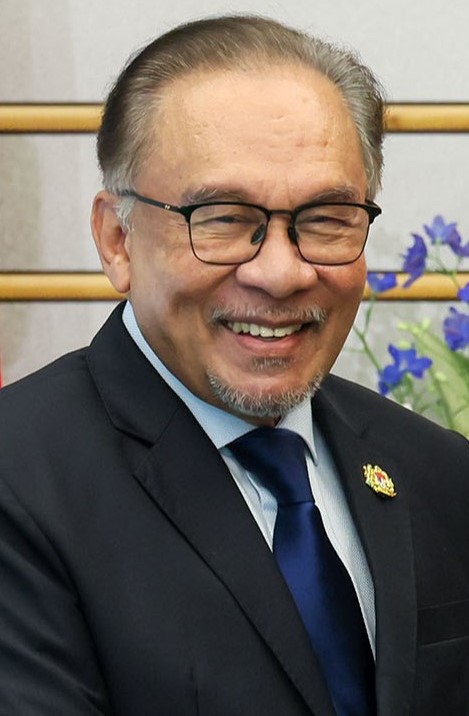
Prime Minister Datuk Seri Anwar Ibrahim has announced a significant enhancement to community policing infrastructure across Malaysia, raising the annual operational grant for neighbourhood watch organisations (KRT) to RM10,000, up from the previous RM6,000 allocation. The increase, effective from January 1, 2027, will directly benefit 8,615 registered KRT units operating at the neighbourhood level, according to National Unity Minister Datuk Aaron Ago Dagang. This injection of funding represents a 67 percent boost to grassroots security and community development initiatives, signalling renewed government investment in local-level social cohesion during an increasingly complex period for Malaysian society.
The announcement came during the MADANI KITA programme held in Dataran Segamat, Johor, where the Prime Minister engaged directly with KRT representatives and community leaders. Minister Aaron characterised the grant increase as concrete evidence of the MADANI Government's dedication to empowering neighbourhood-level movements, which he framed as foundational to constructing a cohesive and progressively developed society. The timing of the announcement underscores official recognition that grassroots community engagement mechanisms require sustained financial backing to remain relevant and effective in an era of rapid social change and digitalisation.
Operating under the Ministry of National Unity's oversight, the KRT movement encompasses approximately 250,000 active members who collectively delivered over 100,000 community activities in the preceding year alone. These initiatives have reportedly extended benefits to more than 12 million Malaysians, positioning neighbourhood watch organisations as significant conduits for government-community interaction. The scale of reach indicates that KRT functions extend well beyond traditional security patrols, encompassing social welfare provision, educational programming, and local economic development—a comprehensive community governance model that distinguishes Malaysian neighbourhood watch structures from their counterparts in other jurisdictions.
The ministry envisions the enhanced funding enabling KRT units to expand their programme portfolios substantially. Anticipated priority areas include unity-building activities that cut across ethnic and religious lines, neighbourhood safety initiatives that engage residents in collaborative security arrangements, educational outreach tailored to local demographics, welfare assistance for vulnerable residents, volunteerism coordination to mobilise community resources, and local economic empowerment schemes that stimulate small business development. This multifaceted approach reflects a sophisticated understanding that social cohesion cannot be achieved through security measures alone, but requires simultaneous investment in education, economic opportunity, and mutual trust-building.
Minister Aaron emphasised that neighbourliness constitutes the foundational bedrock upon which national unity ultimately rests. He stressed that the quality of relationships between neighbours—transcending divisions of ethnicity, religious affiliation, and socioeconomic status—represents Malaysia's authentic source of strength as a multiethnic nation. This framing positions KRT not merely as administrative entities but as cultural institutions embodying and reinforcing Malaysia's foundational diversity principle. By elevating neighbourhood-level interaction as central to national cohesion, the government articulates an alternative to top-down unity initiatives, instead rooting social harmony in the concrete, daily interactions that occur at street and community level.
KRT's track record over more than five decades demonstrates sustained institutional capacity and public trust, factors that informed the government's decision to substantially increase investment. The organisation has evolved from its origins as a neighbourhood security mechanism to encompass comprehensive community development functions, positioning it as a trusted intermediary between government and residents. This institutional maturity and demonstrated reliability suggest that enhanced funding will likely translate into expanded service delivery rather than administrative inefficiency. The decision also reflects implicit government confidence that grassroots organisations, when properly resourced and supported, constitute a more effective development delivery mechanism than centralised bureaucratic structures.
The January 2027 implementation date provides a roughly six-month buffer for KRT units to prepare operational plans that maximise the funding increase's impact. This timeline suggests that the ministry intends to ensure the additional resources catalyse systematic programme expansion rather than merely supplementing existing activities. KRT units will likely require capacity-building support to design and execute programmes that leverage the increased budget effectively, potentially creating opportunities for training providers and community development specialists. The phased implementation approach also allows for preliminary assessment of how units allocate enhanced resources, generating data that could inform future adjustments to the funding formula or distribution methodology.
For Malaysia's broader community governance architecture, this funding increase signals official recognition that decentralised, community-based approaches to social development warrant strategic investment. At a regional level, Malaysia's KRT model presents an interesting case study in institutionalising grassroots participation within government frameworks while preserving community agency. The enhanced funding positions Malaysia as comparatively committed to neighbourhood-level governance infrastructure, potentially distinguishing the approach from models emphasising more centralised or privatised community services. The initiative also reflects the MADANI Government's stated commitment to economic inclusion and social equity, channelling resources directly to grassroots organisations rather than concentrating them at regional or national administrative levels.
The multiplier effects of this investment merit consideration. With 250,000 members distributed across 8,615 units and reaching 12 million Malaysians, enhanced KRT capacity could translate into substantially expanded community programming and local economic activity. If effectively deployed, the additional RM27.4 million in annual aggregate funding (8,615 units × RM4,000 increase) could generate employment through community projects, business training, and skill development initiatives. Educational programming could strengthen social cohesion among younger demographics who may lack exposure to Malaysia's founding multiculturalism principles. Welfare assistance expansion could reach vulnerable populations at community level before crises necessitate more expensive intervention.
Implementation quality will ultimately determine whether this investment generates proportionate returns in social cohesion and community development outcomes. Success requires effective ministry oversight to ensure equitable fund distribution, guard against misallocation, and support KRT units in developing evidence-based programmes aligned with local priorities. Transparency in fund usage and outcomes measurement will strengthen public confidence and potentially justify future funding increases. The ministry's commitment to ensuring optimal utilisation of additional resources suggests awareness of these implementation challenges and a determination to move beyond funding announcements to systematic capacity-building support.
The broader policy context suggests that this funding increase reflects government recognition that community-level social investment constitutes essential counterbalance to other policy priorities. As Malaysia navigates demographic transitions, economic restructuring, and technological disruption, neighbourhood-level institutions capable of maintaining social trust and coordinating collective action become increasingly valuable. The enhanced KRT funding thus represents not merely budgetary adjustment but strategic positioning of grassroots community organisations as central to Malaysia's long-term social stability and inclusive development trajectory. Looking ahead, this precedent may prompt similar funding enhancements to other grassroots institutions, consolidating government commitment to community-based governance models.