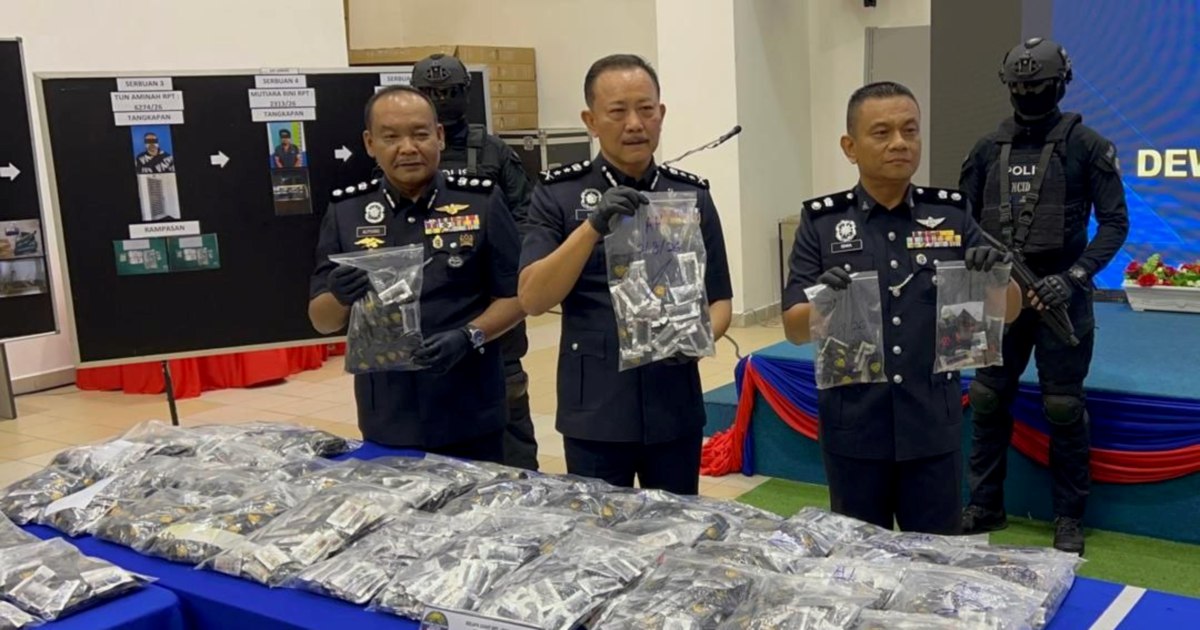
Johor authorities have successfully dismantled a significant narcotics distribution network engaged in the manufacture and illegal marketing of drug-infused vape cartridges, leading to the detention of seven suspects during a series of coordinated raids across the state on Sunday. The operation, which targeted multiple locations simultaneously, resulted in the seizure of vape products worth RM10.68 million, marking a substantial blow against organised drug trafficking in the region.
The scale of this operation reflects the growing sophistication of drug syndicates adapting to modern consumption methods. Rather than relying solely on traditional drug formats, organised criminal networks have increasingly turned to vaping devices as a vehicle for distributing controlled substances, capitalising on the widespread use and social acceptance of vaping products among younger demographics across Malaysia and the region. This operational shift represents both an enforcement challenge and a worrying public health trend that authorities have been scrambling to address.
The decision to execute five simultaneous raids across Johor demonstrated careful intelligence gathering and meticulous coordination among law enforcement units. Such multipronged operations are essential when targeting network-based criminal enterprises, as they prevent suspects from fleeing, destroying evidence, or warning associates downstream in the distribution chain. The timing and precision of these simultaneous actions suggest that investigators had spent considerable time mapping the syndicate's infrastructure and identifying key nodes within the operation.
Johor's emergence as a focal point for this particular trafficking route warrants examination. The state's strategic geographic position, with major transport corridors connecting it to Singapore, Selangor, and other states, makes it an attractive hub for drug distribution networks seeking to move contraband efficiently across regional boundaries. Additionally, Johor's relatively high vaping prevalence and substantial youth population may have made it a lucrative market for dealers willing to infuse vape cartridges with illicit substances.
The specific value of RM10.68 million attached to the seized inventory provides insight into the financial magnitude of even a single syndicate's operations. This figure likely represents wholesale or distributor-level valuation rather than street prices, which would yield substantially higher returns. The profitability of such operations—where the cost of producing drug-infused cartridges is relatively modest compared to their street value—creates powerful incentives for organised crime groups to maintain and expand these networks despite enforcement risks.
The seven arrests represent individuals at various levels of the hierarchy. Typically, such operations involve production facilities where cartridges are filled and packaged, mid-level distributors who transport products between locations, and street-level retailers who make final sales to consumers. Investigating officers will likely seek to determine the full extent of each suspect's involvement and identify potential links to higher-level organisers or international supply sources for the precursor drugs being used.
This bust aligns with broader regional and global trends in drug enforcement. Vape-based narcotics distribution has become increasingly common in countries across Southeast Asia, Australia, and beyond, prompting health authorities and law enforcement agencies to develop new detection and interdiction protocols. The challenge for Malaysia's enforcement apparatus lies in staying ahead of criminal innovation while managing the legitimate vaping industry, which remains legal in Malaysia despite ongoing public health debate.
The public health implications extend beyond traditional concerns about drug addiction and criminality. Young people using vape devices laced with drugs face compounded health risks, including potential exposure to uncontrolled dosages, adulterants, and contaminants that may accompany illicitly manufactured cartridges. The deceptive nature of drug-infused vapes—where appearance is virtually indistinguishable from legitimate products—compounds the risk of accidental consumption, particularly among inexperienced users.
For Malaysian policymakers and enforcement authorities, this case underscores the necessity of sustained investment in narcotics intelligence and community-level interventions. Intelligence-led policing approaches, which prioritise identifying and dismantling entire criminal networks rather than simply arresting street-level dealers, have proven effective in reducing trafficking capacity. However, such success requires adequate resources, training, and inter-agency coordination that remains inconsistent across Malaysia's states.
The investigation's continuation will be crucial in determining whether this syndicate operated independently or formed part of larger networks extending beyond Johor's borders. International cooperation through mechanisms like ASEAN narcotics cooperation frameworks may reveal supply chain connections stretching into neighbouring countries. Such revelations would justify elevated priority for this case at regional law enforcement forums.
Government agencies responsible for drug abuse prevention must now consider targeted educational campaigns warning young people about the dangers of drug-infused vaping products. The superficial similarity to legitimate vapes makes this particularly important, as conventional warnings about drug paraphernalia may fail to resonate with users who do not recognise the products as narcotics-related. Schools, youth organisations, and community health centres represent key platforms for disseminating such information.
Longer term, Johor's experience demonstrates why comprehensive policy approaches combining enforcement, prevention, and treatment yield better outcomes than enforcement-centric strategies alone. While the successful raid represents an important tactical victory, sustainable reduction in drug trafficking requires addressing underlying demand drivers, particularly among youth populations drawn to vaping as a perceived safer or more socially acceptable consumption method compared to traditional alternatives.

