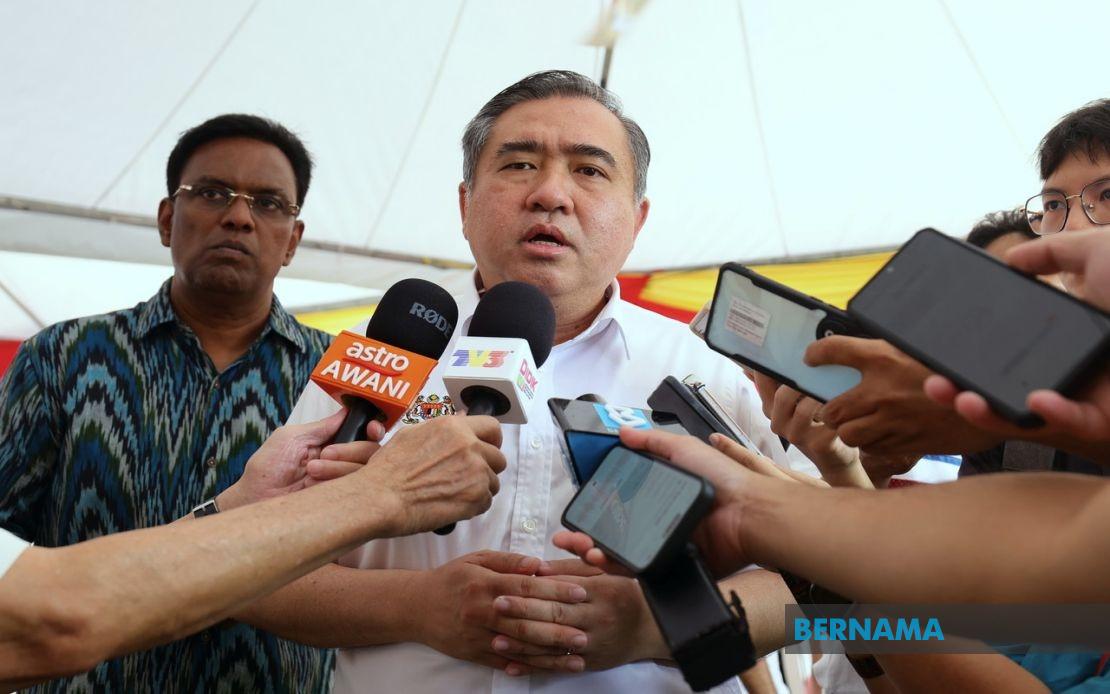
Transport Minister Anthony Loke has announced RM100,000 in development funding for Kampung Bukit Temiang in Seremban, channelling resources through the MADANI Adopted Village Programme to enhance essential community infrastructure. The allocation marks the government's effort to extend direct ministerial engagement to village-level communities, ensuring that development priorities reflect residents' actual needs rather than bureaucratic assumptions. By combining parliamentary constituency funds with agency resources, the initiative demonstrates a collaborative approach to grassroots development that seeks to integrate multiple funding streams for maximum community benefit.
The financing package comprises two equal tranches of RM50,000 each. The Railway Assets Corporation, a Transport Ministry subsidiary, contributes the first portion, while Loke's personal allocation as Seremban Member of Parliament provides the second. This dual-source arrangement illustrates how government agencies and elected representatives can coordinate resources to address infrastructure gaps in underserved areas. By leveraging both institutional budgets and parliamentary funds, the model potentially creates efficiency gains and reduces bureaucratic fragmentation that often delays rural development projects.
Funds will flow through the Federal Village Development and Security Committee, a mechanism designed to localise implementation oversight and ensure that spending decisions remain responsive to community circumstances. This institutional pathway allows project execution to occur in phases rather than lump-sum disbursement, reducing waste and enabling course corrections based on ground-level experience. The phased approach also distributes financial pressure and administrative burden, making oversight more manageable for local authorities and reducing the risk of project abandonment or incomplete delivery that occasionally plagues rural infrastructure programmes.
Loke detailed the anticipated upgrades based on consultations with residents, encompassing renovation of the community hall, residential roof repairs, drainage system improvements, and additional facilities identified through resident engagement. The specificity of these projects underscores the programme's premise that listening to community members precedes resource allocation. Rather than imposing standardised development templates across different villages, the government is attempting to customise interventions around locally-identified priorities, a methodological shift that could enhance project sustainability and resident satisfaction compared to top-down approaches.
Implementation flexibility constitutes another programme feature. The Railway Assets Corporation will undertake certain works directly, while the Federal Village Development and Security Committee can alternatively mobilise volunteer labour through gotong-royong community efforts or engage private contractors for specialised repairs such as roof restoration. This tiered approach recognises that different tasks require different execution models and that community-driven solutions sometimes produce superior outcomes regarding both cost-efficiency and social cohesion compared to purely commercial contracting.
Loke positioned the MADANI Adopted Village Programme as emblematic of broader government philosophy emphasising direct ministry-community interaction. The framework assumes that when government agencies maintain continuous engagement with local populations, they develop deeper understanding of contextual challenges and can tailor policy responses accordingly. For Malaysia's federal structure, where central agencies often operate at considerable distance from village-level realities, this grassroots engagement model potentially addresses long-standing criticisms regarding disconnect between policymaking and implementation contexts.
Beyond the Kampung Bukit Temiang allocation, Loke highlighted the Transport Ministry's concurrent National MADANI Taxi Renewal Programme, which recently received RM10 million in additional funding announced by Prime Minister Anwar Ibrahim in early July. The supplementary allocation reflects encouraging uptake among taxi and hire car operators, suggesting that government financing support for vehicle replacement resonates with transport sector stakeholders facing aging fleet challenges. The additional commitment signals ministerial confidence that programme mechanics are functioning effectively and warrant expanded resource commitment.
The taxi renewal initiative transcends simple vehicle replacement financing, functioning instead as a comprehensive intervention addressing multiple dimensions of driver welfare and transport industry sustainability. Beyond facilitating purchase of modern vehicles, the programme encompasses driver education regarding available benefits, income-enhancement opportunities, social protection mechanisms, permit processes, and modernisation incentives. This holistic framing acknowledges that vehicle age represents merely one factor constraining taxi driver livelihoods; alongside financing, drivers require information access, social security, and pathways to increased earnings.
Particularly significant is the government's explicit repositioning of the relationship between traditional taxi services and ride-hailing platforms. Rather than characterising e-hailing as competitive threats destabilising the taxi industry, policy now encourages strategic partnership and complementarity. This frameworkreflects recognition that both service models serve distinct market segments and operational contexts, and that competitive coexistence need not produce zero-sum outcomes. By facilitating cooperation rather than imposing regulatory conflict, the government attempts to enhance overall service quality for passengers while creating income opportunities for taxi drivers through potential collaboration arrangements.
Implementation coordination involves multiple institutional actors including the Land Public Transport Agency and various government departments alongside private sector partners encompassing taxi associations, financial institutions, automotive manufacturers, and ride-hailing operators. This multi-stakeholder architecture reflects understanding that transport policy effectiveness depends upon alignment among diverse actors operating across the value chain. Fragmented or contradictory approaches by different entities undermine coherence; conversely, collaborative frameworks where government agencies, industry participants, and service providers pursue aligned objectives generate more durable solutions.
For Malaysian regional context, these initiatives carry broader implications regarding rural development methodology and transport sector modernisation during economic transition. The MADANI programmes suggest government commitment to decentralising development decision-making and extending direct engagement to communities often marginalised in policy processes. Similarly, the taxi renewal framework addresses an industry-wide challenge affecting livelihoods across Malaysia and potentially Southeast Asia, where aging vehicle fleets and digital disruption simultaneously pressurize traditional transport operators. By combining financing support with welfare provisions and competitive repositioning, policymakers acknowledge that sustainable transport modernisation requires attention to driver circumstances alongside vehicle specifications.

