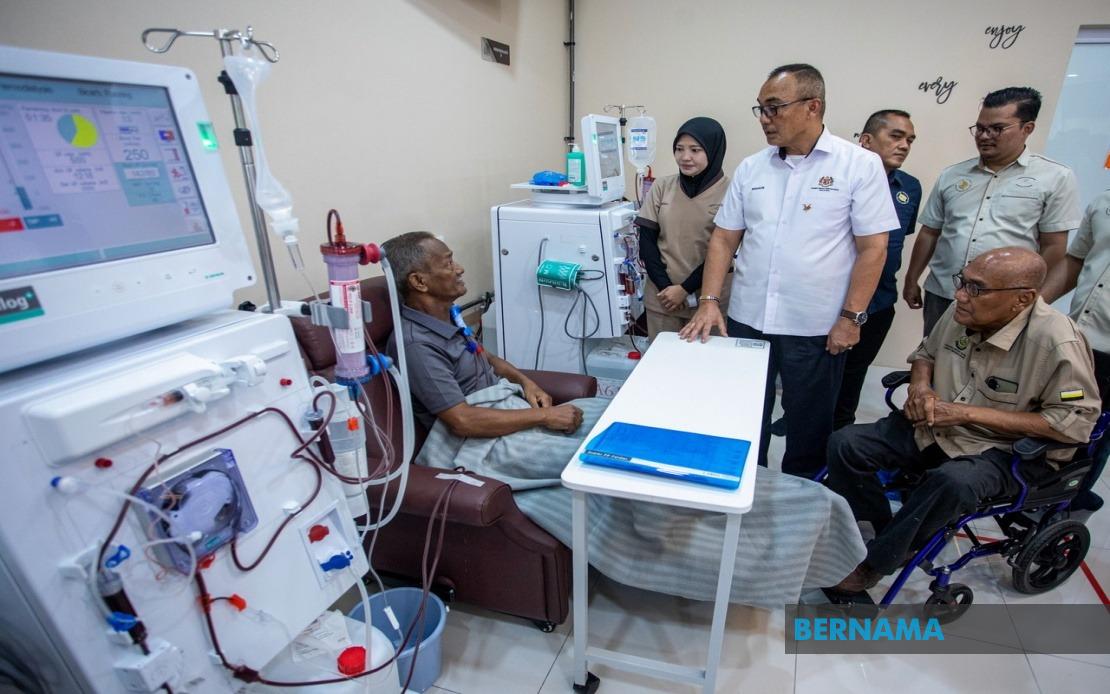
The Malaysian Armed Forces Veterans Affairs Department has unveiled an ambitious healthcare expansion plan, committing over RM18 million towards constructing nine dialysis treatment centres across the nation. The initiative, spearheaded by Yayasan Veteran Angkatan Tentera Malaysia (YVATM), represents a significant step in broadening medical access for military veterans, their dependents, and surrounding communities. The announcement was made by Major General Datuk Semaon Marjuki, the department's director-general, during the official inauguration of the MAF Veterans Foundation Dialysis Centre in Batu Kurau, Larut, highlighting the government's sustained commitment to enhancing the welfare of those who served the nation.
Geographically, the nine facilities are strategically distributed to ensure equitable coverage across multiple states. Selangor will host the majority with four centres, reflecting the state's large population and high concentration of dialysis patients. Perak will accommodate two centres, while Negeri Sembilan, Johor, and Pahang each receive one facility. This distribution suggests deliberate planning to minimise travel distances for patients requiring thrice-weekly dialysis sessions, a consideration that significantly impacts quality of life for individuals managing chronic kidney disease.
The infrastructure reflects contemporary medical standards and patient-centred design principles. Each centre has been equipped with modern medical apparatus that complies with Malaysia's Ministry of Health guidelines, ensuring treatment outcomes remain consistent with international benchmarks. Beyond hardware, the facilities employ experienced nursing professionals trained in nephrology care, addressing a critical gap in specialised healthcare delivery outside major urban centres. The emphasis on creating comfortable, patient-friendly environments acknowledges the psychological dimensions of chronic illness management—dialysis patients spend substantial portions of their lives in treatment facilities, making the quality of the physical and social environment directly relevant to treatment efficacy and patient satisfaction.
Operational oversight has been vested in DVET Holding Sdn Bhd, a wholly-owned subsidiary of the MAF Veterans Foundation. This governance structure maintains public ownership and control while potentially leveraging private sector operational efficiencies. The consolidation of management under a single entity suggests intentions to standardise protocols, streamline procurement, and ensure consistent quality across all nine locations—factors that historically pose challenges when facilities are managed independently across different states.
The demographic scope of this initiative extends considerably beyond the veteran population. Currently, approximately 2,055 MAF veterans nationwide are receiving dialysis treatment through various channels—JHEV-operated facilities, Social Security Organisation clinics, or private approved centres. However, by explicitly framing these new facilities as serving "MAF veterans, their family members and the general public," the authorities acknowledge that kidney disease does not respect occupational categories. Veterans' spouses, children, and aging parents utilising these facilities represent a meaningful portion of Malaysia's estimated 100,000-plus dialysis patients, many of whom face financial constraints in accessing private treatment.
The financial investment merits contextualisation within Malaysia's broader healthcare economy. Over RM18 million distributed across nine centres translates to approximately RM2 million per facility—a modest sum when considering capital costs for medical equipment, building construction, and initial operational setup. This pricing suggests either efficient procurement practices or potential reliance on in-kind contributions and government asset allocation. For comparison, private dialysis centre operators typically require substantially higher initial investments, indicating that public sector mobilisation of resources achieves different cost structures than commercial providers.
From a disease burden perspective, chronic kidney disease represents an escalating health challenge across Southeast Asia. Malaysia's prevalence of diabetes and hypertension—the primary drivers of end-stage renal disease—has climbed steadily over recent decades. Veterans, as an aging demographic with elevated exposure to occupational hazards and stress-related conditions, arguably face above-average susceptibility to kidney disease. By proactively expanding treatment capacity within the veteran healthcare ecosystem, authorities implicitly acknowledge rising demand trajectories and seek to prevent a scenario where veterans encounter treatment delays or rationing.
The announcement carries implications for Malaysia's healthcare sustainability architecture. Dialysis treatment represents one of the most expensive ongoing medical interventions, consuming substantial portions of health budgets worldwide. By establishing dedicated facilities operated as integrated networks, the MAF Veterans Foundation may achieve economies of scale in consumables procurement, staff training, and maintenance that standalone private providers cannot match. This approach potentially yields cost per treatment that benefits both the organisation and patients through extended treatment timelines without compromising care quality.
Regional comparisons illuminate Malaysia's positioning. Several neighbouring countries have expanded dialysis capacity through mixed public-private models, though dedication of public resources to veteran-specific treatment networks remains relatively uncommon. This initiative reflects Malaysia's specific historical relationship with its military population and broader policy emphasis on veterans' welfare as a national obligation—a stance that resonates with institutional memory of Malaysia's various security challenges and the sacrifices demanded of service personnel.
The timing of this announcement, occurring in mid-August, suggests alignment with broader government healthcare planning cycles and budget allocations. The specification of nine facilities and precise geographic distribution indicates detailed planning rather than ad-hoc announcement, suggesting these centres likely represent earlier-stage construction projects reaching announcement milestones. Communities in targeted states should anticipate further developments regarding recruitment timelines, staffing patterns, and commencement of patient referrals within coming months.
Sustainability considerations warrant attention beyond the initial capital investment. Nine new facilities require ongoing operational funding for staffing, consumables, maintenance, and equipment replacement. The assignment to DVET Holding suggests the MAF Veterans Foundation anticipates continuous budget allocations or revenue generation through patient fees and government subsidies. Long-term viability depends on whether utilisation rates meet projections and whether the organisation can maintain service quality amid potential budget pressures characteristic of public health systems.
For individual veterans and their families confronting dialysis dependency, these facilities represent more than infrastructure additions—they symbolise institutional recognition of healthcare needs and commitment to preventing treatment access from becoming a source of additional hardship. The geographic dispersal particularly benefits veterans in less-urbanised states who previously faced choices between expensive travel or accepting private facility costs. This expansion thus operates simultaneously as medical infrastructure development and as a statement regarding the government's continuing obligation to those who have served the nation.

