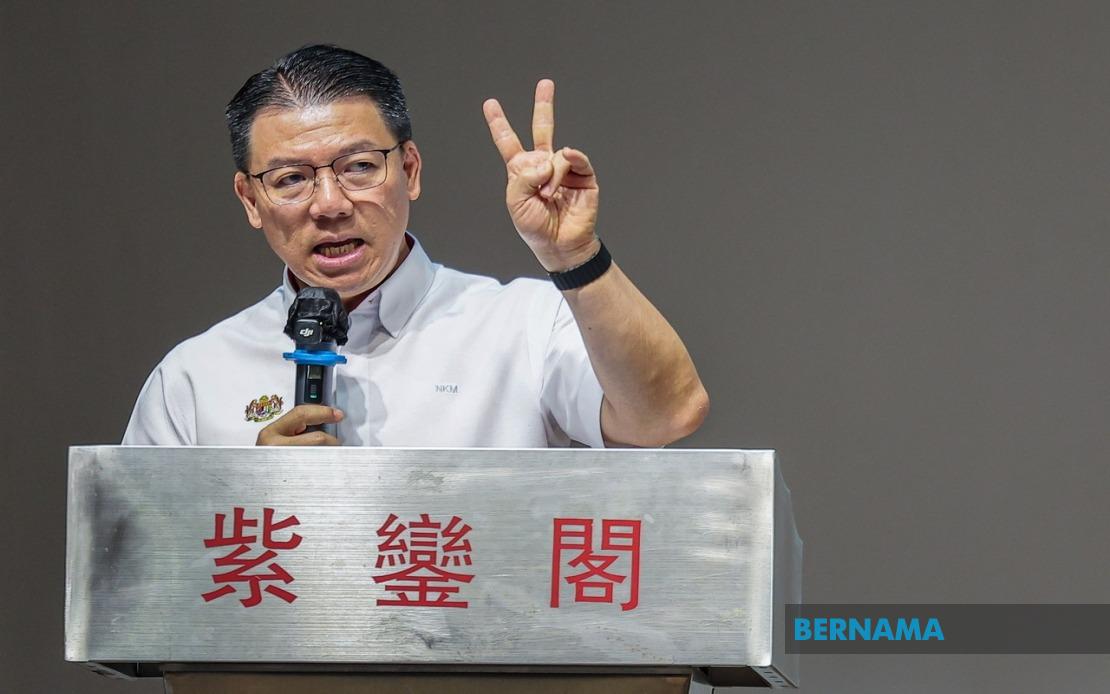
The Malaysian government has invested RM200 million into a four-year initiative dedicated to maintaining non-Muslim places of worship across the nation, marking a substantial commitment to religious accommodation in the multicultural landscape. Housing and Local Government Minister Nga Kor Ming announced the programme in Kluang, Johor, positioning it as tangible evidence of the MADANI administration's pledge to serve all segments of society equitably, regardless of ethnic or religious background.
The Non-Muslim Houses of Worship Maintenance Initiative, administered through the Housing Ministry and channelled via the e-RIBI System, represents a broadening of government infrastructure support beyond majority-community institutions. The scheme encompasses churches, gurdwaras, Hindu temples, Buddhist temples, and other religious associations, acknowledging the practical reality that maintaining diverse religious spaces requires dedicated public resources. This approach reflects shifting expectations in Malaysia's development policy, where inclusive governance increasingly means extending maintenance budgets across sectarian lines rather than concentrating them primarily on facilities serving the dominant religious community.
Responses to the scheme have exceeded initial projections, with 1,478 applications lodged through the digital portal requesting more than RM279 million in aggregate funding. This figure substantially exceeds the four-year allocation, signalling pent-up demand for facility upgrades that religious communities have deferred due to budget constraints. The disparity between requested and available funds suggests the initiative, while significant, addresses only a portion of nationwide requirements—a reality that may prompt future budget reviews if political momentum behind the programme continues.
Johor State, Malaysia's southernmost peninsula state, has emerged as a priority region under the scheme, with the government announcing RM3.14 million in fresh allocations for 27 religious institutions during the current financial year. Since the initiative's inception in 2023 through May 2026, Johor has received RM18.75 million benefiting 154 institutions statewide, making it one of the more actively engaged states in the programme. These funds finance renovation work, structural maintenance, new construction projects, and emergency repairs—the full spectrum of facility management typically handled by larger organisations with institutional budgets.
Nga framed the initiative within a broader political philosophy emphasizing national unity and inclusive development. His rhetoric explicitly positioned the maintenance scheme as counterpoint to divisive forces, using the metaphor of bridge-building rather than wall-construction. This messaging carries particular weight in Malaysia's contemporary political environment, where periodic tensions around religious space, religious expression, and resource allocation occasionally surface in public discourse. By embedding the maintenance scheme within a unity narrative, the government projects an image of deliberate, values-driven inclusivity rather than grudging accommodation.
The deployment of the e-RIBI digital system itself warrants attention from governance observers. Moving religious institution funding through an online portal increases transparency compared to ad-hoc allocation methods, creating a documented trail of applications, approvals, and disbursements. For religious minorities, digital systems theoretically reduce opportunities for bureaucratic discretion or informal gatekeeping. However, system accessibility remains contingent on digital literacy and reliable internet access—factors that may disadvantage smaller, rurally-located institutions or those with limited administrative capacity. The government's monitoring framework, as outlined by Nga, emphasizes professional, efficient, and transparent project oversight, suggesting awareness that public funds flowing to religious institutions require particularly robust accountability mechanisms.
The scheme's emergence reflects demographic and political realities specific to Malaysia. With Christian, Hindu, Sikh, and Buddhist communities collectively numbering in the millions, their institutional infrastructure carries genuine public significance. Yet these communities historically relied on internal fundraising, foreign remittances, and philanthropic networks rather than government capital expenditure. The shift toward direct government maintenance funding represents recognition that religious heritage—regardless of majority or minority status—constitutes part of Malaysia's shared built environment deserving state investment. This reframing carries implications for how future governments conceptualize cultural preservation and community support.
Regional dimensions merit consideration. Malaysia's approach to funding non-Muslim religious infrastructure contrasts with patterns in some neighbouring countries where such support remains minimal or contested. The initiative positions Malaysia internationally as a model for managing religious pluralism through pragmatic resource allocation. Within Southeast Asia's diverse religious landscape, Malaysian policymakers may view the programme as soft-power investment, demonstrating that prosperity and stability correlate with inclusive institutional support.
The initiative's sustainability hinges on several factors beyond current allocations. Future government administrations must maintain budgetary commitment despite competing priorities. Political pressures from constituencies opposing such spending could complicate continuation. Additionally, as religious institutions complete initial maintenance backlogs, ongoing funding requirements may diminish, or the programme may pivot toward advancing facilities rather than merely preserving existing ones. The four-year timeline ending in 2027 creates a natural review point where programme redesign or termination becomes politically feasible.
For Malaysian minority religious communities, the initiative offers practical benefits while carrying symbolic weight. Concrete outcomes—repaired roofs, renovated prayer halls, improved facilities—directly enhance congregational experience. Simultaneously, the scheme's visibility signals government recognition of these communities' legitimate claims on public resources. This combination of material and symbolic value explains why applications have substantially exceeded allocations; the programme addresses longstanding grievances about infrastructure equity while creating opportunities for community groups to formalize facility needs through official channels.
Implementation quality will determine whether the initiative achieves its stated aims of ensuring community comfort and safety while strengthening national cohesion. Projects completed on schedule, within budget, and meeting quality standards will validate the programme's effectiveness. Conversely, delays, cost overruns, or inadequate workmanship could undermine confidence in government administration and intersectarian trust. The ministry's emphasis on professional monitoring suggests awareness that outcomes matter as much as intentions in programmes touching on sensitive communal issues.

