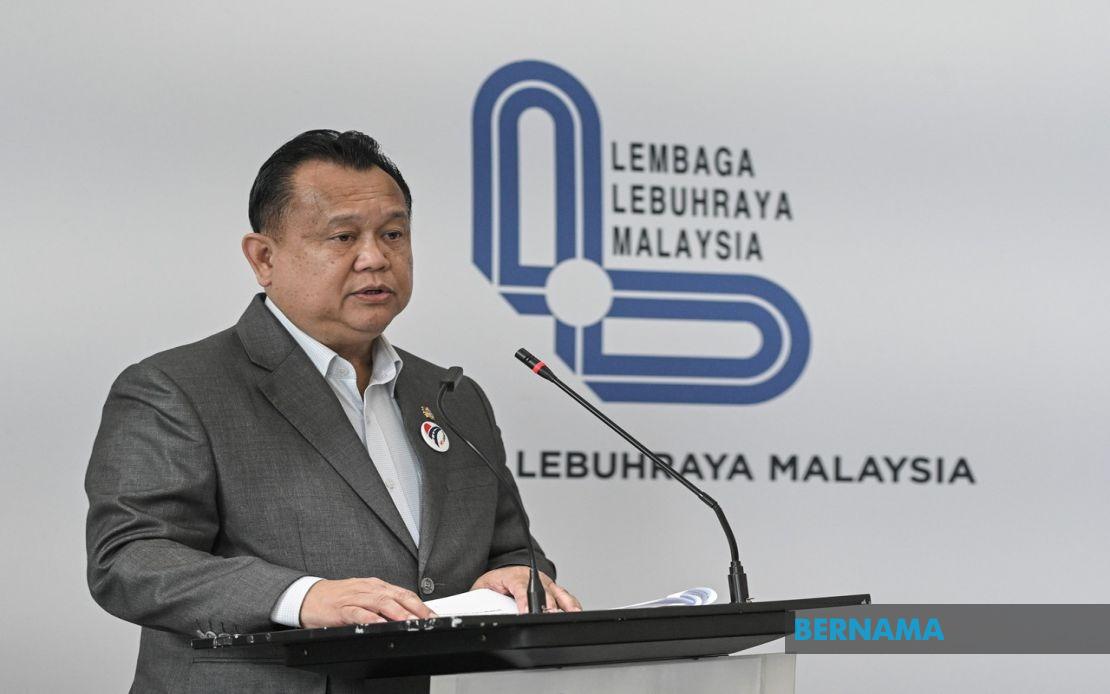
Malaysia has commenced a major infrastructure initiative aimed at significantly reducing highway accidents through strategic lighting improvements. Works Minister Datuk Seri Alexander Nanta Linggi announced that the government has allocated RM25.2 million for the first phase of installing solar-powered LED street lights at 32 identified accident-prone locations across the national highway network. The project represents a tangible government response to road safety concerns that have long plagued Malaysian motorways, where poor visibility during night hours remains a contributing factor to fatal collisions.
The initiative, operating under the MADANI Monitoring programme, will see the deployment of 3,000 individual light poles across the targeted high-risk zones. These installations are designed to enhance visibility and create safer driving conditions for the millions of road users who traverse Malaysia's highways daily. The solar-powered technology represents an environmentally conscious approach to infrastructure development, eliminating ongoing electricity costs while providing sustainable illumination in remote or difficult-to-service highway locations.
This announcement follows Prime Minister Datuk Seri Anwar Ibrahim's original pledge during the 2026 Budget presentation last October, when the administration committed RM30 million towards comprehensive highway safety improvements. The current allocation of RM25.2 million constitutes the initial tranche of funding, with the Works Ministry indicating that remaining budgeted amounts will be released sequentially as project requirements are reassessed and identified. This phased approach suggests a pragmatic strategy allowing authorities to evaluate effectiveness and adjust subsequent installations based on real-world performance data.
The project exemplifies collaborative governance, bringing together the Works Ministry, the Finance Ministry, and the Malaysian Highway Authority (LLM) in a coordinated effort to address road safety at a systemic level. Such inter-agency coordination is essential given the complexity of highway infrastructure management and the multiple stakeholder interests involved. The partnership demonstrates recognition that accident prevention requires integrated approaches spanning planning, budgeting, and execution rather than siloed departmental efforts.
The contract award, formalized through the signing of the Letter of Acceptance (SST), represents a crucial milestone enabling immediate commencement of on-ground activities. This administrative completion signals that procurement processes have concluded and contractors can mobilize equipment and personnel without further bureaucratic delays. For Malaysian taxpayers and road users, such expedited execution offers reassurance that government commitments translate into timely service delivery rather than languishing in protracted planning phases.
The project timeline establishes November 2026 as the target completion date, providing a fourteen-month implementation window for what represents a substantial infrastructure rollout. This schedule appears realistic given the nature of the works, though highway-based construction inevitably faces challenges including traffic management complexities, weather disruptions, and site accessibility constraints during operational hours. Meeting this deadline would constitute a significant achievement in demonstrating government capacity to execute large-scale safety projects efficiently.
From a regional perspective, Malaysia's emphasis on solar-powered street lighting reflects broader Southeast Asian trends toward sustainable infrastructure development. Countries across ASEAN are increasingly recognizing that environmental sustainability and economic efficiency intersect in renewable energy applications for public infrastructure. Malaysia's approach positions the nation favorably within regional development conversations, showcasing commitment to reducing carbon footprint while addressing critical safety needs.
The selection of accident-prone locations as priority sites reflects evidence-based policy-making grounded in traffic safety analytics. Concentrating resources on statistically high-risk sections maximizes return on investment in terms of lives potentially saved and injuries prevented. This targeting strategy suggests that the authorities conducted thorough accident data analysis to identify corridors requiring urgent intervention, rather than implementing generic nationwide solutions that might prove less effective.
For Malaysian motorists and freight operators, improved highway lighting carries immediate practical implications. Enhanced visibility during nighttime driving reduces accident risks while potentially improving traffic flow by enabling drivers to navigate with greater confidence. Particular benefits will accrue to long-distance freight operators and commercial drivers who disproportionately use highways during nocturnal hours when visibility challenges peak. The project also indirectly supports Malaysia's broader economic objectives by enhancing the safety and efficiency of critical transportation corridors.
The emphasis on solar technology introduces interesting long-term considerations regarding maintenance regimes and performance monitoring. Solar-powered systems require periodic assessment of panel efficiency, battery functionality, and LED degradation to maintain effectiveness over extended periods. The project design presumably incorporates provisions for ongoing maintenance arrangements, though public information remains limited regarding operational responsibility and budget allocation for this critical dimension.
Looking forward, this project provides a testbed for evaluating solar street lighting effectiveness in Malaysian highway contexts. Performance data from these 32 locations could inform larger-scale rollouts should the initiative prove successful in measurably reducing accident rates. Such evidence-gathering serves planning purposes for future highway safety investments, potentially establishing standardized approaches to lighting interventions nationwide.
The allocation also reflects shifting government priorities toward preventive road safety measures rather than reactive post-accident responses. Investment in infrastructure improvements that reduce accident probability represents more cost-effective and humane policy than managing consequences of collisions through emergency services and medical interventions. This preventive orientation aligns with international road safety best practices and demonstrates Malaysian commitment to evidence-based transportation policy.