The Petaling Jaya City Council is moving ahead with plans to establish a RM400,000 recreation park on vacant land along Jalan PJS1/30 in Taman Medan, marking the latest phase in a wider urban revitalisation effort across the municipality. The project forms part of a strategic initiative to transform underutilised public spaces into functional community amenities that prioritise environmental sustainability and public wellbeing.
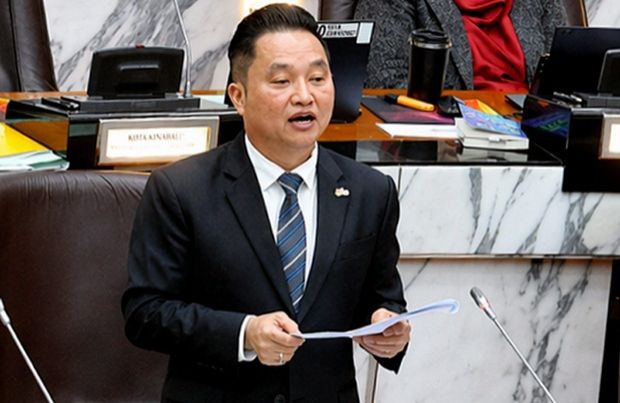
Datak Ng Suee Lim, the Selangor state assemblyman overseeing local government and tourism matters, disclosed details of the scheme while addressing the state assembly at Bangunan Dewan Negeri Selangor in Shah Alam on August 10. He explained that commencement of construction hinges upon MBPJ's budgetary capacity and planning priorities, with next year pencilled in as the likely starting point. The initiative extends beyond simple recreational provision, instead targeting a comprehensive safety upgrade that will establish a more welcoming and functional space for residents.
The proposed park addresses longstanding concerns about underutilised urban land within residential areas. Ng outlined how the development would enhance environmental quality whilst simultaneously creating a safer neighbourhood asset. By converting an open space into a managed recreational facility, the project aims to eliminate potential hazards associated with unmaintained vacant land, whilst simultaneously contributing to the broader municipal vision of establishing a greener, more liveable and sustainable urban environment.
The Taman Medan park represents one component of an ambitious five-park development programme encapsulated within the Damansara Damai People's Park Landscape Masterplan. This comprehensive framework aligns with the overarching Petaling Jaya Strategic Plan 2030, which establishes ambitious environmental and quality-of-life objectives for the municipality. The masterplan prioritises recreation amenities, environmental conservation efforts, biodiversity enhancement, community participation, and advancement towards a low-carbon urban model.
Among the five planned urban parks, Taman Damai Belantara, designated as Urban Park 3, will emphasise environmental education and experiential learning. The facility will incorporate an urban farming section, allowing residents and schoolchildren hands-on engagement with food cultivation practices. An amphitheatre will provide venue space for community events and outdoor programming, whilst an information gallery will disseminate educational content regarding local ecology and conservation principles. This design philosophy positions the park as more than recreational infrastructure, transforming it into a pedagogical resource.
Progressively, Taman Damai Setia, classified as Urban Park 1, is already undergoing enhancement works launched this year, with further phases scheduled for next year and beyond. The upgrades will introduce a family recreation zone catering to visitors across all age brackets, whilst a multipurpose hall will accommodate community gatherings and events. Additional features include bioswale systems designed to manage stormwater runoff naturally, a compost centre supporting organic waste processing and environmental education, and designated stall operation sites enabling local vendors and small businesses to establish presence within the park environment.
The Sungai Klang riverbank represents another significant focus within the municipal greening agenda. Under the Petaling Jaya Landscape Masterplan, portions of river reserve zones adjoining both Sungai Klang and Sungai Penchala will be reconfigured as green corridors and public recreation spaces. This approach recognises the potential of natural waterways as linear parks capable of threading through urban environments, creating continuous accessible pathways whilst preserving riparian ecosystems. The transformation will enhance ecological connectivity across the municipality.
Interconnectivity emerges as a central design principle guiding these riverbank initiatives. Rather than creating isolated amenities, the upgrading programme emphasises linkages between riverbank corridors and surrounding commercial and residential districts. Planned construction of walkways and access facilities will ensure seamless integration between naturally vegetated areas and built environments, encouraging residents to utilise and appreciate these spaces regularly. Such connectivity promotes active transport modes and outdoor recreation, contributing to healthier lifestyle patterns across the community.
These municipal initiatives must be contextualised within broader Southeast Asian urbanisation trends. As Malaysian cities experience continued population concentration and residential densification, deliberate interventions preserving and enhancing green space become increasingly critical. The Petaling Jaya approach demonstrates recognition that sustainable urban development requires proactive land-use planning, rather than allowing commercial pressures to dominate urban cores entirely. This contrasts with less regulated urban expansion patterns observed elsewhere in the region.
The financial commitment represented by the RM400,000 initial investment in the Taman Medan park, whilst modest by infrastructure standards, signals municipal prioritisation of quality-of-life improvements. However, Ng emphasised that all projected park developments and riverbank enhancements constitute long-term initiatives entirely dependent upon MBPJ's future budgetary allocations and strategic priorities. This caveat suggests that despite enthusiastic planning objectives, implementation remains subject to competing municipal demands and resource constraints.
For Petaling Jaya residents, particularly those in established residential neighbourhoods like Taman Medan, these developments promise tangible improvements to their immediate environments. Proximity to quality recreational facilities substantially influences residential satisfaction and property values, creating incentives for surrounding communities to support and participate in park maintenance and programming. The emphasis upon community involvement within the masterplan reflects understanding that successful public spaces require ongoing local engagement rather than purely top-down management approaches.
The timing of these announcements, delivered during state assembly proceedings, indicates political commitment to urban amenity development. For a municipality like Petaling Jaya, which encompasses significant middle-class residential communities, green space provision represents both electoral priority and genuine contribution toward livability standards. The integration of environmental, recreational, and educational objectives within single facilities demonstrates evolving sophistication in municipal planning, moving beyond traditional park typologies toward multifunctional community assets.
As implementation progresses contingent upon budget availability, these projects will likely establish templates for other Malaysian municipalities seeking to maximise utility of urban land whilst advancing sustainability objectives. The Petaling Jaya model of coordinated masterplanning across multiple sites, emphasising ecological and educational dimensions alongside recreation, offers instructive lessons for urban governance across Southeast Asia. Whether subsequent budgetary cycles provide adequate resources for full execution remains the critical question determining whether these ambitious plans materialise into lasting community assets.

