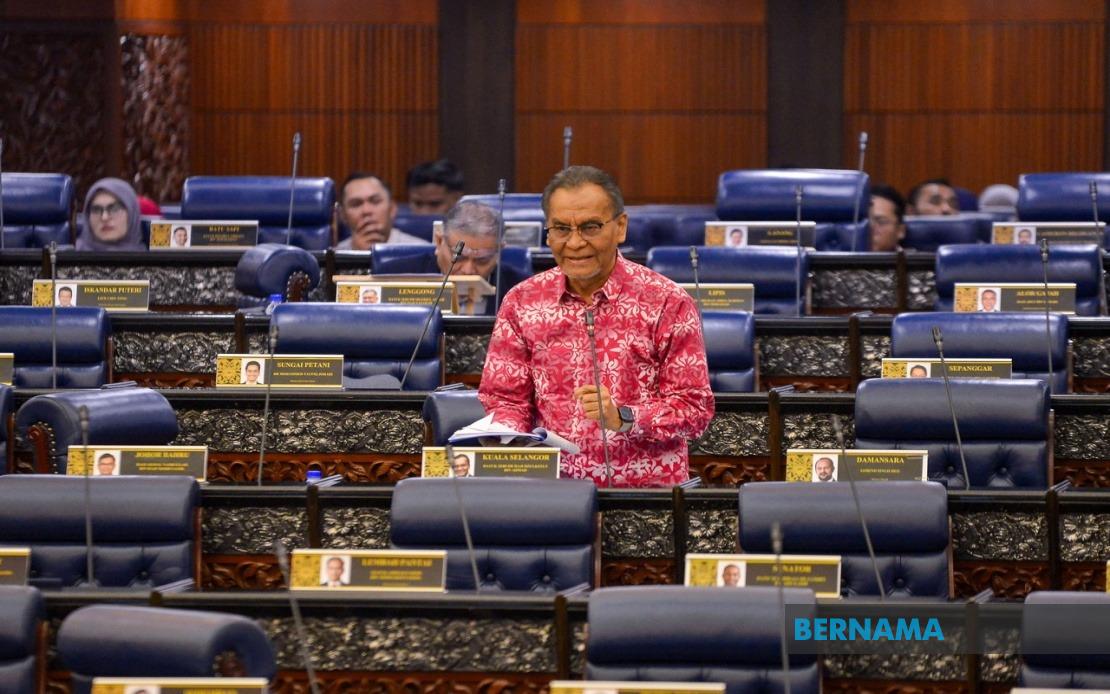
The Health Ministry's RM500 million expenditure restriction announced last month will not disrupt patient care or operational capacity, according to Health Minister Datuk Seri Dr Dzulkefly Ahmad, who fielded parliamentary concerns about the impact of the budgetary measure during today's Dewan Rakyat session. The minister characterised the restriction warrant, issued by the Finance Ministry on June 5, as a prudent administrative recalibration rather than a substantive cut to the ministry's functioning.
The adjustment addresses what the ministry describes as surplus funding earmarked for positions that have remained unfilled despite approval processes. Dzulkefly explained that although the Public Service Department has authorised 18,641 positions for the MOH in the current financial year, the ministry has been unable to recruit personnel to occupy all these posts. This structural gap between approved positions and actual staffing needs created the opportunity to reallocate RM500 million without compromising service delivery. The figure represents approximately 1.07 per cent of the ministry's total annual budget allocation of nearly RM46.52 billion.
The reallocation framework deliberately excludes expenditure categories that would directly affect healthcare provision and infrastructure development. Operating costs, development projects, staff remuneration, professional training initiatives, and purchases of medical equipment have all been protected from this adjustment. Instead, the ministry has undertaken a comprehensive expenditure review process that prioritises the strategic deployment of available resources while maintaining fiscal discipline. This targeted approach allows the government to demonstrate budgetary prudence without forcing the types of operational compromises that hospital administrators and healthcare professionals had initially feared.
Public concerns about the potential impact on rural health facilities and service continuity were raised during parliamentary questioning by Datuk Shahelmey Yahya of Putatan and Abdul Latiff Abdul Rahman representing Kuala Krai. These legislators sought explicit assurance that the budget adjustment would not cascade down to affect basic service provision, particularly in underserved regional areas where healthcare infrastructure remains fragile. Dzulkefly directly addressed these apprehensions, characterising suggestions that rural hospital operations would be compromised as inaccurate. The minister reiterated that fundamental health services and ongoing development projects would proceed without interruption regardless of the budget adjustment.
The clarification carries particular significance for Malaysian health system users, given the sustained public anxiety about healthcare accessibility and quality. Recent years have witnessed mounting pressure on the public health system, with hospitals in major urban centres experiencing congestion while rural facilities grapple with resource constraints and specialist shortages. The ministry's assurance that this budget measure affects only vacant position allocations rather than operational funding attempts to forestall concerns that cost-cutting initiatives might eventually translate into reduced service hours, delayed treatments, or deferred infrastructure improvements.
Beyond addressing the immediate budget adjustment, Dzulkefly used the parliamentary session to outline broader healthcare reforms aimed at managing the escalating costs of private medical treatment. The ministry, in collaboration with the Joint Committee on Private Healthcare Costs, will launch a new basic health insurance scheme known as the Base Medical and Health Insurance or Takaful product at selected hospitals beginning this month. This initiative represents the government's attempt to provide Malaysians with a more accessible alternative to existing private health insurance offerings, which have become progressively expensive as treatment costs rise across the private sector.
The insurance scheme is designed around three core principles: simplicity of coverage, affordability relative to conventional private health insurance, and consumer protection against catastrophic medical expenses. Rather than offering comprehensive coverage, the MHIT product focuses on fundamental health protection at price points intended to be attractive to middle-income Malaysians who might otherwise find private insurance prohibitively expensive or choose to forgo coverage entirely. A nationwide rollout of the scheme is planned for January 2027, following the pilot period at designated hospitals, allowing the government time to refine product features and operational processes based on initial implementation experience.
The government has simultaneously introduced a Diagnosis Related Groups payment system designed to standardise hospital billing and treatment charges across the healthcare ecosystem. This framework encompasses public, private, university-affiliated, and military hospitals, creating unified payment benchmarks that should theoretically reduce pricing variations and enhance transparency for patients navigating the system. By establishing consistent payment standards, the DRG system aims to make private healthcare costs more predictable and comparable, potentially alleviating one source of consumer dissatisfaction with the current fragmented approach to medical billing.
These parallel initiatives—the budget adjustment, the new insurance product, and the standardised payment system—reflect the government's strategy for addressing healthcare sector challenges through administrative restructuring and market-based mechanisms rather than substantial increases in public health spending. For Malaysian patients and healthcare advocates, the approach suggests a recognition that sustainability in healthcare delivery requires not only adequate funding but also improved efficiency and consumer access to affordable private alternatives. The extent to which these measures succeed in achieving their stated objectives will significantly influence public confidence in the healthcare system's trajectory over the coming years.

