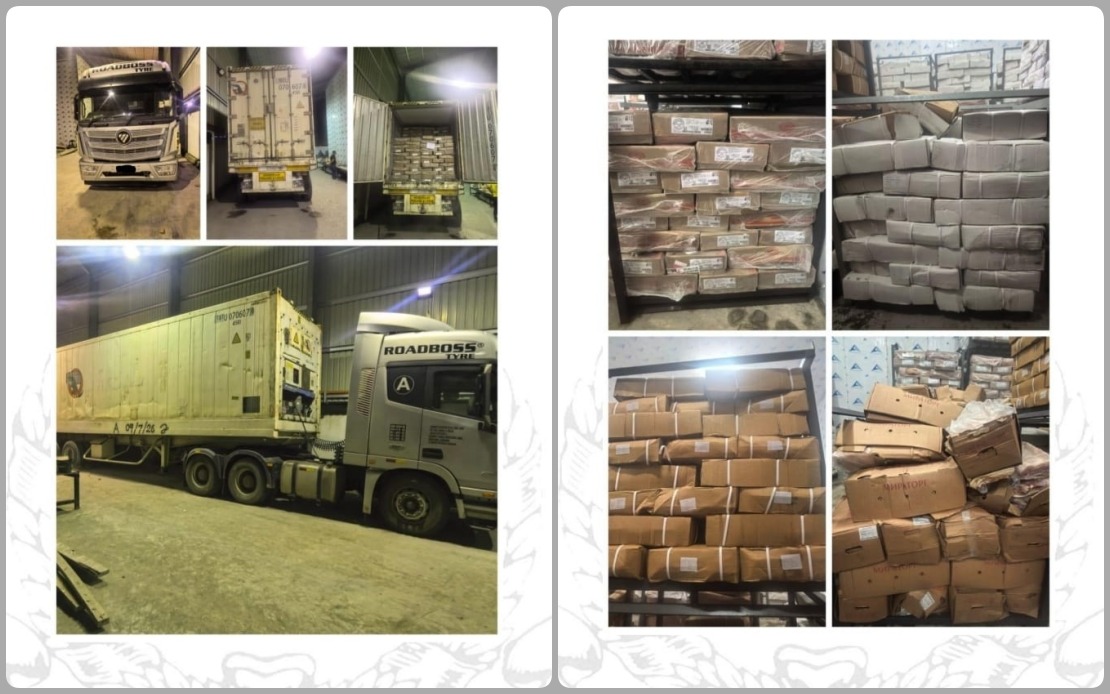
A significant enforcement operation in Miri, Sarawak has resulted in the seizure of RM6.19 million worth of frozen pork products suspected of entering Malaysia without the necessary authorisation from regulatory authorities. Police arrested a 26-year-old local man during the raid, designated Operation Taring Chiller, which took place at a warehouse facility last night. The operation highlights the ongoing challenge of illegal food importation across Malaysia's borders, particularly affecting food security and public health standards.
According to Datuk Seri Mohd Yusri Hassan Basri, director of the Internal Security and Public Order Department (JKDNKA), the enforcement action forms part of a broader crackdown against the storage and distribution of frozen food products with questionable halal certification status. The warehouse inspection uncovered substantial quantities of various pork cuts, including 30,000 kilogrammes of cooked frozen pork large intestines, 18,000 kilogrammes of pork loin distributed across 15 pallets, 750 kilogrammes of pork stored in a single pallet, multiple pallets of bone-in pork bellies with rind attached, and frozen pork shoulder sections. The sheer volume of seized products underscores the scale of illegal food trafficking operations currently operating within the country.
The operation was conducted by the Wildlife Crime Bureau and Special Investigation Intelligence unit within JKDNKA, working collaboratively with the Miri district police headquarters and officers from the Sarawak Veterinary Services Department. This inter-agency approach demonstrates how Malaysian law enforcement has adapted to tackle increasingly sophisticated smuggling networks that move contraband across regional supply chains. The coordination between federal and state-level agencies reflects recognition that food security violations require comprehensive intelligence gathering and coordinated enforcement responses.
Investigations into the case proceed under Sections 9(1) and 9(3) of the Veterinary Public Health Ordinance 1999, the primary legislation governing imported food safety and veterinary standards. Beyond the arrest, authorities issued a RM25,000 compound notice under the same ordinance, a financial penalty designed to deter similar violations. For Malaysian consumers, these regulatory frameworks are meant to ensure that all imported meat products meet stringent health and safety requirements before reaching retail distribution networks.
The Miri seizure represents just one component of a broader enforcement campaign. Between January 1 and July 10 this year, the WCB/PSK unit conducted 201 raids nationwide, resulting in 375 individual arrests across multiple categories of smuggling and organised crime. These operations targeted diverse illegal activities including the movement of non-duty-paid goods, leakage of government-controlled and subsidised commodities, frozen food trafficking, wildlife smuggling, and electronic waste dumping. The cumulative value of seized items across these 201 operations reached RM264.86 million, reflecting the substantial economic scale of smuggling networks operating throughout Malaysian territory.
The focus on frozen food products without proper permits has become increasingly important given Malaysia's position as a major import-dependent economy and regional food consumer. The country relies heavily on imported protein sources to feed its growing population and support its food service industry, making the integrity of the import chain critical to public health. Illegal imports bypass mandatory veterinary inspections, halal certification processes, and food safety testing protocols that protect consumers from contaminated or unsafe products. The seizure in Miri demonstrates that enforcement agencies remain alert to these risks, though the continued discovery of large-scale illegal operations suggests that smuggling networks continue to adapt their methods to circumvent regulatory controls.
From a regulatory perspective, the involvement of halal certification concerns reflects Malaysia's unique position as a Muslim-majority nation where halal compliance carries both religious and commercial significance. Products imported without valid permits lack the proper documentation certifying their halal status, creating risks that non-compliant items could reach Muslim consumers who consider halal certification fundamental to their food purchases. This compounds the public health dimension of the enforcement action, as illegal products fail both veterinary safety standards and halal regulatory requirements simultaneously.
The Royal Malaysia Police statement indicates intention to intensify intelligence gathering and integrated enforcement operations targeting smuggling activities and organised crime networks. This commitment suggests that the Miri operation follows months of investigation and intelligence development rather than representing a chance discovery. The naming of the operation and release of detailed statistics indicates that authorities are seeking to publicise enforcement success, potentially to deter would-be smugglers and reassure the public that food security measures remain active. Yet the ongoing nature of these operations, with hundreds of raids conducted in a single year, underscores that smuggling remains a persistent challenge despite comprehensive enforcement efforts.
For regional observers, the Miri operation reflects broader Southeast Asian concerns about food supply chain integrity and the movement of contraband across porous borders. Neighbouring countries including Thailand, Vietnam, and Indonesia face similar challenges managing illegal food imports and ensuring consumer protection. The inter-agency Malaysian approach, combining federal intelligence units with state-level police and veterinary services, offers a model that other regional governments continue studying as they strengthen their own enforcement capacities. Cross-border cooperation mechanisms, still developing across Southeast Asia, will likely become increasingly important as food trafficking networks become more sophisticated and organised.

