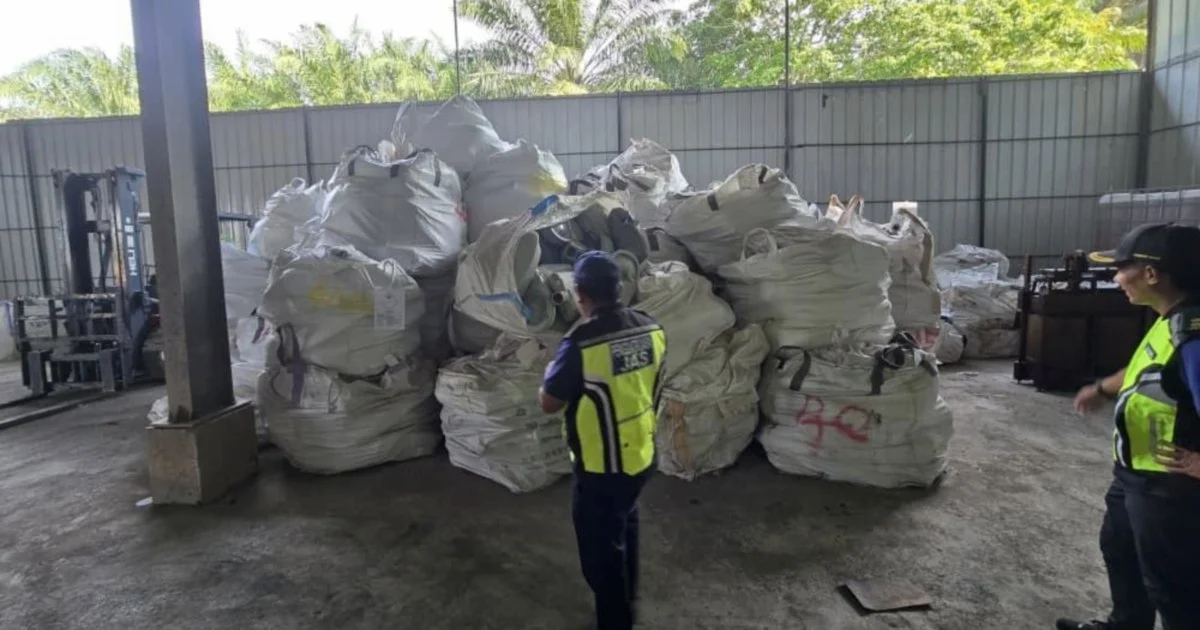
Police in Kuantan have dealt a substantial blow to illegal e-waste trafficking networks operating in Pahang, conducting a high-value raid on an unlicensed factory in Gambang yesterday that resulted in the seizure of electronic waste valued at RM6.4 million. The General Operations Force executed the operation and subsequently detained the facility's manager for questioning regarding the enterprise's unlawful operations.
The raid represents an intensification of enforcement efforts against the growing menace of unregulated electronic waste processing in Malaysia. Illegal e-waste operations have become increasingly sophisticated across Southeast Asia, often operating from remote industrial locations where oversight remains limited. Gambang, situated in the Kuantan district, has emerged as a focal point for such illicit activities, attracting operators seeking to exploit loose monitoring and relatively low enforcement capacity in certain manufacturing zones.
Electronic waste comprises discarded computers, mobile phones, televisions, and other electrical equipment containing hazardous materials including lead, mercury, cadmium, and asbestos. When processed improperly through unregulated channels, these substances contaminate soil and water systems, creating serious environmental and public health consequences for surrounding communities. Malaysia's position as a regional electronics manufacturing hub has paradoxically created vulnerability to becoming a dumping ground for imported e-waste, often imported under false documentation and processed illegally.
The RM6.4 million valuation attached to yesterday's seizure underscores the substantial financial incentives driving this criminal enterprise. International regulations increasingly restrict developed nations' ability to dispose of e-waste domestically, creating lucrative markets for unscrupulous operators willing to accept illegally shipped materials. Criminal syndicates exploit weak border controls and inadequate tracking mechanisms, diverting precious metals and recoverable components from legitimate recycling channels into black markets where environmental standards are entirely disregarded.
Legislative frameworks governing e-waste management in Malaysia have evolved considerably, yet enforcement remains inconsistent across states and localities. The Environmental Quality Act and the Solid Waste and Public Cleansing Management Corporation regulations establish parameters for legitimate e-waste handling, but resource constraints within enforcement agencies limit inspection frequency and investigation capacity. Yesterday's operation demonstrates renewed commitment to combating this particular environmental crime, yet observers note that isolated raids, however successful, require sustained coordination across agencies and borders to address systemic vulnerabilities.
The detention of the factory manager indicates investigators believe individual accountability extends beyond mere operational involvement to potential complicity in organised illegal activity. Prosecutors will examine whether the defendant knowingly managed unlicensed operations, whether waste sourcing violated import regulations, and whether co-conspirators at higher organisational levels should face charges. Such investigations frequently reveal networks involving corrupt officials, fraudulent documentation specialists, and international trafficking contacts supplying materials to multiple illegal facilities.
Communities residing near Gambang have faced mounting concerns regarding industrial pollution from various manufacturing operations. Residents have reported unusual odours, atmospheric haze, and water quality degradation in recent years, often without clear attribution to specific factories. Illegal e-waste processing facilities typically lack proper ventilation systems, waste segregation equipment, and containment infrastructure, allowing airborne particulates and leachate to disperse into surrounding areas untreated. Yesterday's discovery may prompt local residents to file formal complaints with environmental authorities regarding neighbouring facilities' compliance status.
Malaysia's commitment to tackling e-waste crimes aligns with regional initiatives and international protocols including the Basel Convention, which restricts transboundary movements of hazardous waste. However, implementation gaps persist throughout ASEAN member states, creating jurisdictional challenges when investigation trails cross borders. Neighbouring countries including Indonesia and Thailand have similarly grappled with illegal e-waste processing networks, suggesting coordinated international enforcement strategies could enhance interception capabilities at regional distribution points.
The seizure's magnitude reflects modern e-waste accumulation patterns in which multiple layers of discarded electronics converge at processing centres. Factory raids often uncover not merely equipment awaiting processing but also partially dismantled components, processed scrap, and recovered materials representing different stages of illegal conversion operations. Detailed forensic analysis of seized materials will likely reveal sourcing origins, potentially identifying whether imports originated from legitimate global recyclers, unauthorised trade partners, or theft from licensed waste management operators.
Investigators will scrutinise documentation recovered during yesterday's raid to establish whether the facility operated under false pretences, claimed legitimate operations while processing e-waste, or attempted concealment through shell company structures. Such administrative dimensions of environmental crime investigation frequently prove as significant as physical evidence in establishing systematic wrongdoing. Communication records, financial transactions, and supplier relationships often illuminate the broader criminal architecture supporting individual illegal facilities.
Yesterday's enforcement action represents visible progress against a crime category that frequently attracts minimal public attention compared to trafficking or violent offences. However, e-waste criminals inflict cumulative environmental damage rivalling more publicised environmental crimes, with long-term health consequences for affected populations. Sustained investigation of detained managers' networks and organisational structures could dismantle larger trafficking operations, deterring would-be operators from establishing new illegal processing facilities in Malaysian jurisdictions.