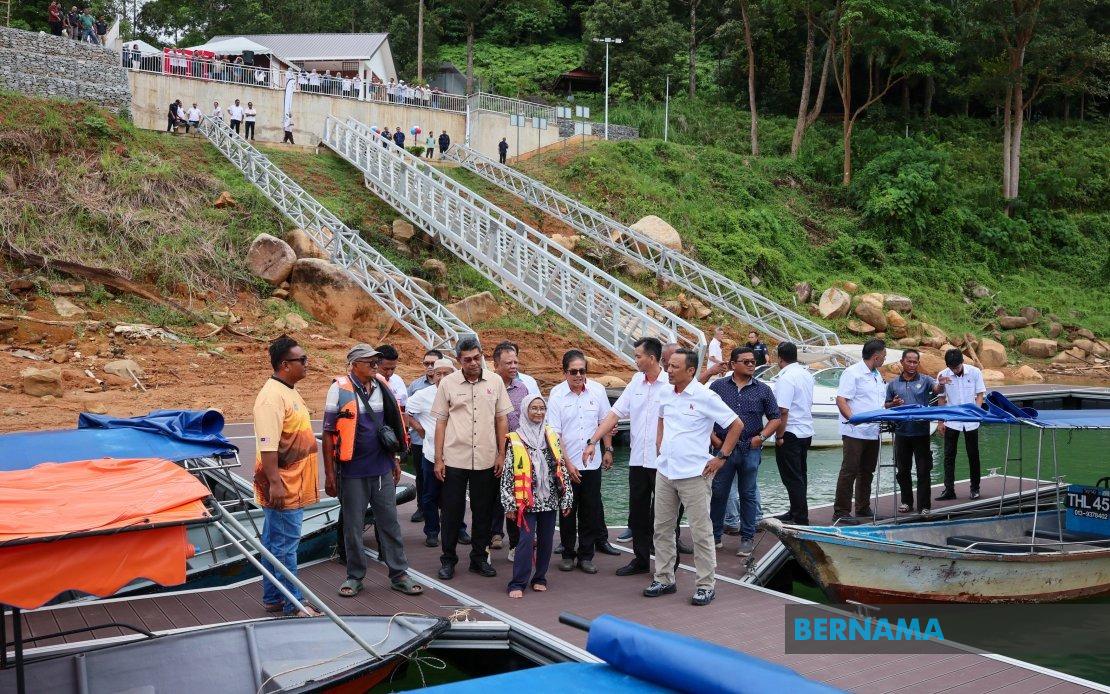
Terengganu's development authority has completed a significant infrastructure project designed to elevate the tourism experience at Tasik Kenyir, the country's largest man-made lake. The RM8.7 million Tasik Kenyir Jetty Development Project, which commenced in 2023 and was handed over on July 6 this year, represents a strategic investment in reorganising boat operations at one of Malaysia's premier ecotourism sites. The facility can accommodate more than 80 houseboats and speedboats, addressing a persistent issue of haphazard berthing that has long plagued the destination's waterfront operations.
Datak Rozi Mamat, chairman of the Terengganu Tengah Development Authority (KETENGAH), highlighted the project's significance in enhancing the lake's competitive standing as an international tourism destination. The initiative was approved under the Third Rolling Plan of the 11th Malaysia Plan (RMK-11), reflecting the federal government's commitment to developing regional tourism infrastructure. According to Rozi, modern and well-maintained facilities are essential for delivering quality visitor experiences and maintaining the pristine image required to attract international tourists seeking authentic ecotourism adventures. Tasik Kenyir has long been recognised for its environmental significance and recreational potential, yet operational challenges have constrained its full development.
The comprehensive facility extends well beyond simple boat parking. The jetty infrastructure incorporates fully equipped berthing spaces with electricity and water supply—critical amenities for houseboat operators who run extended tourist operations on the water. A pedestrian walkway spanning approximately 600 metres connects the jetty to supporting facilities, facilitating smooth visitor circulation. The project includes 86 parking bays to accommodate tourist vehicles, addressing a common bottleneck at popular Malaysian lakeside destinations. Additional support infrastructure comprises public toilets, a security guard post, an electrical substation to power the facility, a pump house to manage water supply, and a dedicated waste disposal facility that will help maintain environmental standards around the sensitive water body.
Rozi specifically referenced the persistent problem of disorganised boat berthing in the Pengkalan Gawi area, noting that the new facility offers a structured solution to gradually eliminate this longstanding challenge. Unregulated vessel berthing has historically created safety hazards, cluttered the waterfront, and detracted from the visitor experience. By consolidating boat operations into a single, professionally managed facility, the authority aims to impose order on commercial boating activities whilst maintaining the ecological integrity of the surrounding area. This approach reflects broader regional trends toward professionalising tourism infrastructure in Southeast Asian nature-based destinations.
The jetty project represents merely one component of KETENGAH's broader development agenda for the Terengganu Tengah region. The authority received RM48.36 million in development allocations for the current year to execute 28 different programmes and projects across its jurisdictional areas covering Dungun, Hulu Terengganu, and Kemaman districts. This substantial budget allocation underscores the government's recognition of tourism as a driver for regional economic development. The Tasik Kenyir area alone is benefiting from six concurrent improvement initiatives, indicating a concentrated effort to position the lake as a world-class destination.
Beyond the jetty itself, complementary projects are enhancing the broader Tasik Kenyir ecosystem. The Sungai Petang Kelah Sanctuary Complex is undergoing upgrading works to improve visitor access to the river's renowned freshwater fish populations and scenic corridors. Slope repairs at various tourist attractions address safety and accessibility concerns that have previously limited visitor mobility across the landscape. The redevelopment of tourism facilities at Pulau Petang, one of the lake's significant islands, promises enhanced accommodation and recreational options for overnight visitors. A new public mini park at Gawi Point will provide additional recreational space for day trippers and resident communities.
The Herbal Park facilities are similarly being redeveloped to improve their educational and commercial appeal. These interconnected projects create a synergistic effect, where improved jetty operations funnel visitors into a network of enhanced attractions. Tourism development of this nature carries particular significance for Terengganu, a state that has historically relied on maritime-based livelihoods and natural resource management. By converting these traditional economic foundations into sustainable tourism revenue streams, the state government positions local communities to benefit directly from environmental conservation and visitor engagement.
For Malaysian tourism operators and regional competitors, the Tasik Kenyir developments signal an intensifying focus on infrastructure quality as a differentiator in ecotourism markets. Thailand, Vietnam, and Indonesia have invested heavily in similar waterway-based tourism facilities, and Malaysia's capacity to match or exceed these standards directly impacts its share of regional tourist flows. The RM8.7 million investment, whilst substantial, is modest compared to competing destinations' expenditures, yet demonstrates commitment to incremental improvement. Tourists increasingly demand reliable infrastructure, safety assurances, and professional service standards; the Tasik Kenyir upgrade directly addresses these expectations.
The timing of project completion reflects Malaysia's broader post-pandemic recovery strategy for tourism. As international visitor flows normalise following travel disruptions, destinations must present their most competitive face. A well-organised, modern jetty facility conveys professionalism and operational competence to potential visitors researching Malaysian destinations. International travel blogs, tourism forums, and social media platforms amplify the importance of such visible infrastructure improvements in influencing booking decisions. The Tasik Kenyir jetty therefore functions not merely as a operational facility but as a promotional asset that signals investment in tourism quality.
The project's environmental management components warrant particular attention given the ecotourism positioning. The dedicated waste disposal facility recognises that tourism operations inevitably generate waste; proper management prevents contamination of the pristine lake waters that constitute the destination's primary appeal. Houseboat operations, in particular, require careful waste handling to prevent pollution. By incorporating environmental infrastructure into the commercial facility design, KETENGAH demonstrates integrated thinking about sustainability—a crucial consideration for long-term destination viability. Environmental degradation frequently undermines tourism potential; preventive infrastructure investment represents sound economic strategy alongside environmental stewardship.
Looking forward, the Tasik Kenyir developments position Terengganu to capture a larger share of Malaysia's domestic and international leisure tourism market. Domestic tourists from the Klang Valley and other populated areas increasingly seek natural, water-based recreational experiences within easy driving distance. The enhanced jetty and complementary attractions address both comfort and safety concerns that historically discouraged casual family visits. International tourists, particularly from Singapore, Thailand, and Brunei, represent a growth opportunity as word-of-mouth and online platforms communicate the destination's improved infrastructure. The state's geographic positioning on Malaysia's east coast makes Tasik Kenyir accessible to neighbouring countries seeking authentic nature-based experiences.

