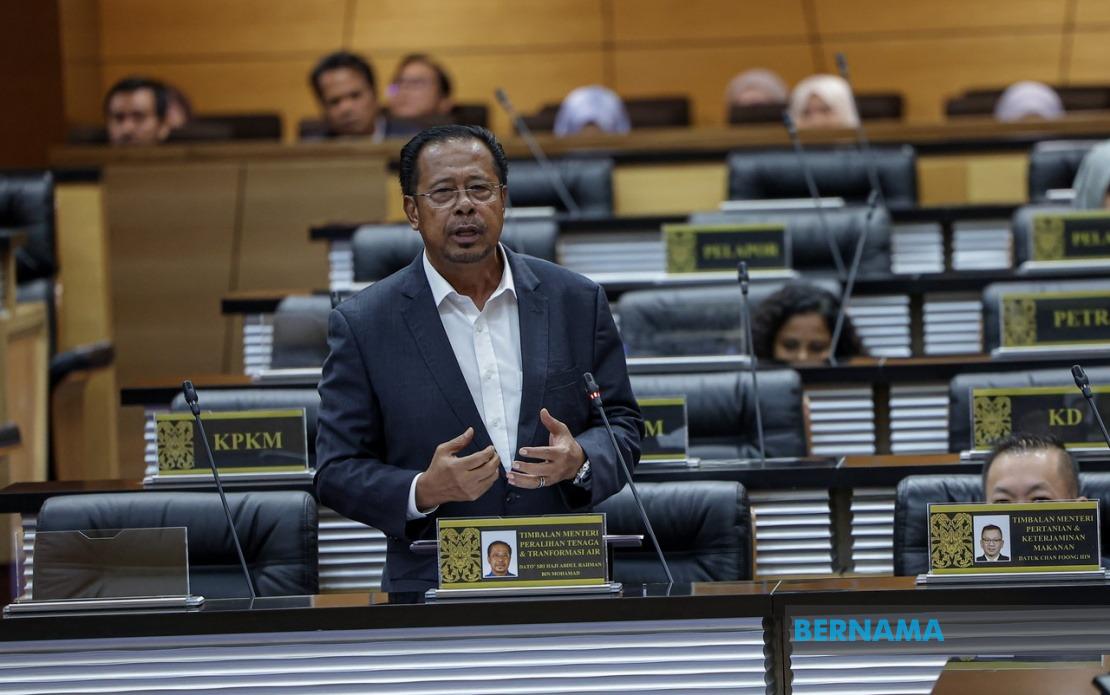
The Malaysian government is advancing a comprehensive river management initiative in Johor that promises significant relief for thousands of residents facing recurring flood challenges. The Integrated River Basin Development (PLSB) project for Sungai Skudai carries an investment of RM99.8 million and represents a substantial commitment to addressing water-related vulnerabilities in one of the country's most flood-prone regions. According to Deputy Minister of Energy Transition and Water Transformation Datuk Seri Abdul Rahman Mohamad, the undertaking will ultimately benefit approximately 15,000 people while reducing flood exposure across a 50-hectare area upon its completion.
The initiative falls under the 12th Malaysia Plan and currently operates in its preparatory phase, with the groundwork needed to launch formal construction still underway. This cautious approach reflects the complexity of river basin management projects, which require extensive technical preparation before heavy machinery can be deployed. The consultant responsible for detailed planning and site investigations was engaged in May 2025 and is now preparing the project's foundational concept report. This document will serve as the blueprint for all subsequent phases, making accuracy and thoroughness paramount at this stage.
Survey activities commenced in November 2025 and are projected to conclude by May 2027, establishing the precise geographical and hydrological parameters that will inform engineering decisions. Running parallel to this effort is the land acquisition process, which began in June 2026 and should be finalised by August 2027. These concurrent workstreams demonstrate how modern infrastructure projects attempt to compress timelines without compromising the due diligence required for transparent dealings with affected landowners. Once these prerequisites are satisfied, the government intends to proceed with contractor procurement and appointment, with physical construction anticipated to commence in mid-2027.
The project targets the entire 46-kilometre expanse of Sungai Skudai with a multifaceted approach designed to enhance water management capacity. Bank strengthening works will be undertaken along the river's length, while selected sections will be widened to approximately 15 metres to increase the volume of water the channel can accommodate during peak flow periods. This engineering strategy addresses the root cause of many flood incidents: insufficient channel capacity during heavy rainfall. By expanding the river's ability to convey water safely to the sea, the project reduces the likelihood of overflow onto adjacent residential and commercial areas.
Beyond flood mitigation, the initiative encompasses ecological restoration objectives that reflect growing recognition of environmental considerations in infrastructure planning. The development is anticipated to rehabilitate the river ecosystem, potentially recovering aquatic habitats degraded by decades of urbanisation and industrial activity. Such restoration has implications for fishermen who depend on the river for their livelihoods, a concern explicitly raised during parliamentary questioning. The project is designed to improve navigability for local fishing communities whilst simultaneously enhancing operational efficiency for maritime security and emergency management agencies patrolling the waterway.
In addressing a parliamentary inquiry from Suhaizan Kaiat (PH-Pulai) regarding the scheme's broader impact trajectory, Abdul Rahman outlined the government's expectations across short, medium and long-term horizons. The immediate benefits centre on improved drainage system capacity and optimised water flow management, which should curtail flooding in regularly affected zones. These near-term gains provide relief whilst the comprehensive restructuring unfolds over several years. The medium-term phase introduces ecological benefits and enhanced navigability, whilst longer-term outcomes encompass fully restored river systems and institutionalised improvements in water resource governance.
Acknowledging the pressing nature of flooding, the ministry is simultaneously implementing six smaller-scale projects valued at approximately RM700,000 as interim flood mitigation measures. These stopgap interventions provide immediate relief to communities whilst the larger, more transformative RM99.8 million scheme advances through its preparation phases. Additionally, officials have identified approximately 50 specific flood hotspots distributed along the river, with five concentrated in the Kulai area. Targeting these vulnerability points through quick-win improvements represents a pragmatic strategy to demonstrate government responsiveness whilst comprehensive solutions are developed.
The Deputy Minister emphasised the ministry's commitment to maintaining the project timeline, stressing that successful transition to the physical implementation phase by mid-2027 remains the target. Delays in infrastructure projects are endemic across Malaysia and Southeast Asia, often stemming from unforeseen technical complications, bureaucratic obstacles or contractual disputes. The government's explicit reiteration of its schedule suggests institutional awareness that public confidence hinges on demonstrated follow-through on announced commitments. For residents who have endured repeated flooding, tangible proof that remedial works are progressing becomes increasingly important as years pass without solution.
In a related development affecting road infrastructure in the vicinity, the Ministry of Works disclosed that a RM174.53 million Phase Three upgrading project for the Pasir Gudang Highway (FT17) will proceed without requiring acquisition of land belonging to Keretapi Tanah Melayu Berhad (KTMB). This clarification matters because railway land acquisition often triggers complex negotiations and potential implementation delays. Instead, construction works in proximity to railway tracks will proceed under work permits and right-of-way approvals obtained from KTMB, a less cumbersome arrangement that should facilitate smoother project execution. According to Minister Datuk Seri Alexander Nanta Linggi, activities in the railway vicinity are scheduled for execution between February 2027 and December 2028.
The convergence of the Sungai Skudai flood mitigation project and the Pasir Gudang Highway upgrade reflects broader infrastructure investment in Johor, a state grappling with rapid urbanisation and the associated challenges of managing water resources and transportation networks. Both initiatives recognise that effective governance requires coordinated investments across multiple infrastructure categories. For Malaysian readers, particularly those in flood-affected regions, these developments signal government attention to vulnerabilities that disrupt daily life and impose economic costs through business interruption and property damage.
The Sungai Skudai project's emphasis on ecosystem restoration alongside engineering solutions represents evolving practice in river management globally. Rather than treating rivers purely as conduits to be maximised for hydraulic capacity, contemporary approaches recognise that healthy ecosystems provide co-benefits including improved water quality, enhanced recreational value and support for livelihoods. For Johor, where rapid industrialisation has historically subordinated environmental considerations to economic growth, this integrated approach signals policy maturation.
Looking ahead, the project's success will be measured not merely by whether physical construction commences on schedule, but whether the completed works deliver promised flood reduction benefits. Communities across Johor will be monitoring progress through the preparatory phases with understandable scepticism born from past experiences with delayed or underperforming infrastructure projects. The ministry's simultaneous implementation of interim measures suggests recognition that residents cannot wait years for complete solutions, even as the comprehensive remedy develops. For Malaysia's water management trajectory, the Sungai Skudai initiative represents a substantial test of whether the government can execute large-scale, technically complex projects whilst maintaining public confidence through transparent communication and demonstrated commitment to stated timelines.

