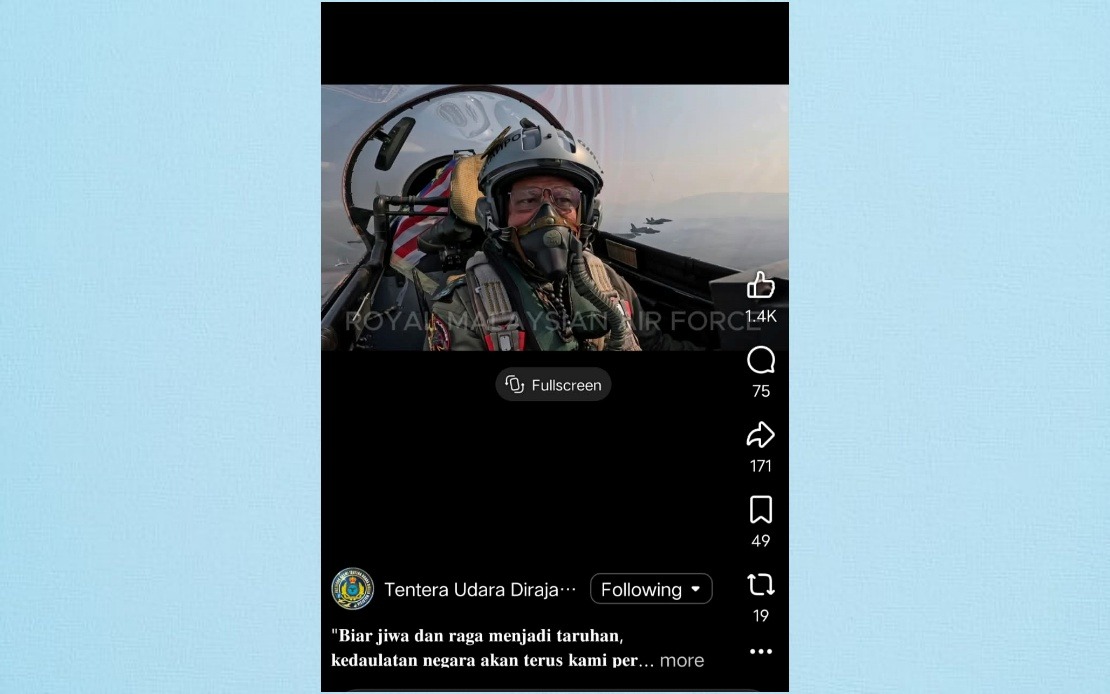
The skies above Putrajaya thundered with military might on August 31 as the Royal Malaysian Air Force (RMAF) orchestrated one of the centrepiece events of Malaysia's 69th National Day celebration. The meticulously choreographed air display brought thousands of spectators to their feet, their eyes tracking the powerful aircraft as they carved through the sky in precision formations that demonstrated both the technical proficiency of the pilots and the operational readiness of the nation's air defence apparatus.
General Tan Sri Muhamad Norazlan Aris, the RMAF chief, once again demonstrated his commitment to the service by personally commanding the display from the cockpit of a Sukhoi Su-30MKM fighter jet. This marked his second consecutive year taking to the controls during the National Day showcase, a symbolic gesture that underscored the leadership's direct connection to operational excellence and the capabilities of Malaysia's aerial forces. His presence in the lead aircraft sent a powerful message about institutional pride and the importance the military places on this annual demonstration of national strength.
The aerial armada that took flight comprised an impressive lineup of combat and transport aircraft. Four Su-30MKM jets, the backbone of Malaysia's air defence capability, flew alongside four F/A-18D Hornet fighters and three BAE Hawk 208 trainer-attack aircraft. This combination showcased the diversity of the RMAF's operational fleet and the multi-layered approach to aerial defence. The selection of aircraft types reflected both the conventional fighter capabilities that form the first line of defence and the advanced systems that Malaysia has invested in to maintain regional relevance and credibility.
Beginning at 9:30 am, the ten-minute display unfolded with deliberate artistry and technical precision. The pilots executed a series of specially choreographed formations—the Kite, Diamond, Delta and Victory Combine—that required extraordinary skill and coordination. These formations are not merely aesthetic; they serve to demonstrate the level of training and synchronisation within the pilot corps, conveying to both domestic audiences and regional observers the sophistication and professionalism of Malaysia's air arm. Each manoeuvre was executed with the confidence of a force confident in its capabilities.
Adding narrative dimension to the visual spectacle, Major Patrick Dinnesh, Major Neny Suhaida Ab Suki and Captain Muhammad Iqbal Nasrudin provided real-time commentary that helped spectators understand the significance of what they were witnessing. Rather than remaining silent, the RMAF recognised that public engagement with military capability strengthens national identity and civilian appreciation for the armed forces. This educational component transformed the display from mere entertainment into a moment of collective understanding about national defence infrastructure.
The focus then shifted from combat aircraft to the strategic airlift dimension of the RMAF's operations. The appearance of the C-130H Hercules, A400M Atlas and CN235 transport aircraft underscored the force's capacity for logistical support, humanitarian missions and regional deployments. In a region characterised by vast distances and challenging terrain, transport aircraft represent critical capabilities for disaster response, medical evacuation and military mobility. Their presence in the display reminded observers that air power extends far beyond fighter jets into the essential infrastructure of national security and disaster management.
The demonstration further incorporated the RMAF's helicopter assets, with EC725 and AW139 aircraft performing formations that highlighted their role in anti-submarine warfare, search and rescue, and troop transport. Notably, these helicopters flew in integrated formations with assets from the Malaysian Army, Royal Malaysian Navy, Fire and Rescue Department of Malaysia and the Royal Malaysia Police. This inter-agency coordination symbolised the whole-of-government approach to national defence and emergency response, demonstrating how military air assets integrate with civilian agencies to protect Malaysian citizens.
The spectacle drew reactions that transcended the typical patriotic response to military displays. Thousands of spectators at Dataran Putrajaya remained transfixed throughout the performance, their sustained attention reflecting both the technical impressiveness of the flying and the emotional resonance of seeing national power projected skyward. The roar of engines and the precision of formations created sensory experiences that lingered long after the final aircraft departed the airspace, embedding memories of military capability and national pride in the consciousness of attendees.
For observers from neighbouring countries and regional defence establishment circles, such displays serve as calibration points for assessing Southeast Asian military capabilities. Malaysia's decision to showcase a diverse range of modern and capable aircraft—including the advanced Su-30MKM and strategic transport options—communicates clearly about the nation's defence posture and technological sophistication. In an era of regional strategic competition and evolving security challenges, such displays carry messages that extend well beyond domestic audiences.
The integration of the air display within the broader National Day celebration framework emphasised the connection between military capability and national identity. The armed forces are not presented as separate from national life but as integral to the fabric of national celebration and continuity. This messaging becomes particularly significant in a plural society where national unity and pride serve as essential cementing forces. The RMAF's display demonstrated not merely what Malaysia could do militarily, but implicitly reinforced the notion that national defence is a collective endeavour worthy of celebration and respect.
From a practical standpoint, the display also served important professional functions. For the RMAF personnel participating, such high-profile operations provide opportunities for pilots to execute the most demanding manoeuvres in controlled conditions, sharpening skills and building institutional experience. The coordination required to execute such a display—involving multiple aircraft types, precise timing, communication protocols and safety procedures—represents the kind of operational complexity that the force must master to maintain its readiness and professional standards in an increasingly contested regional environment.

