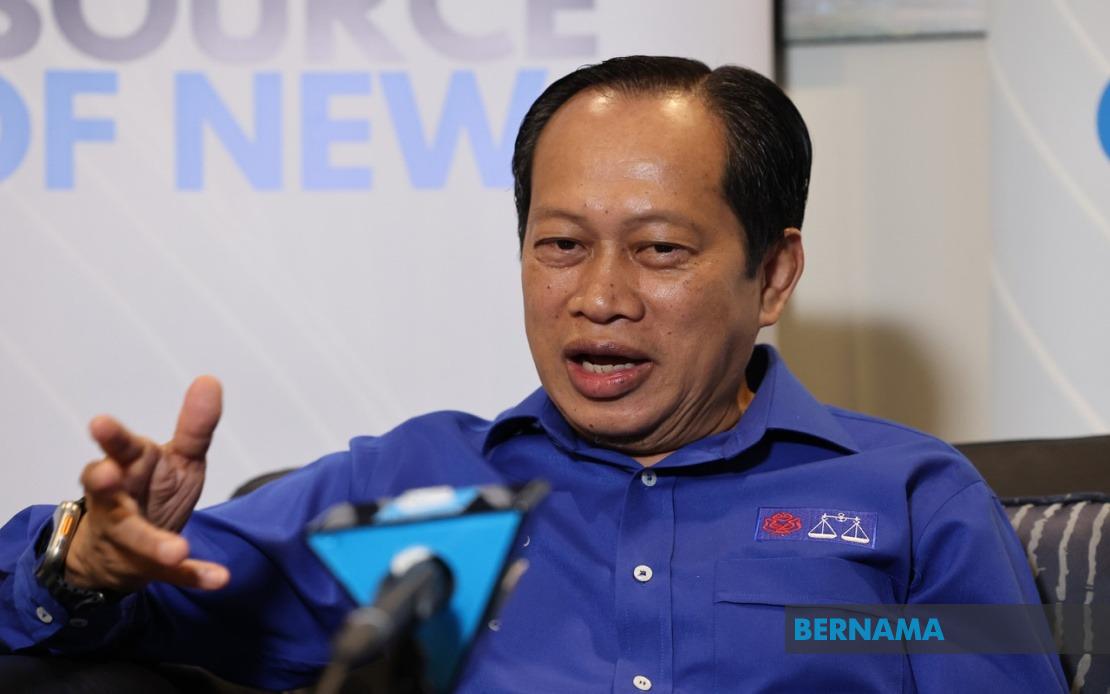
Ensuring Malaysia's road network remains in adequate condition demands a comprehensive collaborative approach involving multiple tiers of government and elected officials, according to Deputy Works Minister Datuk Seri Dr Ahmad Maslan. Speaking in Johor Bahru on July 2, Ahmad emphasised that without coordinated effort among all relevant stakeholders—from Members of Parliament and state assemblymen to district-level authorities—the nation's road maintenance programmes cannot achieve their intended outcomes. His remarks come amid increasing public scrutiny over deteriorating road conditions in various parts of the country, an issue that has gained prominence through social media complaints and on-the-ground assessments by opposition politicians.
The Deputy Works Minister has directed the Public Works Department (JKR) to accelerate repair operations on damaged road sections nationwide, signalling the government's intention to address the problem more expeditiously. Ahmad's call for expedited action reflects growing awareness within the administration that delays in road maintenance disproportionately affect commuters, increase vehicle maintenance costs, and potentially pose safety risks. The timing of his statement is particularly significant as Malaysia faces mounting criticism over road infrastructure quality, especially in urban and semi-urban areas where traffic congestion compounds existing surface deterioration issues.
Ahmad articulated a multi-stakeholder responsibility framework during his remarks, establishing clear expectations for what he termed the respective roles of different entities. State assemblymen, Members of Parliament, and local government agencies must collectively monitor road conditions within their constituencies and jurisdictions, taking proactive steps to report and remediate defects. This distributed accountability model suggests recognition that centralised monitoring alone cannot capture the full scope of road maintenance needs across Malaysia's diverse geography and varied urban-rural landscape. By distributing responsibility, Ahmad appeared to be advocating for a bottom-up approach to infrastructure reporting and response that leverages local political representatives' proximity to constituents.
In Johor specifically, Ahmad highlighted the presence of ten district JKR offices, which he has personally visited to assess operational capacity and deliver direct instructions. His engagement with these district-level installations underscores the operational mechanics through which road maintenance actually occurs—these offices form the frontline of repair and maintenance activities. By visiting all ten offices and conducting development briefings, Ahmad signalled his commitment to understanding bottlenecks and ensuring that district operations possess sufficient resources and clear priorities. His urging of these offices to respond with greater alacrity to road damage reports suggests acknowledgment that response times have been inadequate in addressing public complaints.
The Deputy Works Minister's comments were prompted by recent actions taken by Pakatan Harapan's candidate for the Puteri Wangsa state seat, Dr Maszlee Malik, who conducted a high-profile road assessment exercise in Johor. On June 29, Dr Maszlee drove a Perodua Myvi along Jalan Tebrau from Kampung Melayu Majidi to Ulu Tiram, traversing a route that residents had flagged repeatedly on social media platforms regarding deteriorating surface conditions and traffic congestion during peak periods. This journey was not merely symbolic; Dr Maszlee's subsequent public account of his experience—detailing how his vehicle jolted across uneven road surfaces and documenting heavy traffic delays—provided tangible evidence supporting the complaints that had circulated online.
Such opposition-initiated assessments place pressure on the government to demonstrate responsiveness to infrastructure concerns, making Ahmad's public acknowledgment of the maintenance challenge strategically important. Opposition politicians can effectively highlight government shortcomings by conducting their own investigative drives and documenting problems through social media, creating a counter-narrative to official channels. For ruling coalition representatives, this dynamic necessitates visible commitment to resolution and rapid action, or risk being portrayed as unresponsive to constituent concerns. Ahmad's statements therefore represent not only policy articulation but also defensive positioning ahead of potential electoral contests in Johor and broader perception management regarding government effectiveness.
The administrative machinery for road maintenance involves layered approval processes that Ahmad outlined, with allocations for federal roads, highways, and bridges flowing through the State Economic Planning Unit (UPEN) and state executive councils. These institutions are responsible for assessing and prioritising maintenance applications before granting approval. This structured process, while intended to ensure rational allocation of limited resources, can create bottlenecks and delays in responding to urgent defects. The involvement of multiple approval layers means that even critical repairs require navigation through bureaucratic channels, potentially resulting in extended periods during which hazardous road conditions persist. Ahmad's explanation of this system implies that constituents and local officials must submit formal applications through established channels, which may not align with public expectations for rapid response to visibly deteriorated roads.
For Malaysian road users, the implications of Ahmad's position extend beyond immediate maintenance questions. The emphasis on coordination suggests that successful outcomes depend on citizens actively engaging with elected representatives rather than relying solely on centralised government action. Assemblymen and Members of Parliament thus become intermediaries whose effectiveness partly determines whether complaints reach the appropriate authorities and receive prioritised action. This places responsibility on both elected officials to engage seriously with constituent concerns and on the public to pursue grievances through established political channels. The system's success is therefore contingent on reciprocal engagement rather than on government agencies operating independently.
The road maintenance challenge Ahmad addressed carries particular significance for Johor, a state whose geographic scale and mixed urban-rural character present substantial maintenance demands. With ten district JKR offices coordinating activities across the state, resources must be allocated strategically to maximise impact. The visible deterioration documented by opposition figures on Jalan Tebrau—a major arterial route—represents exactly the type of infrastructure degradation that affects daily life for thousands of commuters. For residents of Puteri Wangsa and surrounding areas, the competing positions staked out by Ahmad on behalf of the government and by Dr Maszlee as an opposition candidate reflect genuine infrastructure concerns that will influence electoral calculations.
Moving forward, Ahmad's directive to accelerate repairs and his emphasis on stakeholder cooperation establish benchmarks by which the government's performance can be measured. Public observation of whether road repairs on disputed routes actually accelerate, whether JKR district offices respond more quickly to reported defects, and whether the multi-level coordination he advocated produces tangible improvements will determine the credibility of his statements. For Malaysia's broader infrastructure management, Ahmad's framing suggests that the government recognises maintenance deficiencies while attributing solutions partly to distributed responsibility. Whether this accountability framework produces results more rapidly than the previous system remains to be seen through observable changes in road conditions across the country.

